






A notable shift in tone from Chinese state media signals a potential thaw in the traditionally tense China-India relationship. The Global Times, Beijing’s prominent government mouthpiece historically known for peddling anti-India narratives, has in recent weeks pivoted to a narrative emphasising cooperation, mutual benefit, and friendship with India.
This transformation follows the economic pressures exerted by US President Donald Trump’s tariff war, which targeted BRICS nations, including India, for their strategic partnerships, most notably India’s purchase of Russian oil. This unexpected American pressure may have inadvertently nudged India and China closer toward pragmatic engagement.
Trump’s tariff war sparks China’s rethink of India policy
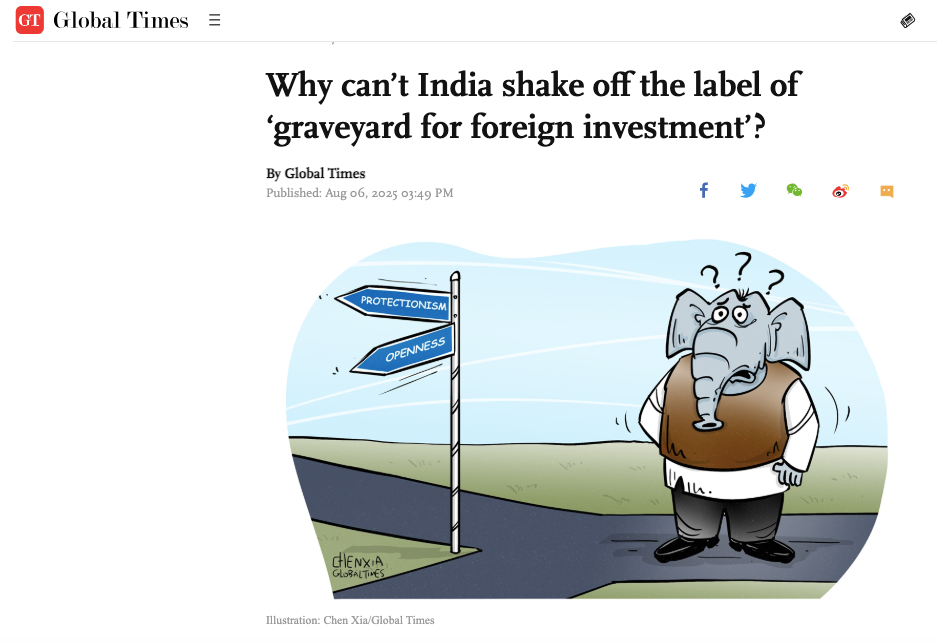
The Global Times has shed its hawkish rhetoric, advocating for shared development and practical cooperation instead of rivalry. An August 6 opinion piece titled, “Why can’t India shake off the label of ‘graveyard for foreign investment’?” dismissed Western media narratives about India overtaking China economically as lacking substantive value. The article highlights the complementary nature of the two economies and calls for a partnership based on mutual benefit.
Yu Jing, spokesperson for the Chinese Embassy in India, echoed this sentiment on social media platform X, stating, “In today’s complex landscape, it makes far more sense for both nations to deepen trust, manage disagreements, foster consensus, widen cooperation, and promote peace in Asia and globally.” Jing’s post included symbolic imagery of an Elephant and a Dragon united as halves of a Yin Yang symbol, representing India and China in harmony.
Share with you an article @globaltimesnews. Western media create narrative of “who will replace whom” between #China and #India, which has little substantive value. In today’s complex landscape, it makes far more sense for both nations to deepen trust, manage disagreements,… pic.twitter.com/W0CUcX9FRL
— Yu Jing (@ChinaSpox_India) August 7, 2025
Multipolar world and resistance against US economic coercion
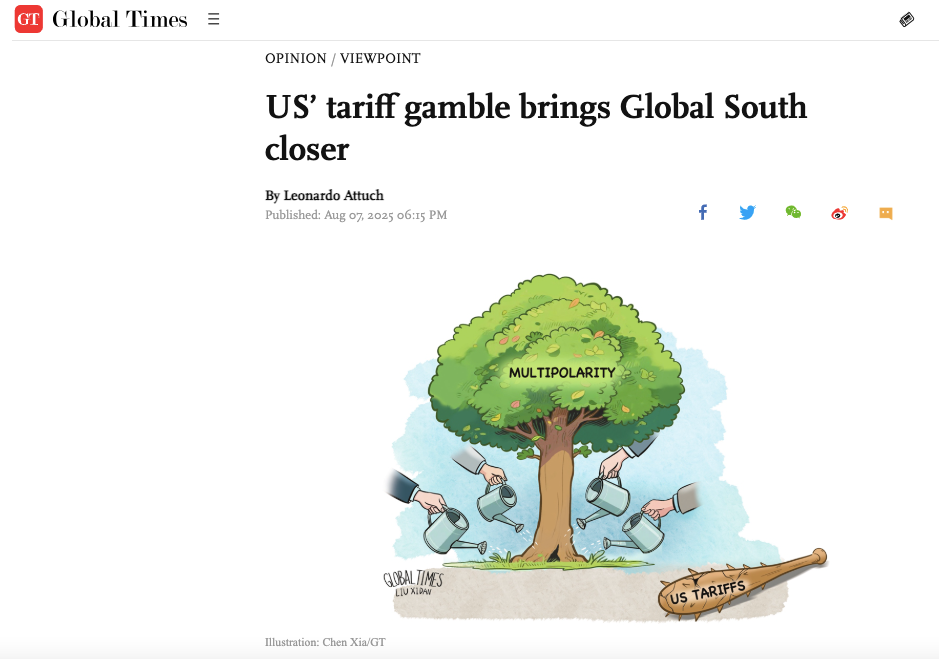
On August 7, Global Times published articles highlighting the importance of a multipolar global order and the strengthening of the Global South. A Brazilian journalist’s opinion piece noted how US attempts to isolate and punish emerging economies like India and Brazil ironically promote greater cooperation among them, reducing dependence on Washington.
Another article from the same day emphasised India’s resistance to US tariffs, highlighting that India never expected exceptional treatment from the US despite being considered a strategic ally to counterbalance China. The refusal of India to open its agriculture sector or halt Russian oil purchases demonstrates its assertion of strategic autonomy.
Reviving trilateral cooperation and Modi’s upcoming China visit
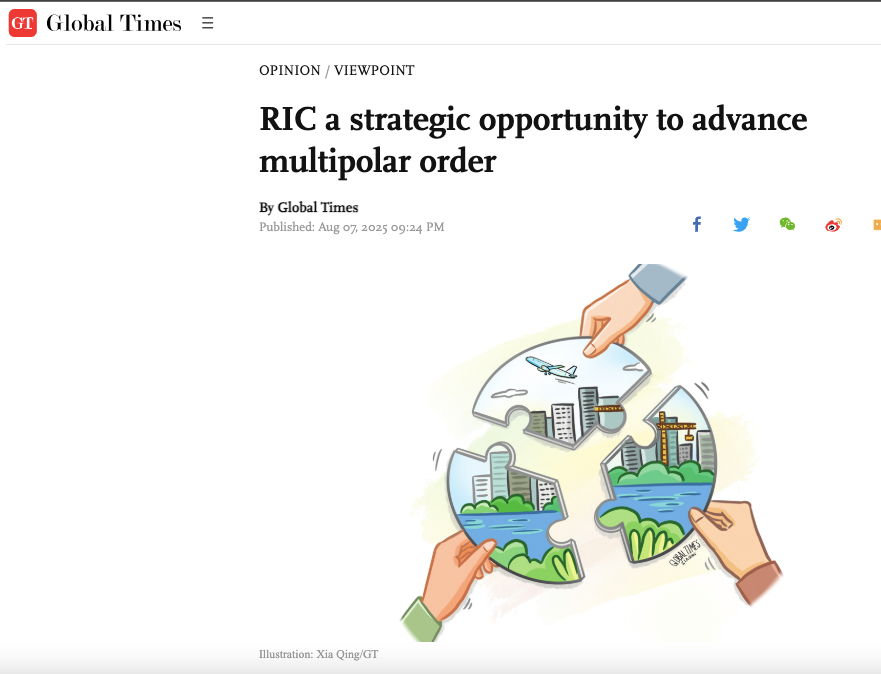
Global Times also stressed the strategic importance of reviving China-Russia-India (RIC) trilateral cooperation, calling it a chance to unite against external sanctions and advance a multipolar order. An editorial urged India to seize Prime Minister Modi’s upcoming China visit to adjust its China policy and remove “unnecessary barriers” to bilateral relations.
Rejecting Western media interpretations that view Modi’s China visit as a hedge against the US, the editorial emphasised shared interests between China and India, including counterterrorism, trade, and cultural exchange. The article even cited a Hindu proverb: “Help your brother’s boat across, and your own will reach the shore,” signalling a hopeful gesture for improved ties.
Lingering challenges amid new rapprochement efforts
Despite these optimistic overtures, significant challenges remain. India continues to view China’s military and policy support to Pakistan, with the Pakistani Army acting as a de facto ruler and perpetrator of cross-border terrorism, as a major stumbling block. India has not forgotten China’s vow to protect Pakistan during Operation Sindoor in May 2025, when India launched military strikes against terror infrastructure.
China’s embrace of India’s vision for multipolarity is also contrasted by its own expansionist ambitions and historical anti-India propaganda campaigns. The Global Times has previously spread fake news during India-Pakistan conflicts and amplified Pakistan’s false claims against India’s military.
China’s contradictory track record on India
In 2024, the Global Times questioned India’s military posture after the commissioning of India’s nuclear-powered submarine INS Arighat, implying India should use its arsenal “responsibly.” Chinese media has also consistently targeted India’s foreign policy and domestic affairs, often leveraging Indian political figures to advance Beijing’s narratives.
However, the current tone shift suggests Beijing is recognising the geopolitical value of aligning with India to counterbalance Western pressure. While the Modi government remains cautiously optimistic, it is clear that India will continue to watch Beijing’s actions carefully.
Trump’s Tariff War: A catalyst for BRICS unity?
Ironically, what started as Trump’s “America First” economic policy has resulted in closer BRICS cooperation, with India and China finding common ground against US tariff impositions. This evolving dynamic signals a complex new chapter in Asia-Pacific geopolitics.
As India prepares for PM Modi’s visit to China, the world watches closely to see whether this shift in Chinese state media rhetoric represents a genuine rapprochement or a tactical manoeuvre amid tough economic times.














Comments