





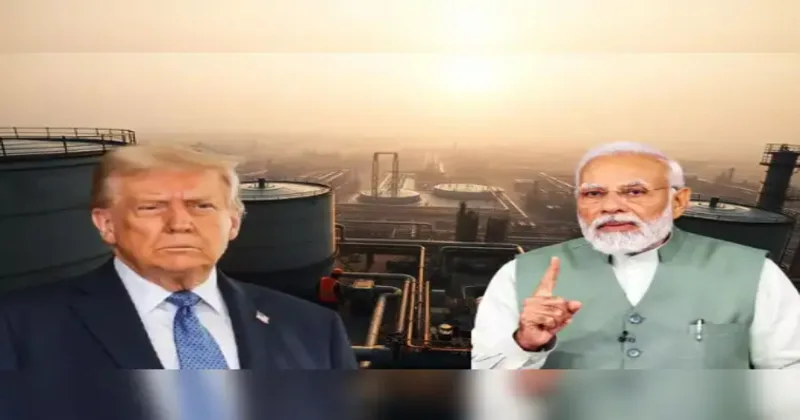
In a volatile world order increasingly defined by transactional alliances and power posturing, Prime Minister Narendra Modi has positioned India as a formidable, independent force — unwilling to be browbeaten by even the most powerful nations. The United States’ recent imposition of a sweeping 50 per cent sanctions on India has only amplified this stance, triggering a strong diplomatic and strategic response grounded in Modi’s uncompromising “India First” doctrine. Prime Minister Narendra Modi has risen as a global statesman — not by yielding to pressure, but by reaffirming India’s sovereignty, pride, and strategic independence.
The message from New Delhi is crystal clear: India will engage but not be coerced.
The Sanctions That Backfired
The sanctions — particularly targeting oil trade and defence cooperation with nations outside the Western sphere — were meant to isolate India diplomatically. Instead, they have only strengthened India’s global stature and accelerated its push for strategic autonomy.
The Modi government has refused to compromise on core national interests. India will continue purchasing energy from sources that secure its economy, and it will collaborate with defence and tech partners who respect mutual sovereignty, not impose dictates.
Modi’s Message: “Don’t Dare Touch the Livelihood of India’s Annadatas”
In a bold statement that resonated across the nation, Prime Minister Modi declared that no external force would be allowed to threaten the livelihoods of India’s:
- Farmers (Annadatas) – the backbone of India’s food security,
- Fisher community – vital contributors to India’s blue economy and export earnings, and
- Pashupalaks – custodians of India’s traditional rural economy.
“India’s soil, seas and livestock are sacred. Anyone trying to sanction our economy and hurt the livelihood of our farmers, fishermen, or Livestock farmers will face the full strength of our democracy and determination,” Modi said at a recent public address.
This stance has won widespread domestic support and reaffirmed his image as a leader deeply rooted in Bharat’s grassroots realities, not just its geopolitical aspirations.
Operation Sindoor: India’s Military Tech Breaks the Western Monopoly
India stunned the global defence community during Operation Sindoor, a rapid-response joint military action that showcased India’s indigenous military prowess:
· Tejas Fighter Jets roared across borders,
· BrahMos Supersonic Missiles struck with precision,
· DRDO surveillance systems coordinated real-time intelligence, and
· AI-powered drones and battlefield logistics systems operated flawlessly — all Made in India.
The world took notice. Today, countries across Africa, Latin America, Southeast Asia, and even Eastern Europe are queuing up to purchase Indian-made defence systems.
This growing demand has rattled the US military-industrial complex — especially as it tries to force-sell F-35s without technology transfer and pushes for crude oil deals on its own terms.
Trump 2.0’s Transactional Diplomacy: India Isn’t Buying
The return of Donald Trump to the Oval Office has brought back the “America First at Any Cost” mind set — evident in Washington’s push to:
· Arm-twist India into buying F-35s with no tech sharing,
· Pressurize New Delhi to curb imports from Russia and Iran,
· Dictate oil deals that suit Wall Street, not Indian streets.
But Modi’s India is not a buyer of coercive diplomacy. Instead, India has deepened energy ties with the Middle East, Russia, and even Latin America, ensuring both affordability and stability in its domestic energy market.
SCO Summit: A New Strategic Axis Emerges
India’s participation in the upcoming SCO Summit in China, alongside Russia and China, marks a pivotal moment in global diplomacy. Rather than being pigeonholed into Western versus Eastern alliances, Modi is defining a new India-led axis based on:
· Strategic autonomy
· Issue-based cooperation
· Sovereign equality
The Indo-China-Russia triangle, once considered improbable, is now emerging as a balancing force against the USA-led unipolarity.
“India First” is Not Rhetoric — It’s a National Strategy
Modi’s diplomacy rests on the clear doctrine of “India First” — not as a slogan, but as a compass:
·In trade, India prioritises value and fairness.
·In defence, it pursues Atmanirbharta (self-reliance).
·In foreign policy, it upholds non-alignment with dignity.
·In economy, it supports the last mile worker — from farmer to fisherman to wage earner and of course a strong focus on entrepreneurship, start-ups
India is no longer a silent observer. It is a civilizational power shaping the contours of a new world order.
The Cost to the US: Losing India, Gaining Nothing
America risks losing
· A $5 trillion economy-in-waiting
· A critical Indo-Pacific partner
· A trusted tech, talent, and trade ally
The U.S. must now ask: Is pressuring India into submission worth the price of alienating the world’s largest democracy? Is it OK to team up with terror infested Pakistan for Oil just to undermine India?
A New World, An Unshakable India
Despite sanctions, threats, and global pressure, Modi’s India refuses to bow. It stands on its own feet — rooted in tradition, rising through technology, and driven by the dreams of 1.4 billion citizens.
India has made its choice: Partners, not patrons. Respect, not subordination. Sovereignty, not submission.
And that, perhaps, is why the world is watching — and Washington is worrying…












Comments