





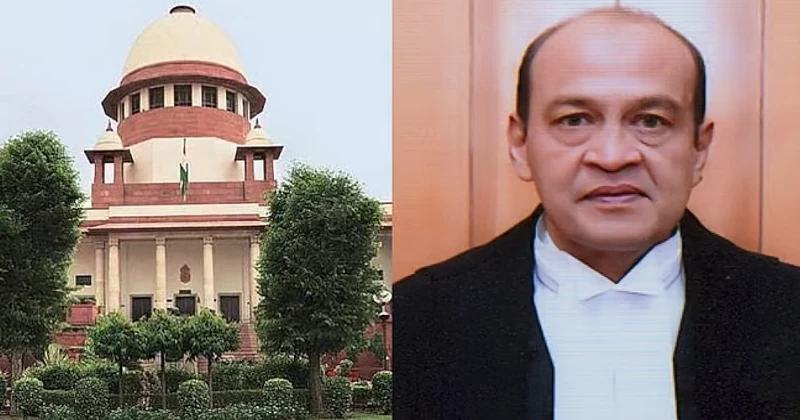
The Supreme Court of India has delivered a strong rebuke to Justice Yashwant Varma of the Delhi High Court by dismissing his petition challenging an in-house inquiry initiated against him. The apex court’s decision, which clears the way for potential impeachment proceedings, underscores the judiciary’s zero-tolerance stance on allegations of judicial misconduct—particularly when such charges involve abuse of power, ethical breaches, and possible corruption.
Justice Yashwant Varma, once considered a rising star within the Delhi High Court, has now become the subject of one of the most serious internal investigations faced by a sitting judge in recent years. The in-house probe, reportedly initiated after multiple complaints and internal red flags, found sufficient merit in allegations suggesting that Justice Varma misused his position for personal and extrajudicial gains.
The charges against Justice Varma involve:
- Improper bench formation and case allocation, favouring specific litigants or advocates.
- Interference in administrative matters beyond his purview, in violation of established High Court rules.
- Misuse of judicial powers in disposing of sensitive cases without proper reasoning or adherence to legal precedents.
- Persistent deviation from conduct expected of a High Court judge, leading to erosion of public confidence.
The inquiry committee reportedly reviewed witness statements, case records, and administrative files over several months before reaching its damning conclusion.
Sources within the judicial fraternity have hinted at charges ranging from deliberate judicial overreach in select high-stakes cases to questionable financial decisions and potential interference in the judicial process to benefit known associates. While the exact nature of the allegations remains under wraps due to the confidentiality of the in-house mechanism, the gravity was such that Chief Justice of India DY Chandrachud formally recommended Justice Varma’s removal a move that only comes after clear establishment of “serious misconduct.”
Justice Varma had filed a petition before the Supreme Court, challenging the legality, procedure, and findings of the in-house committee constituted to examine the complaints against him. He argued that the inquiry was arbitrary, lacked transparency, and violated the principles of natural justice. However, the bench headed by Justice Sanjiv Khanna categorically rejected these arguments, affirming that the in-house procedure while confidential is constitutionally valid, internally consistent, and essential to preserving public faith in the judiciary.
The Supreme Court said, “Judicial office comes with immense power, but also with the highest degree of accountability. When a judge is accused of undermining that trust, the institution must act with firmness, not fear.”
Chief Justice DY Chandrachud’s recommendation for Justice Varma’s removal is one of the rarest actions taken under the in-house mechanism since its inception. According to court insiders, the decision followed weeks of internal deliberations and legal review of the committee’s findings. Such a recommendation means the matter could now be forwarded to the President of India, potentially triggering the process for Justice Varma’s impeachment by Parliament under Article 124(4) of the Constitution.
While impeachment is a politically and procedurally complex process requiring a two-thirds majority in both Houses the recommendation alone marks an irreversible reputational collapse for Justice Varma.
The in-house procedure is a judicially evolved framework meant to deal with allegations against sitting judges of High Courts and the Supreme Court. Though it does not carry the force of a formal trial, it allows the CJI and a panel of senior judges to review serious complaints and, where necessary, recommend the judge’s removal. Importantly, it is one of the few internal checks on the judiciary’s functioning, especially since judges of higher courts enjoy constitutional protections against arbitrary removal.
This case comes at a time when questions about judicial propriety, especially in High Courts, have been making headlines—from conflicts of interest and family appointments to opaque decision-making in sensitive political or financial cases. The apex court’s decision to back the inquiry and allow the process to run its course sends a strong message to the judiciary and the public: institutional integrity matters more than individual reputation.
Several senior advocates have applauded the ruling. “The judgment reaffirms the court’s resolve to protect the dignity of the judiciary by acting swiftly when a judge’s conduct raises serious concerns,” said one former Supreme Court judge on condition of anonymity.
















Comments