





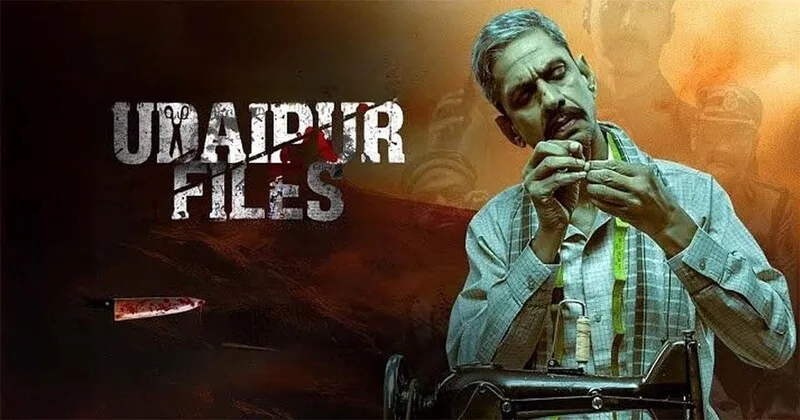
On August 6, the Ministry of Information and Broadcasting dismissed the revision petitions filed against Udaipur Files, a film based on the murder of Rajasthan-based tailor Kanhaiya Lal.
In its official order, the ministry stated that the Central Board of Film Certification (CBFC) had cleared the film after following due legal process and implementing 55 cuts. It also acknowledged that the producers had made further edits beyond those mandated by the CBFC. The ministry added that the petitioners opposing the film’s release did not provide sufficient grounds to warrant any further action.
“Therefore, in light of the above facts and findings, and in compliance with the directions issued by the Delhi High Court on August 1, 2025, the competent authority in the Ministry of Information and Broadcasting—acting as the Revisional Authority under Section 6 of the Cinematograph Act, 1952—finds no grounds to invoke powers under sub-section (2) of Section 6 of the Act. As such, the revision petitions and representations are dismissed,” stated Under Secretary Santosh Kumar Maurya in the official order.
The Delhi High Court had earlier directed the Union government to re-examine the film Udaipur Files after Additional Solicitor General Chetan Sharma informed the Court that the ministry would withdraw its previous order mandating cuts and issue a fresh decision in line with legal procedures.
The Court had also raised concerns over the centre’s authority to mandate such edits. With the film’s producers aiming for an August 8 release, the Court had instructed the ministry to make a final decision by August 7.
The Delhi High Court was hearing petitions opposing the release of the Udaipur Files. The petitioners included Jamiat Ulema-e-Hind President Maulana Arshad Madani and one of the accused in the Kanhaiya Lal murder case. They argued that the film portrays Muslims in a negative light and could prejudice the ongoing trial, thereby affecting the accused’s right to a fair trial.
Kanhaiya Lal, a tailor based in Udaipur, was killed by two attackers in June 2022 after he posted a WhatsApp status in support of BJP leader Nupur Sharma, who had made controversial remarks about Prophet Muhammad. The film was originally scheduled for release on July 11.
The High Court initially stayed the movie’s release and directed the Union government to exercise its revisional powers under Section 6 of the Cinematograph Act, 1952, to re-evaluate the film.
In response, the film’s producers approached the Supreme Court. However, the apex court declined to intervene, allowing the High Court’s order to stand. A committee constituted by the union government subsequently reviewed the film and recommended its release with specific modifications.
The government then instructed the filmmakers to implement those changes, which led to another round of legal challenges. The High Court questioned the centre’s authority to impose cuts while exercising its revisional powers and sent the matter back for reconsideration.
















Comments