





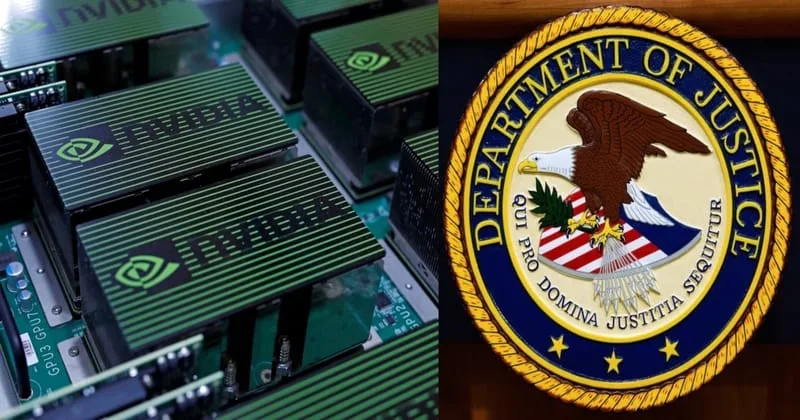
Two Chinese nationals have been arrested in the United States for illegally smuggling high-end artificial intelligence (AI) chips worth millions of dollars to China. The US Department of Justice (DOJ) announced the arrests on August 5, revealing that the individuals exported restricted technology without obtaining the necessary government licenses.
The suspects, identified as Chuan Geng and Shiwei Yang, operated a California-based company named ALX Solutions. Over the last three years, the firm allegedly shipped advanced GPUs, including Nvidia’s H100 and GeForce RTX 4090, from the US to China, in violation of strict export control regulations.
Nvidia AI Chips at the Centre of Smuggling Case
Some of the smuggled shipments involved Nvidia’s H100 graphics processing units (GPUs), considered among the most advanced chips used in artificial intelligence development. These GPUs are currently subject to strict US export restrictions aimed at preventing their transfer to China.
In response to the case, a spokesperson for Nvidia stated that any attempt to smuggle its chips is a “nonstarter.” The company emphasised that it only sells products to trusted partners who comply fully with export control regulations. Illegally exported or diverted products, the spokesperson added, are immediately cut off from all official service, support, and software updates.
Fake Customers and Suspicious Payments Uncovered in GPU Smuggling Case
According to the US Department of Justice (DOJ), ALX Solutions operated with just three known employees. Chuan Geng managed the company’s finances, Shiwei Yang served as secretary, and the identity of the CEO remains unknown. Geng was a legal permanent resident in California, while Yang had overstayed her visa and was classified as an “illegal alien.”
Between October 2022 and July 2025, ALX is accused of shipping high-end GPUs to companies in Singapore and Malaysia. However, investigators believe these countries were used as transit points to conceal that the final destination was China.
The DOJ also noted that ALX did not receive payments directly from the listed shipping companies. Instead, funds came from businesses based in Hong Kong and mainland China. In one instance, a China-based firm transferred $1 million to ALX in January 2024.
An invoice from 2023, valued at $28.4 million, claimed Nvidia chips were ordered by a Singapore-based company. But upon investigation, US officials found no evidence the shipment had been delivered, and discovered that the company did not exist at the listed address.
The DOJ also discovered that neither ALX Solutions nor its employees applied for or received an export license from the US Commerce Department. In December of last year, one shipment containing restricted chips—including Nvidia’s H100 and GeForce RTX 4090—was flagged by US customs for further inspection.
Yang was arrested on Saturday, and Mr. Geng surrendered to authorities shortly afterward. Both appeared in federal court in Los Angeles on August 4 (local time). If convicted, they could face up to 20 years in prison.
ALX Solutions does not currently appear to have an official website. However, another company called ALX-Cloud, which offers cloud computing services, claims to be a subsidiary of ALX Solutions.
Super Micro Computer, the chip manufacturer mentioned in the case, stated its commitment to complying with all US export laws. While the company declined to comment on the ongoing legal proceedings, it assured that it would cooperate with authorities if required.
Why the US Is Restricting AI Chip Exports to China
This case is part of a larger US government effort to prevent advanced technologies from reaching geopolitical rivals, particularly China and Russia.
In January 2025, the US implemented strict new regulations limiting the export of AI chips to most countries. These rules focus on high-performance chips from companies like Nvidia and AMD. The goal is to stop countries such as China from using AI technology for military purposes or mass surveillance.
Only close US allies that adhere to American security and human rights standards are permitted to purchase such technology. US Commerce Secretary Gina Raimondo explained that these measures are essential to protect national security, even if they come with certain trade-offs.
“Managing national security risks requires trade-offs,” Raimondo said in a White House blog post. “This rule ensures our allies can access cutting-edge technology while safeguarding our interests.”
Similarly, US National Security Advisor Jake Sullivan emphasised that these regulations aim to keep the future of AI technology within the hands of the US and its trusted partners. He noted that the US wants to avoid repeating the loss of dominance it experienced in chip and battery manufacturing.
The arrest of Geng and Yang underscores the US commitment to enforcing its chip export controls and signals that even small-scale violators will face serious consequences.














Comments