





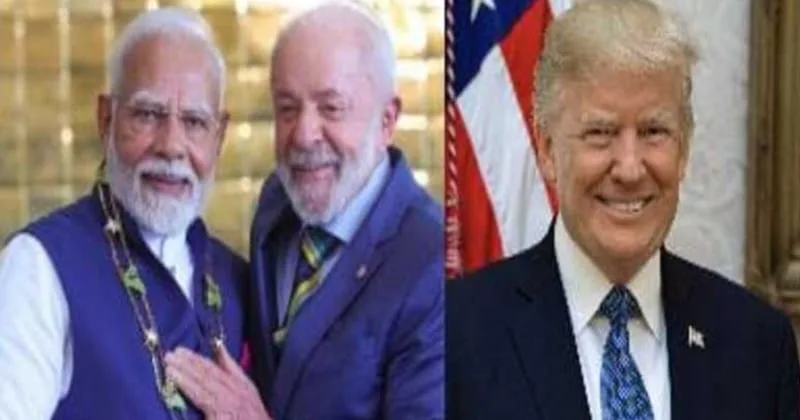
Brazilian President Luiz Inacio Lula da Silva has rejected US President Donald Trump’s offer to call him at any time to discuss the ongoing tariff dispute. Instead of engaging in direct talks with Trump, Lula stated that Brazil would pursue all available avenues, including the World Trade Organization (WTO), to defend its economic interests.
Trump accused the current Brazilian administration of “hunting” former President Jair Bolsonaro, who is on trial for allegedly conspiring to overturn the 2022 election results. He stated that the United States had imposed a 50 percent tariff on Brazilian imports in retaliation. The move has further strained relations between Washington and Brasilia.
Speaking at an event in Brasilia, Lula said that his government had already begun diversifying Brazil’s trade relations before the recent shift in the US administration. He emphasized that Brazil had proactively sought to expand commercial ties with other nations and foster new opportunities for domestic industries.
Lula said he would not call Trump to discuss tariffs because the US president “doesn’t want to talk.” However, he added that he would call Indian Prime Minister Narendra Modi. “I can’t call Putin because he can’t travel right now,” Lula remarked. “But I will call many other presidents.”
Amid rising tensions, the United States has accused the BRICS group which Brazil, Russia, India, and China are members, of attempting to undermine the US dollar’s dominance. In response, Trump has threatened to levy an additional 10 percent tariff on countries that support BRICS policies.
Despite the diplomatic chill, Lula said he would extend an invitation to President Trump to attend the COP30 UN climate change conference scheduled to be held in Belem, Para, this November. Lula noted that Brazil remains open to resolving the tariff dispute with the United States but insisted that any talks must take place on an equal footing and be grounded in mutual respect. Earlier, Trump had remarked that Lula was welcome to call him anytime to discuss tariffs or other matters concerning the two nations.
The evolving rift between Washington and Brasilia, triggered by Trump’s tariff retaliation and his criticism of Lula’s handling of Bolsonaro’s trial, marks a low point in US-Brazil relations. Yet, Lula’s refusal to engage with Trump on unequal terms, coupled with his outreach to leaders like Prime Minister Narendra Modi, reflects a shifting diplomatic landscape. As India and Brazil deepen their ties, symbolised by Modi’s historic state visit on 8 July this year, and as Lula reaffirms his commitment to South-South cooperation, it is evident that emerging powers are charting their own course, grounded in mutual respect, multilateralism, and a shared vision for a more balanced global order.










Comments