





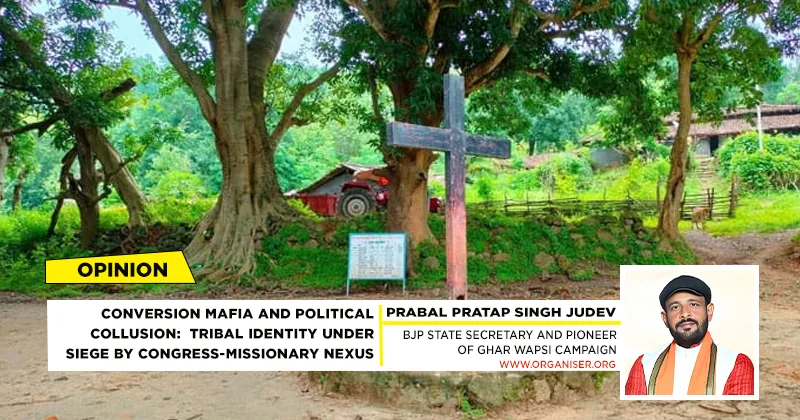
India’s tribal soul, deeply rooted in ancient customs, worship, and native identity, faces an escalating threat. A disturbing pattern of forced religious conversion, human trafficking, and political silence is emerging across tribal regions, particularly in Chhattisgarh. The recent incident involving two Kerala-based nuns allegedly trafficking tribal girls from Narayanpur to Durg has once again exposed the sinister web of missionary activism backed by political patronage.
The two nuns were apprehended at Durg Railway Station in possession of tribal girls, triggering public outcry and legal scrutiny. Locals raised several questions:
- Why were the nuns from Kerala operating in tribal-dominated Durg?
- Who funded the nearly 1000 km AC train journey?
- Why were the girls not listed in local village migration records?
Initial inquiries suggest a wider conspiracy involving human trafficking under the garb of religious service. Despite local protests, Congress leaders, including MPs and MLAs, reportedly rushed to Durg and demanded the release of the nuns — prompting outrage from civil society and tribal rights activists.
A Pattern of Political Silence and Protection
Why does the Congress leadership consistently side with missionary organisations, critics ask? Why has the party opposed scrutiny of missionary-linked institutions and remained silent on increasing conversion cases?
Historical patterns indicate deeper ties. Under UPA regimes, missionary organisations allegedly enjoyed unprecedented freedom and protection. Congress leader Sonia Gandhi’s perceived proximity to Christian bodies only reinforces these suspicions. The party’s MPs have even defended conversion practices in Parliament.
Alarming Official Warnings Ignored
In 2021, even under Congress rule, the Bastar Commissioner and Sukma SP issued official alerts on rising social unrest caused by aggressive conversion campaigns. Letters to district collectors called for monitoring missionary activities that were disrupting tribal harmony. Yet no concrete action followed, and Congress leaders dismissed these concerns.
This, according to many, highlights a dangerous hypocrisy — while the administration acknowledges the problem, political leadership undermines its resolution.
Conversion and Trafficking: The Twin Crisis
Multiple victims have come forward, recounting how they were lured with promises of education or healthcare but ended up being trafficked to cities. Their religion was changed without consent; some were even placed in unknown locations for labour. These revelations were officially recorded only after sustained pressure from Hindu organisations.
Reports from across Chhattisgarh paint a grim picture
Raipur: 6+ conversion-related disturbances in the last 3 months.
Bilaspur: 3 FIRs filed.
Jashpur, Sarguja, Gariaband: Mass protests erupted against missionary activities.
Still, Congress has remained unmoved — allegedly due to its dependence on minority vote banks that include missionary-backed networks.
A Legacy of Resistance and ‘Ghar Wapsi’
The late Dilip Singh Judeo, a champion of tribal identity and faith, foresaw the danger and launched the “Ghar Wapsi” movement — encouraging tribals to return to their ancestral Sanatan Dharma. He often said, “This is not mere religious conversion — it is eventual national subversion.”
His son continues the fight today through mass awareness campaigns and faith restoration drives. “This battle isn’t against a religion,” he asserts. “It’s against organised radicalism disguised as charity, and against a political agenda that seeks to erase tribal roots.”
















Comments