





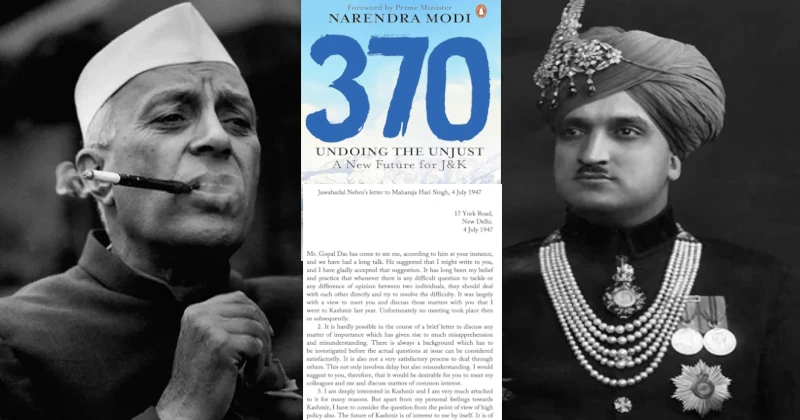
A hitherto unpublished letter written by Pandit Jawaharlal Nehru to Maharaja Hari Singh on 4 July 1947 has now been brought into the public domain through the newly released book 370: Undoing the Unjust – A New Future for J&K. Published by BlueKraft Digital Foundation to mark the 6th anniversary of the abrogation of Article 370, this pathbreaking volume delivers what many historians have failed to: irrefutable documentary evidence that India’s first Prime Minister himself rebuffed early efforts by the Maharaja to merge Kashmir with India well before Independence.
Our latest release, 370: Undoing the Unjust – A New Future for Jammu & Kashmir – is now available in bookstores across India.
The #370Book offers a deep dive into the strategic vision and administrative execution behind one of India’s most consequential policy decisions in… pic.twitter.com/8xamBbRKQL
— BlueKraft Digital Foundation (@BlueKraft) August 5, 2025
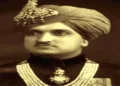
The document, part of a chapter that showcases rare, never-before-published records, is a typed letter from Nehru dated 4 July 1947 and addressed to the Dogra monarch, Maharaja Hari Singh. It references an intermediary, one Gopal Das, who had come to Nehru on behalf of the Maharaja to explore possible terms of accession. But far from being welcoming, Nehru categorically declined any progress on the matter, urging instead for a direct political engagement between the Maharaja and Congress leaders without any commitment or promise of accession.
One of the many historical documents that the #370Book puts in public domain for the first time.
Order on Amazon: https://t.co/eH9C5oOCvM
Nehru's letter to Maharaja Hari Singh on 4th July 1947 where in Nehru explicitly declined Hari Singh's plea to merge with India.
Till now… pic.twitter.com/QqPYN3i3kD
— Akhilesh Mishra (@amishra77) August 5, 2025
This single piece of correspondence, as the book highlights, demolishes the long-held claim that, Nehruvian apologists, and even official textbooks that Hari Singh was indecisive or hesitant about acceding to India. On the contrary, the evidence now clearly points to Pandit Nehru being the one to stall or sideline the matter.
For decades, the mainstream historiography both in Indian academia and international discourse—has projected Maharaja Hari Singh as a dithering ruler caught between India and Pakistan, allegedly seeking to maintain the princely state’s independence for selfish reasons. However, Nehru’s own words in this explosive letter now suggest that it was New Delhi’s top leadership that delayed engagement, not the Dogra monarch.
“Mr. Gopal Das has come to see me, according to him at your instance… I am deeply interested in Kashmir… But apart from my personal feelings… I have to consider the question from the point of view of high policy…”
— Nehru to Hari Singh, 4 July 1947
Notably, Nehru makes no offer, promise, or plan to integrate Kashmir, nor does he acknowledge the urgency of the Maharaja’s outreach an omission that, in hindsight, may have cost India dearly, leading to the eventual Pakistani tribal invasion in October 1947 and the resultant accession under duress.
This letter also undercuts a second pillar of the prevailing narrative that there was no direct communication between Nehru and Hari Singh before Independence. That claim, often used to whitewash Nehru’s strategic blunders in Kashmir, now stands exposed as historically inaccurate. The July 4 letter confirms that not only was there communication, but Nehru also chose not to act decisively when invited to do so.
The refusal to accept Kashmir’s accession before August 15, 1947, arguably left the state in a geopolitical vacuum, paving the way for Pakistan’s orchestrated invasion just two months later. The delay also opened the door for internationalisation of the Kashmir issue, as Nehru later took the matter to the United Nations another move widely criticised by strategic experts.
This newly surfaced letter now makes it clear: Kashmir’s suffering and the decades-long insurgency may have stemmed not from Hari Singh’s hesitancy, but Nehru’s political calculations.
370: Undoing the Unjust the first book of its kind offers more than just historical correction. It chronicles the bold and strategic dismantling of Article 370 by the Narendra Modi government in 2019, through first-hand accounts of key decision-makers like Union Home Minister Amit Shah, National Security Advisor Ajit Doval, External Affairs Minister Dr. S. Jaishankar, and Prime Minister Narendra Modi himself.










Comments