





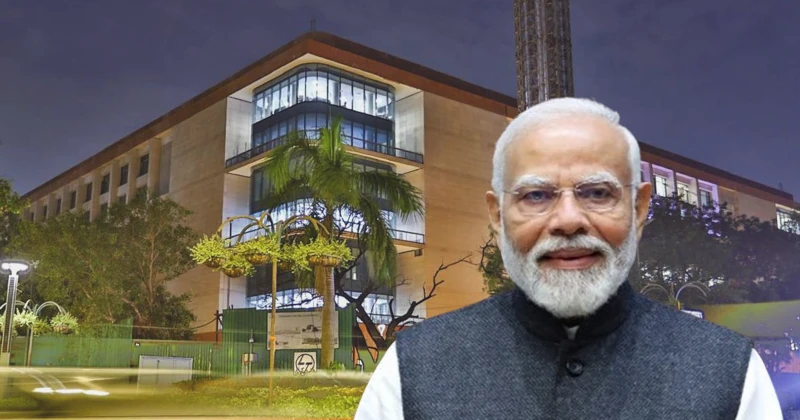
Prime Minister Narendra Modi will inaugurate Kartavya Bhavan – 03 at Kartavya Path in the national capital on August 6 at 12:15 PM. Later in the evening, he will address a public programme on Kartavya Path at 6:30 PM.
The inauguration of Kartavya Bhavan marks a pivotal moment in the Centre’s ambitious Central Vista Redevelopment Project, a cornerstone of the Prime Minister’s vision for modern, efficient, and citizen-centric governance. Designed to catalyse a new era of streamlined administration, Kartavya Bhavan is the first building in the Common Central Secretariat complex aimed at transforming the bureaucratic landscape of Delhi.
For decades, crucial Ministries have been operating from ageing buildings such as Shastri Bhawan, Krishi Bhawan, Nirman Bhawan, and Udyog Bhawan, constructed during the 1950s to 1970s. These structures are not only structurally outdated but also inefficient in terms of energy use, workspace design, and inter-ministerial coordination.
Kartavya Bhavan, 03, spread over 1.5 lakh square metres, with two basements and seven levels (G+6), is a major architectural and administrative upgrade. It will house key Ministries including:
- Home Affairs
- External Affairs
- Rural Development
- Micro, Small & Medium Enterprises (MSME)
- Petroleum & Natural Gas
- Department of Personnel and Training (DoPT)
- Office of the Principal Scientific Adviser (PSA)
The co-location of these Ministries under one roof will foster inter-ministerial collaboration, speed up policy execution, and promote administrative agility. With IT-ready, secure workspaces, ID-based access controls, centralised electronic surveillance, and a command-and-control centre, Kartavya Bhavan epitomises the digital backbone of future governance.
Kartavya Bhavan doesn’t just stand for efficiency; it sets a new benchmark for sustainability and green architecture in government infrastructure. The building is designed to achieve a GRIHA-4 rating, featuring:
- Double-glazed façades for insulation
- Rooftop solar panels generating over 5.34 lakh units annually
- Solar water heating systems meeting 25 per cent of daily needs
- Rainwater harvesting
- Zero-discharge waste management
- On-site solid waste processing
- Electric vehicle (EV) charging stations
- Energy-efficient HVAC systems
- LED lights with motion sensors
- Smart lifts and power management systems
The campus also employs recycled construction material, including demolition waste for masonry and dry partitions to reduce topsoil use and structural load. The energy-efficient design ensures the building consumes 30 per cent less energy. Special noise-reducing glass windows, sensor-based lighting, and solar-powered systems make the infrastructure not only cost-effective but also environmentally responsible.
Wastewater from the complex is treated and reused, addressing a major chunk of the water requirements. This zero-discharge approach aligns with the government’s larger “Swachh Bharat” and “Green India” missions.















Comments