





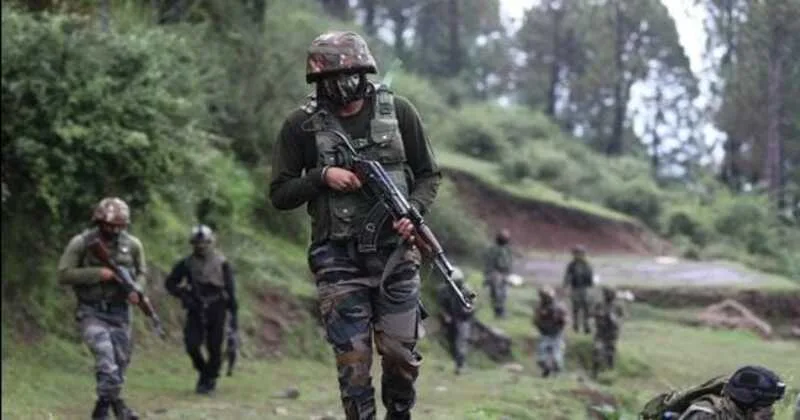
India has seen many forms of extremism, from religious terrorism to cross-border sponsored extremism and left-wing extremism, but among all these, the extremism that has been eroding the country’s roots for the longest time has been left-wing extremism, which we all know as ‘Red Terror’ or ‘Maoism’. In the last three decades, this problem has become a serious challenge in many states of the country. But the joint efforts of the centre and the states, multi-dimensional strategies and the policy of taking development forward at the same pace along with security have brought an end to this maoism to a decisive turn.
Chhattisgarh Chief Minister Vishnudev Sai met Union Home Minister Amit Shah recently in Delhi, where he discussed various topics, including the strategy to deal with the Maoist challenge. According to him, 445 Maoists, including top Maoist leaders, have been neutralised in 33 major encounters since December 2023.
1554 maoists have been arrested, and 1588 maoists have surrendered. Under the integrated development and security policy of the state government, the goal has been set to completely eliminate maoist influence. In this direction, road, education and health services are being expanded. These efforts have not only reduced maoist influence but have also increased the trust in the administration among the local communities.
In fact, this story is not limited to Chhattisgarh only. In other maoist-affected states of the country like Jharkhand, Odisha, Andhra Pradesh, Telangana, Bihar and Maharashtra, the policies of surrender, rehabilitation, and development have limited insurgency to a great extent. While setting the goal of ending maoism by 2026, Union Home Minister Amit Shah has maintained a balance between political will and action plan in this fight. It can be said that this strategy has been successful because it has reached the root of the problem through development instead of fighting with weapons only. Although in the Seventh Schedule of the Constitution of the country, ‘police’ and ‘public order’ have been considered the subject of the states, but in view of the complex problem like left-wing extremism, the union government has played a role in comprehensive cooperation from time to time. In the year 2015, as a decisive initiative in this direction, the National Policy and Action Plan was approved, in which four pillars of security, development, protection of rights and rehabilitation were kept at the center. After which, serious work started on all these points. As a result, ‘Naxalism’, which had once spread to about 126 districts of the country, was limited to only 18 districts. Indeed, today the Modi government at the centre has modernised the security system, empowering the states with resources like Central Armed Police Force (CAPF) battalions, intelligence inputs, modern weapons and training.
Under special schemes, Rs 3357 crore was given to the states under the Security Related Expenditure Scheme. Under the Special Infrastructure Scheme, 71 fortified police stations were constructed, which were set up directly in encounter-prone areas. This not only protects the police forces but also instils confidence in the citizens. The union government acknowledged that the biggest reason for left-wing extremism has been social and economic neglect. That is why, today, the Modi government is giving special emphasis on areas like roads, telephones, education, health, and financial inclusion in maoist-affected areas. Under two major schemes, Road Requirement Plan and Road Connectivity Project for Left Wing Extremism (LWE) Affected Areas (RCPLWEA), 17,589 km of road construction was approved, out of which 14,902 km has been constructed so far. To improve telecom connectivity, 10,644 mobile towers were planned, of which 8640 are now functional. At the state level, in a state like Jharkhand, where communication was once completely disrupted, 1589 towers are now functional.
Similarly, to save the youth from violent activities, the government has taken steps towards making them skilled by setting up ITI and skill development centres. So far, 46 ITIs and 49 skill development centres are operational. 258 Eklavya model residential schools were approved in tribal areas so that tribal children can get quality education. Out of these, 179 schools have already started. Here, it is also noted that no matter what the governance system is, the real foundation of development is laid when citizens get financial rights. The centre and the states have their own surrender cum rehabilitation policies to include left-wing extremists in the mainstream. Rs 5 lakh is immediately given to the surrendered extremists, and Rs 2.5 lakh to other left-wing extremist cadres. Apart from this, there is also a provision to provide training in the trade/business of their interest with a monthly stipend of Rs 10,000 for three years.
Overall, many options have been given, like financial assistance up to self-reliance, incentives on surrender of arms, a monthly stipend, and training in a vocation. States have also been encouraged to adopt better surrender-cum-rehabilitation policies. The intention behind this is that the youth who have taken up arms can return to the mainstream and live a life of dignity. Today, due to the firm implementation of these policies, left-wing violence has continuously decreased, and the expansion of leftism has been limited. The result of the efforts of the union and state governments is also visible in the fact that since 2016. The internal network of maoists, whether it is the supply of weapons, the urban maoist network or ideological propaganda, has started collapsing today. Due to accurate intelligence operations by security agencies, top maoists like big leaders Ganapati, Madhavi, Sunanda, Naveen have been eliminated. At the same time, the campaigns launched against the ‘urban network’ have also continued to expose the supporters hidden in the intellectual and legal perimeter.
Today, when we are half a year away from 2025, it is clear that left-wing extremism is no longer India’s major security challenge. The successful experiments that have been done in states like Jharkhand, Chhattisgarh and Odisha now need to be implemented as a model across the country. It would not be an exaggeration to say that after the year 2014, the most important role in curbing left-wing extremism has been played by political will. Where earlier the strategies related to it were victims of hesitation, contradiction and limited effect, now action has been taken with integrated thinking and direction across the country. It was not easy to create harmony between the Home Ministry, State Police, Paramilitary Forces and local administration, but this has been made possible by the efforts of Home Minister Amit Shah. That is why today, maoist violence has reduced by more than 85 per cent as compared to earlier.
So, in this context, it must be said that Naxalism has been the longest and toughest test of India’s democracy. In this struggle, we have lost thousands of policemen, CRPF jawans, politicians, villagers and teachers. But in 2025, we are seeing that India has gained a decisive lead in its fight against maoism. Now it has to be ensured that the remote villages of the country, which have been deprived of development and trust for years, get an equal place in the mainstream with education, employment, health and respect and whatever is necessary to do for this, we all should be successful in doing it at a rapid pace.















Comments