





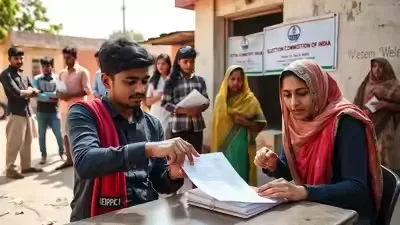
In a notable development ahead of the crucial Bihar Assembly elections later this year, the Election Commission of India (ECI) on Sunday clarified that none of the recognised political parties, including the Indian National Congress, Rashtriya Janata Dal (RJD), and Bharatiya Janata Party (BJP) have lodged any formal complaints regarding the draft electoral roll under the ongoing Special Intensive Revision (SIR) process.
The data was disclosed through an ECI bulletin covering a three-day span from August 1 to August 3 (3 PM), during which 941 claims and objections were submitted. Crucially, all of these were filed by individual electors, with zero complaints from any political party, despite their widespread deployment of Booth Level Agents (BLAs) across the state.
According to the figures released by the ECI: BJP has deployed the highest number of BLAs at 53,338, RJD has 47,506 BLAs, Congress has stationed 17,549 BLAs in the field. Yet, despite the presence of nearly 1.2 lakh political agents, not a single formal claim or objection has been filed on behalf of any political party.
BIHAR SIR 2025: DAILY BULLETIN
🗓️1st Aug (3 PM) till 3rd Aug (3 PM)
Read in detail: https://t.co/Qitu7DZBVd pic.twitter.com/s8LHbIWihJ
— Election Commission of India (@ECISVEEP) August 3, 2025
What is the SIR Electoral Roll Process?
The Special Intensive Revision (SIR) is a comprehensive electoral roll cleanup being carried out in Bihar in advance of the Assembly elections, expected in October–November 2025. The exercise involves a ground-up enumeration approach, with Booth Level Officers (BLOs) conducting house-to-house verification to ensure that: No eligible citizen is left out, and No ineligible or illegal entry remains in the rolls.
This exceptional revision process is typically undertaken when the Commission suspects widespread discrepancies or following significant events like constituency delimitation. The current SIR marks one of the largest electoral cleanup drives in India.
Timeline of SIR and draft roll activities
July 1: Enumeration began with BLOs visiting each household
July 25: Final date for new voter registration via Form 6
August 1: Draft voter list published
August 1 to August 30: Claims and objections window open
September 30: Final voter list to be published after verification
Illegal voters under scrutiny
The SIR exercise has revealed a serious issue: a number of foreign nationals from Nepal, Bangladesh, and Myanmar were found possessing Indian documents such as Aadhaar cards, ration cards, and domicile certificates, allowing them to illegally feature in earlier electoral rolls. The ECI has announced a focused investigation throughout August to identify and remove such entries.
Despite allegations from the I.N.D.I. Alliance, which labelled the SIR as a “vote ban” targeting its core support base, the Supreme Court has allowed the Commission to proceed with the revision exercise.
Massive deployment on the ground
The magnitude of the operation is unprecedented: Over 1 lakh BLOs, 4 lakh volunteers and 1.5 lakh booth agents.
They are currently stationed across all 38 districts of Bihar, making this one of the most intensive voter list revisions in the country’s electoral history.
While political narratives continue to swirl around the SIR and its implications, the hard data from the Election Commission so far tells a different story: no political party has submitted formal objections to the draft electoral list. As the deadline for claims and objections nears, all eyes will remain on whether that stance changes, or whether the SIR becomes a model for electoral transparency and thoroughness.









Comments