





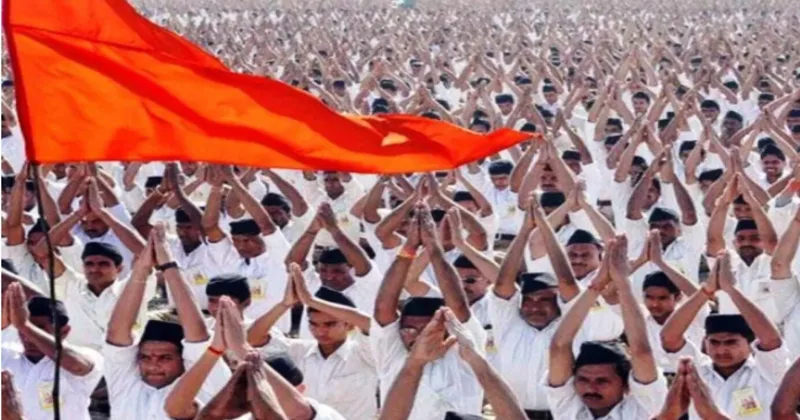
The Rashtriya Swayamsevak Sangh’s Panch Parivartan outlines five essential principles for individuals, societies, businesses, corporations, and governments to work towards restoring Bharat’s greatness in all facets of humanity and national and global well-being. There are five points: 1. Swa bodh 2. Environment 3. Social Harmony 4. Civilian Etiquette 5. Family enlightenment. This article discusses the necessity of environmental protection.
Bharat has a rich history and practice of living in peace with nature. Our nation’s value system has a strong respect for nature. Historically, protecting nature and wildlife was a fundamental article of Sanatan Dharm, expressed in people’s daily lives and supported by Vedic literature, folklore, Dharmic beliefs, art, and culture. Over 2000 years ago, the Bharatiya ethos conceived some of the essential ideas of ecology, such as the interrelationships and interconnectedness of all life, and represented them in an ancient canonical treatise, the Ishavasyopanishad. It states: “The Supreme Power created this cosmos for the welfare of all of its creations. As a result, each individual living form must learn to reap the benefits of being a member of the system in a close relationship with other species. “No species may infringe on the rights of others.” This is a key principle of sustainable development. We can reach similar levels of progress, wealth, and welfare without resorting to irresponsible consumption. In this approach, Bharat maintains a “samanvay” (Coordination) between its rich traditional past and modernity while minimising harmful environmental impacts.
Why is environmental preservation necessary today?
Bharat, one of the world’s fastest-growing economies, is at a crossroads. On the one hand, there is an urgent need for economic growth, as millions of people rely on development to improve their level of living. On the other hand, there is a pressing need to address environmental issues like pollution, climate change, and resource depletion. Environmental issues in India are escalating at an alarming pace. The environmental issues are profound and extensive, ranging from suffocating urban air pollution to widespread water contamination and increased soil erosion.
These challenges not only imperil millions of Bharatiyas health and livelihoods, but they also impede long-term development and economic growth. They exacerbate income and social inequality, causing people to relocate from rural areas to cities at a rapid pace. This exacerbates challenges in cities that lack the necessary infrastructure to accommodate growth. Bharat has very high greenhouse gas emissions and is vulnerable to natural calamities and extreme weather events. Its population and economic growth both contributed to environmental degradation. The various governments, society at large, and citizens should take more decisive action to address environmental challenges.
Soil Health Under Threat
According to parliamentary committee studies, there is a soil health issue caused by overuse of chemical fertilisers. Excessive nitrogen, phosphorus, and potassium (NPK) fertilisers are harming India’s soil. The recommended ratio for NPK use is 4:2:1, but actual usage has shifted to 31:4.8:0.1. Excessive use of plastic in everyday life is also causing major damage to soil and human health.
Health Implications
Poor soil health has an impact on agricultural productivity and food quality. Chemical runoff from soils pollutes water sources, threatening aquatic wildlife. Soil deterioration jeopardises agricultural sustainability and food security.
In agriculture, technology is helping to enhance water efficiency and lessen the environmental impact of farming techniques. Drip irrigation, precision farming, and climate-resilient crop types can help farmers adapt to shifting weather patterns and make better use of their resources. Furthermore, advances in organic farming and sustainable pest control are helping to mitigate the environmental damage caused by chemical fertilisers and pesticides.
Disturbing Water Management Index
The Comprehensive Water Management Index published by NITI Aayog offers a gloomy picture of water management practices. It emphasises the essential need for appropriate water conservation and management measures.
Water Scarcity Challenges
Groundwater depletion and contamination jeopardise water security. Inadequate infrastructure and wasteful water use worsen the situation. Climate change exacerbates droughts and limits freshwater supply.
Need for Holistic Water Policies
Integrated water resource management is essential for sustainable water use. The importance of rainwater harvesting and groundwater recharging cannot be underestimated. Public awareness initiatives can encourage water conservation practices.
Public Push for Change
Public demand and awareness can move the political debate toward environmental issues. The electorate’s influence is critical in driving environmental policy change.
What exactly is meant by “sustainable development?”
Sustainable development is a growth paradigm that satisfies today’s requirements without jeopardising future generations’ ability to meet their own. It is built around three main pillars: economic development, social inclusion, and environmental protection. For a country like Bharat, with a large population and a rapidly developing economy, attaining sustainable development necessitates balancing the need for industrialisation and infrastructural development with the responsibility to protect the environment and promote social fairness.
Central Government Efforts to Address India’s Environmental Crisis
Prime Minister’s Global Message
The ‘One Earth, One Family, One Future’ slogan emphasises collective responsibility. Such global commitments necessitate domestic policy alignment.
National Clean Air Programme (NCAP)
Started to improve the air quality in the 102 most polluted cities in India. Within the next five years, the goal is to cut particulate matter (PM) levels by 20–30%.
Swachh Bharat Mission (SBM)
• Improves environmental hygiene by reducing open defecation and promoting cleanliness. Concentrates on solid waste management, sanitation, and water treatment.
National Mission for Sustainable Agriculture (NMSA)
• Encourages sustainable agriculture techniques that decrease the usage of chemical fertilisers and pesticides. Promotes sustainable use of natural resources and organic farming practices.
National Action Plan on Climate Change (NAPCC)
Develops plans of action and strategies to combat climate change via a coordinated national strategy. Focuses on areas such as energy efficiency, water, sustainable habitat, and solar energy.
Clean Ganga Mission (Namami Gange)
By lowering pollution and preserving biodiversity, it seeks to revitalise the Ganges River and its tributaries. Focuses on public involvement, riverfront development, and sewage treatment plants.
Bharat must decide on a growth path that prioritises improving living conditions while reducing environmental degradation. India can take advantage of this potential with innovations in at least two areas: energy and conservation.
While the government plays an important role in encouraging sustainable development, citizen and business participation are also essential. Individuals can help to promote sustainability by living a greener lifestyle, such as reducing trash, reducing the use of plastic, conserving water, and utilising energy-efficient items. The rising popularity of sustainable fashion, eco-friendly products, and plant-based diets demonstrates a movement in consumer tastes toward environmentally conscious options.
Bharat’s transition to sustainable development is a complicated but vital process. It takes collaboration among the government, corporations, and citizens to establish a balance between economic expansion and environmental conservation. By using technology, implementing green practices, and making mindful decisions, Bharat may create a wealthy and sustainable future for future generations.
















Comments