





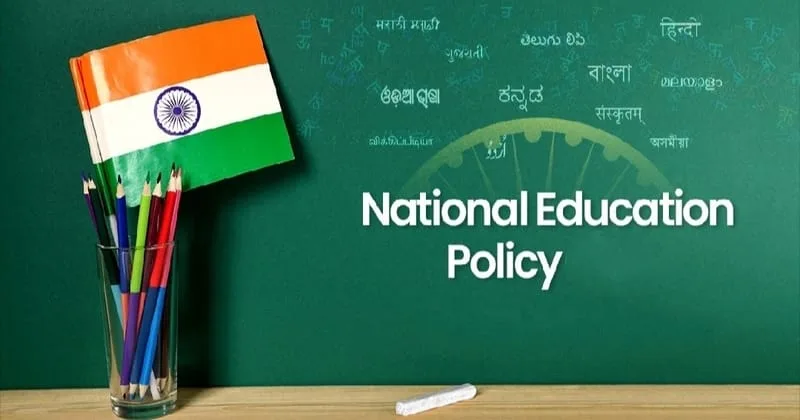
In the backdrop of recent protests against the three-language formula under the National Education Policy (NEP, 2020) in states like Tamil Nadu and Maharashtra, the debate over Hindi’s place in Bharat’s federal framework has resurfaced. Responding to these protests, senior Union ministers offered clarifications that regional languages are not to be discarded under NEP, 2020, and that national unity must not be undermined by linguistic polarisation. Union Home Minister Amit Shah aptly stated: “Hindi has no competition with any other Indian language. Hindi is a friend of all Indian languages. All Indian languages strengthen from Hindi and Hindi strengthens from all Indian languages.”
Given this context, this article examines whether the promotion of Hindi is unconstitutional, anti-federal, and/or anti-secular, keeping in mind the constitutional duty of the Union under Article 351 of the Constitution to promote Hindi. It explores how Hindi serves as a civilisational lifeline of Hinduism and a unifying cultural thread of Bharat, while rebutting the narrative that its encouragement threatens linguistic diversity or regional autonomy.
Language has always been a carrier of culture, consciousness, and Dharmic continuity. It is not just a mode of communication; it is the thread that binds people with their past, their culture, and their Dharma. In Bharat, where civilisation is as much a spiritual as it is a social expression, language—especially Hindi and Sanskrit—has served as the bridge between generations, scriptures, and identities. Yet today, this very bridge is being systematically broken, often under the guise of secularism, federalism or regional autonomy. What is being ignored in this linguistic onslaught is not merely a medium of expression, but the living artery of Hindu civilisation.
The protest against Hindi is not a new one, but it has once again intensified in recent times. Under the three-language formula made under the National Education Policy 2020, some states like Maharashtra, Tamil Nadu and Karnataka have raised strong objections to Hindi, claiming it is being imposed at the cost of regional languages and state autonomy.
Understanding the Constitutional Duty: Article 351 and beyond
The Indian Constitution, a beacon of unity in diversity, meticulously addresses the nation’s linguistic plurality. Part XVII, encompassing Articles 343 to 351, delineates the framework for languages. Within this, Article 351 stands out as a special directive duty upon the Union to promote the spread and development of Hindi so that it becomes a medium of expression for Bharat’s composite culture.
“It shall be the duty of the Union to promote the spread of the Hindi language, to develop it so that it may serve as a medium of expression for all the elements of the composite culture of India…” – Article 351.
Article 351 envisions a Hindi that grows not by erasing regional languages, but by assimilating their strengths, drawing primarily from Sanskrit, and secondarily from the languages listed in the Eighth Schedule. It reflects the constitutional ideal of fostering linguistic harmony while promoting a common medium of communication rooted in Indian culture. This is not a symbolic provision. It is a vision for unity – a vision that recognises the power of language to act as a cultural glue in a deeply diverse society. Hindi, enriched through Sanskrit and other Indian languages, was envisioned as the living, evolving expression of Bharat’s soul.
However, this constitutional mandate is increasingly being mocked by political opportunism and linguistic parochialism, facing severe challenges, not from foreign forces, but from within. Hindi has been the subject of neglect, political manipulation, and even contempt in many parts of Bharat, especially the southern region. There, the states invoke regional identity politics to resist a constitutional duty that lies solely with the Union, not the states.
What happens when states obstruct a constitutional duty?
Article 351 clearly casts the duty to promote Hindi on the Union, not on the States. It is a central obligation – a directive meant to foster cultural integration and linguistic unity across the diverse fabric of Bharat. However, in the backdrop of recent protests against Hindi, a pertinent constitutional question arises: What happens if a State hinders or obstructs the Union’s ability to fulfil this duty?
This dilemma is not theoretical – it is playing out in real time. Under the three-language formula, the Centre is discharging its Article 351 duty by encouraging the spread of Hindi in education. But states like Maharashtra and Tamil Nadu, citing regional identity and linguistic pride, have opposed it. In Maharashtra, political pressure and vocal opposition led the ruling government to withdraw its decision to make Hindi compulsory at the primary school level from Class 1 to 5.
This confrontation exposes a serious constitutional vacuum – nowhere in the Constitution is there any explicit remedy or enforcement mechanism in case the Union is obstructed in carrying out this special directive. Nor has any precedence on what recourse the Union has when a State actively thwarts its constitutionally mandated responsibility under Article 351.
As a result, the directive becomes toothless, reduced to symbolic value rather than practical enforcement. This undermines not only the role of Hindi as a unifying civilisational medium but also dilutes the very intent and authority of the Constitution in fostering linguistic integration. Without an effective remedy, this constitutional obligation of the Union cannot be fulfilled.
A duty without right?
In Jurisprudence, it is often said that every duty comes with a corresponding right. But here, we face an anomaly – the Union has a duty under Article 351 to promote Hindi, but who holds the corresponding right to demand its enforcement? Is it the citizens, the linguistic majority, or the cultural inheritors of Dharmic civilisation?
This ambiguity has made it easier for regional politicians, backed by Anglicised elites, to systematically undermine the efforts to promote Hindi, knowing well that there’s no clear remedy against such obstruction. The result? A continuing dilution of our civilisational connect. Unlike justiciable fundamental rights (where citizens have rights and State has a duty to protect these rights), Article 351 is a directive. But its neglect has serious, tangible consequences – a generation that is Hindu by birth but alien by intellect. A society that reveres the Gita but cannot read it without Western filters.
English hegemony and the elite disconnect
While some states block Hindi in the name of regional pride, India’s English-educated class actively undermines it out of a deep-seated colonial hangover. English is not just a language in Bharat today—it is a symbol of privilege, power, and prestige. Sadly, this status comes at the cost of civilisational rootedness.
Many argue that English is the language of opportunity and globalisation. Fair enough. But can English be the language of spirituality, of rootedness, of collective civilisational memory? More importantly, can a nation where only 10 per cent of the population is fluent in English really use it as a common medium of communication – absolutely NO.
The continuous disregard for Hindi has resulted in a large number of individuals, especially urban Hindus, who neither speak, read, nor understand Hindi, let alone Sanskrit. And worse, instead of feeling a sense of loss or shame, they wear this ignorance as a badge of superiority and proud of their command over English while sneering at Hindi.
This linguistic alienation leads to a deeper cultural and civilisational rupture. Due to this language gap, such Hindus are unable to read Dharmic texts, whether originally in Sanskrit or translated into Hindi. As a result, their access and understanding to Hindu Dharma is mediated through English translations – many of which are intentionally distorted, limited in scope, or steeped in Western frameworks.
Consequences of Ignoring Hindi: Losing access to dharma
For a practising Hindu, the inability to understand Hindi or Sanskrit is not just a linguistic alienation—it is a spiritual disconnection. Vast portions of Hindu literature—Vedas, Puranas, Upanishads, Bhakti poetry, saint literatures—are available in Sanskrit or Hindi. But when Hindus fail to understand Hindi or Sanskrit, their access and understanding to these literatures are mediated through English translations, which are often riddled with Western biases, colonial vocabulary, and civilisational misinterpretations.
Examples of conceptual distortions
Some key examples which illustrate how Hindu texts undergo conceptual distortion when translated from Hindi or Sanskrit to English are-
– Dharma becomes “religion”—but Dharma is not merely religion; it is cosmic order, social duty, spiritual law, way of life and many more.
– Sampradaya becomes “denomination”—reducing spiritual lineages into corporate-like categories.
– Moksha becomes “salvation”,—misrepresenting a liberation of consciousness as a reward-based afterlife.
When Hindus read these translations without the semantic depth of Hindi or Sanskrit, they knowingly or unknowingly begin to see Hinduism through Abrahamic or Western lenses, weakening their understanding and commitment to their own traditions and leaving them spiritually alienated from their own heritage.
From constitutional duty to civilisational necessity
If Article 351 had been implemented strictly, a vast population of Bharat would have been fluent in Hindi, with access to civilisational literature in its original form or Sanskrit-rooted translation. The linguistic ecosystem envisioned in the Constitution—a Sanskrit-enriched Hindi that also draws from regional languages—would have preserved both national unity and regional identities.
Instead, we see the opposite. Hostility to Hindi has become a proxy for hostility to Hinduism. Those who oppose Hindi in public education or government work rarely stop at language—they often oppose temple traditions, Sanskrit learning, Vedic rituals, and Dharmic education as well. The attack is not linguistic—it is civilisational. We must reject the idea that promoting Hindi is communal, or that supporting Sanskrit is regressive. Such narratives are rooted in self-alienation and post-colonial inferiority. It is high time Hindus and all Indians stop apologising for their own linguistic and cultural identity.
If Hindus do not understand their own scriptures, if they continue to rely on distorted translations and colonial categories, then the civilisational disconnect will become irreversible.
Misplaced fear of regional erosion and federal fallacy
It is crucial to remember that India is not a federation of independent states like USA. It is a Union of States, with centralising tendency. Our Constitution leans more towards a strong Centre. This structure reflects a deep recognition that Bharat’s unity depends on shared civilisational values, not just political agreements.
Promoting a common language like Hindi is not anti-federal, nor is it an attack on regional languages (Articles 29, 30, 350A, and 350B of the Constitution provide sufficient safeguards to regional and minority languages). Rather, it is a step towards national integration – an attempt to build linguistic unity throughout India.
If every state overemphasises its own regional language and sideline Hindi, which is meant to function as a link language, we risk fragmenting the nation into isolated linguistic silos – furthering fragmentation instead of integration. Hindi’s promotion under Article 351 is not an imposition but a constitutional bridge – a thread that weaves the plural into the singular. So, the Union promoting Hindi is not a violation of federalism—it is consistent with the centralising vision of our ancestors and Constitution makers to make Hindi a language of our civilisational culture.
The NEP, 2020 and renewed resistance
The National Education Policy, 2020, proposes the Three Language Formula—with the idea that every child should learn two Indian languages and one international language, typically English. For most states, this would mean Hindi + regional language + English. This formula is an earnest effort to balance regional pride with national coherence. But opportunist political parties cry foul, framing Hindi promotion as a form of “Bhagwa”/saffron imposition in secular India. This is not true. In fact, what Article 351 proposes, and what the NEP, 2020 tries to implement, is a harmonious national vision – where diversity is not denied, but is channeled into unity.
However, some states like Maharashtra, Tamil Nadu, and others are refusing to implement this formula where Hindi is included. They continue to push either an English-regional model or, worse, purely English instruction. The result? A growing generation of Hindus who know neither Sanskrit nor Hindi—thus cut off from their scriptures, their saints, their stories and learnings.
Teaching in Sanskrit or Hindi not anti-secular
In the landmark case of Aruna Roy and others v. Union of India, the Supreme Court dismissed the argument that teaching Sanskrit in schools violates secularism. Instead, the Court upheld Sanskrit’s cultural and civilisational significance in Bharat, asserting that secularism does not mean alienation from indigenous heritage. It emphasised the role of Sanskrit in preserving India’s culture and value. Also noted that Sanskrit is the mother of most Indian languages – a language of profound wisdom. Similarly, in Santosh Kumar and others v. Secretary, Ministry of Human Resource and Development, the Apex Court emphasised Sanskrit’s role in preserving and promoting Indian heritage and culture.
If Sanskrit, root of most Bharatiya languages, then Hindi is its living branch—spoken, understood, and used across Bharat. If Sanskrit is judicially recognised for its value to national identity and not considered to be communal or against the principle of secularism, then how can its direct descendant, Hindi (which is infused with a Sanskritic soul), be any less important or against secularism? Shouldn’t the same logic apply to Hindi when we debate NEP, 2020 or the promotion of Hindi in general? In Aruna Roy, the Court expressly said that secularism doesn’t mean detaching from one’s cultural or civilisational roots. Promoting Sanskrit was held constitutional and necessary. The same constitutional morality must apply to Hindi. Both judgments support the view that promoting indigenous languages—especially those that serve as bridges to Dharmic understanding—are not a threat to secularism, but an affirmation of civilisational identity.
Diversity without Unity: A civilisational risk
Currently, we are focusing more on units (regional languages) and ignoring the whole body (national integration). Article 351 envisions a lingua franca that embodies the spirit of Bharat while respecting regional diversity. It directs the Union to promote Hindi in a way that draws from and assimilates vocabulary from regional languages, creating an organic linguistic unity in diversity. Yet we have reversed this logic—emphasising diversity without unity. Without Hindi, we are fragmenting Bharat linguistically, and in the long run, possibly even politically.
A common language is the spine of national consciousness. It is the only way diverse regions can feel emotionally connected to a larger identity. Killing Hindi is like severing that spine.
Even non-religious Indians need Hindi
Even those who claim to be secular, atheist, or culturally neutral cannot ignore the practical necessity of Hindi. In a country as vast and diverse as Bharat, inter-state mobility for employment, healthcare, education, disaster relief, or commerce requires a common communicative platform. Hindi—spoken or understood in various degrees across the country—naturally fills this role.
If not Hindi, then what?
English is elitist and inaccessible. Regional languages are powerful but mutually unintelligible. Hindi, with its adaptability, emotional weight, and cultural centrality, is the only viable common language. So, even from a non-religious, non-Hindu, purely civic perspective, rejecting Hindi is irrational and self-damaging.
Reclaiming Hindi to reclaim hinduism
It is time we reframe the debate. Promoting Hindi is not just about nation-building. It is also about dharma-preservation.
Without Hindi:
– The Bhagavad Gita is read in colonial English.
– The Ramayana and Mahabharata become televised drama, not daily inspiration.
– Bhakti poets like Tulsidas, Kabir, Surdas, Meera become historical footnotes instead of living guides.
– Children and youth grow up with foreign moral systems, unaware of the ethical, spiritual depth of their own.
The Centre must reclaim its constitutional duty under Article 351—not as a top-down imposition but as a bottom-up civilisational necessity. And Hindus must recognise – to ignore Hindi is to voluntarily accept a gradual erasure of their Dharma.
Unmasking the agenda behind Anti-Hindi sentiment
The protests against Hindi are not as innocent or organic as they may appear. Increasingly, they are being driven by ideological forces that harbour open contempt for Hindu Dharma and civilisational unity. A growing section of the so-called secular intelligentsia, backed by political interests and ideological activists, has weaponised language as a tool to attack Hinduism. They know that Hindi—more than any other modern Indian language—carries the cultural memory and living vocabulary of Hindu dharma. By opposing Hindi, they attempt to sever the umbilical cord between young Hindus and their ancestral wisdom, all while pretending to champion linguistic freedom.
The resistance to Hindi is increasingly driven by those with open disdain for Hindu civilisation—those who label Sanskrit as “Brahmanical,” who mock mantras as superstition, and who brand temples as regressive. They understand that Hindi is a bridge – from Sanskrit to the masses – from the Vedas to the villages. And so, they attack it to undermine the transmission of Dharma itself.
In doing so, they are not only alienating Hindus from their rich heritage, but also threatening national cohesion. By opposing Hindi, they are not just targeting a language—they are cutting the arteries of civilisational continuity. They aim to de-root Hindus from their literature, bhakti traditions, and scriptures. This is not language politics. This is cultural sabotage. Article 351 directs the Union to promote Hindi—not out of linguistic chauvinism, but because no nation can survive without a unifying cultural thread.
Final Reflection: Hindi as the civilisational lifeline of Hinduism and Bharat
To reduce Hindi to a mere language dispute is to misunderstand the deeper currents shaping Bharat’s future. This debate is not about federalism versus centralisation, north versus south, or religion versus secularism. It is about whether Bharat will retain its inner coherence—its cultural memory, civilisational selfhood, and unifying thread.
Hindi, enriched by Sanskrit and nourished by regional tongues, is not a threat to diversity—it is the key to holding that diversity together. In denying it space in education, governance, and public life, we are not just rejecting a language—we are silencing the most accessible voice of our heritage.
The denial of Hindi, often under the pretext of modernity, secularism or federalism, is slowly cutting the civilisational roots of Hindu society – alienating young Indians from their scriptures, traditions, and philosophical frameworks. It also cripples national integration by denying Indians a shared platform of communication, especially for those who live outside the English-speaking elite bubble.
If Bharat is to move forward as a strong, self-aware, and united nation, Hindi must be restored not only as a language of governance and education but also as a cultural lifeline. Without it, we risk becoming a house with many rooms but no foundation. It is time we recognise what is at stake. The debate over Hindi is not about whether children should learn Hindi, Tamil, Marathi or other regional language. This is a battle for Bharat’s civilisational soul.
To kill Hindi is to cut Hinduism from its people. To reject Hindi is to unplug Bharat from its past and blur its future. Let us not kill Hindi in the name of diversity. Let us not cut Hinduism in the name of secularism. Let us choose unity—and Hindi as the living string that ties together the soul of Bharat







![A Representative image [ANI Photo]](https://organiser.org/wp-content/uploads/2025/12/representative-image-e1765612818961-120x70.webp)






Comments