





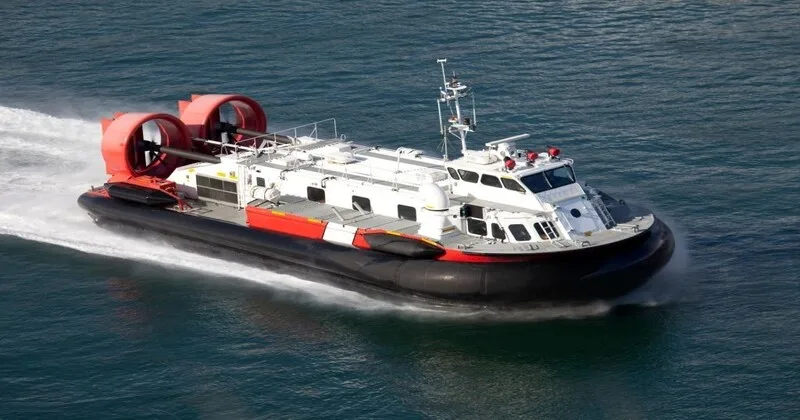
A significant chapter is added to India maritime security history, as the Indian Coast Guard (ICG) laid the foundation for its indigenous Air Cushion Vehicle (ACV) in the course of construction at the Chowgule & Company Pvt. Ltd. shipyard in Goa on July 30, 2025. The Girder Laying and commencement of erection ceremony is an historic milestone in the quest of India for self-reliance and advanced coastal defence solidifying the “Aatmanirbhar Bharat” spirit.
This hovercraft is based on successful Griffon hovercraft work blueprints. Through the adaptation of the design to suit the varied needs of India’s coastal scenario which is unique in the world, this hovercraft promises to transform patrolling, search and rescue operations, as well as interdiction missions.
The milestone comes after the contract was approved by the Ministry of Defence on October 24, 2024, for the manufacture of six indigenous ACVs (Air Cushion Vehicle), which will prove India’s commitment to reinforcing its blue-water ambitions through indigenous growth. Coast Guard Deputy Director General (Materiel & Maintenance) and ICG Inspector General Sudhir Sahni honoured presence on the occasion and highlighted the importance of the project in strengthening India’s blue world
Why Hovercraft? A Tactical Necessity for India
India has got distinctive geography, where more than 7,500 kilometres of coastline, 1,382 islands and extensive array of estuaries and deltas exists, which arises security challenge with great complexity. Patrol boats are typically at a disadvantage in shallow waters, marshy wetlands and mangrove-lined coastlines. Like the Sunderbans, Gulf of Khambhat and Andaman & Nicobar Islands are the places where hovercrafts or Air Cushion Vehicles will fill the operational gap of patrolling and search ops.
In contrast to standard boats, hovercraft move by running on a pocket of air allowing them to travel effortlessly over water, mudflats, sandbanks and even the land. This provides them with a unique edge in high-speed interdiction, swift response rescues and traversing terrain that is inaccessible to normal marine craft. Their shallow-water operation also makes them suitable for fast deployment during natural disasters and the prevention of illegal smuggling, infiltration and poaching.
The use of hovercrafts by India began in the 1980s, when the Indian Coast Guard commissioned British made Griffon-class hovercrafts. They were used for coastal surveillance, especially for the Gulf of Kutch and Sunderbans area. However, ICG saw their tough maintenance, imported spares and design compatibility issues with Indian geography.
The indigenous hovercraft generation is designed to address these constraints by leveraging local design upgrades. Indian know how and eco-friendly hovercraft can be made with present supply chains. The choice of choosing the design on Griffon Hovercrafts is that it is internationally recognized platforms. It’s operational effectiveness with localizing repair and upgrades guarantees the prolonged operability.
Operational Versatility and Indigenous Edge
The recently commissioned ACVs will be equipped with cutting-edge navigation, communication and surveillance systems. They will be designed for year-round use, possessing greater sea-worthiness, better fuel economy and sturdy design to sustain the harsh maritime climate of the Indian subcontinent. Hovercraft will play a critical role in:
· Securing the Sunderban delta and other such coastal habitats vulnerable to illegal crossings.
· Boosting maritime awareness in India’s Exclusive Economic Zone (EEZ).
· Intercepting speedboats carrying threats like drug traffickers and illegal fishing trawlers.
· Delivering rapid humanitarian relief in coastal disasters.
· In addition to their military utility, the ACVs will have civilian uses during disaster relief and medical evacuation from remote areas.
Revitalising Defence Production
Goa’s Chowgule & Company Pvt. Ltd., with a history of decades in shipbuilding, has taken this project in national interests. Partnering with international design collaborators and indigenous technical expertise, represents the integration of Make in India with international quality standards. Goa’s facility has already constructed ships for the Navy, Coast Guard and merchant marine, making it an obvious choice for this challenging project.
“This project is an example of the synergy between defence services and private industry. It is a big step in our pursuit of self-sufficiency at sea,” Inspector General Sahni stated at the ceremony.
Aatmanirbhar Bharat: The Spirit of Self-Reliance in Action
This project reflects Prime Minister Narendra Modi call for Aatmanirbhar Bharat, especially in the defence sector. The indigenization of such platforms indicates not only technological maturity but also a strategic shift from buyer to builder.
India’s indigenous defence production has surged to an all-time high of Rs 1.46 lakh crore, with exports increasing to a Rs 24,000 crore in 2024-25, Defence Minister Rajnath Singh said recently that “Our defence production, which was only Rs 43,000 crore 10 to 11 years ago, has now crossed a record figure of Rs 1,46, crore, with the private sector’s contribution at over Rs 32,000 crore. Our defence exports, which were around Rs 600-700crore 10 years ago, have surpassed a record figure of Rs 24,000 crore today,”.
Amid the tension between India, Pakistan and Bangladesh, the maritime threat at Arabian sea and Bay of Bengal raises high alert due to infiltration and illegal activities. The aatmanirbhar Bharat need this type declaration to show its ability to design, develop and deploy mission-critical assets on its own terms. It sets the stage for future domestic initiatives including modular ACV variants for the Army and Navy or bigger hovercraft for logistics and civilian applications.
Global Implications: From Coastal Patrol to Strategic Stand
India’s growing emphasis on hovercraft is unique. Other countries like the UK, Russia, South Korea and China have long been invested in hovercrafts as a coastal warfare strategy. In view of growing maritime threats to India, the country’s strategic posture in the Indian Ocean Region (IOR) is now fortified through such tactical means. The native ACVs will enable India to project influence across vulnerable areas with IOR countries and counter grey-zone challenges from non-state actors and other issues. The induction of hovercraft will also support the sharing of real time data and information with larger Indian naval platforms such as OPVs, corvettes and maritime surveillance aircraft.
In future when these ACVs traverse the coastal waters of India, they will not only deter the threats, but also reflect the pride of Indian engineering, the vision of its defence planners and the steadfast determination of a nation intent on securing its maritime future.














Comments