






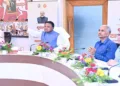
Nearly a month after the tragic stampede at Puri’s Saradhabali during the annual Rath Yatra, Odisha’s Development Commissioner, Smt. Anu Garg, submitted the official inquiry report to Chief Minister Shri Mohan Charan Majhi. The incident, which occurred in the early hours of June 29, resulted in three fatalities and left over 50 devotees injured.
The investigation, which lasted more than a month, involved recording statements from 67 individuals, including eyewitnesses and officials present during the incident. The goal was to determine the cause of the stampede and to recommend measures to prevent similar occurrences in the future.
However, the findings and conclusions of the report have not yet been made public. There is significant public interest in the results, particularly among the families of the deceased and civil society groups advocating for accountability and improved crowd management at religious events.
Officials have indicated that appropriate actions will be taken after a thorough review of the probe report. It may be noted that the stampede occurred around 4:20 a.m. near the Gundicha Temple, approximately 3 kilometers from the Shree Jagannath Temple, as thousands of devotees gathered near the parked chariots of Lord Jagannath, Balabhadra, and Subhadra for a ceremonial event. Among the victims were Basanti Sahu (36) from Bolagarh, and Premakant Mohanty (80) and Pravati Das (42) from Balipatna.
In response to the tragedy, the state government ordered a high-level investigation to identify the causes, pinpoint any lapses, and recommend reforms for better crowd management and emergency preparedness at religious events. The Development Commissioner’s inquiry included testimonies from 67 individuals, which encompassed eyewitnesses, administrative officials, police personnel, servitors, and relatives of the victims.
In addition to verbal accounts, the investigation team analyzed CCTV footage, mobile video clips, and photographs taken during the incident. They also consulted key stakeholders such as the district administration, local police, temple servitors, and civil society members.
Despite the comprehensive fact-finding process, the report’s contents and conclusions remain undisclosed. Officials have stated that the government will conduct a detailed examination before deciding on any actions. Public interest persists, especially among grieving families demanding transparency, accountability, and enhanced safety protocols for future religious gatherings.
An official involved in the investigation confirmed that the report includes recommendations aimed at preventing similar tragedies, likely addressing crowd control mechanisms, real-time monitoring systems, coordination between temple authorities and law enforcement, and the deployment of medical emergency teams during peak pilgrimage periods.
In the immediate aftermath of the tragedy, Chief Minister Majhi announced an ex gratia payment of ₹25 lakh each to the families of the deceased. Additionally, swift administrative actions were taken: Puri’s district collector and superintendent of police were removed from their positions, and two police officers were suspended for dereliction of duty.
As the state awaits the public release of the report, expectations are high for corrective measures that will safeguard the lakhs of devotees who participate in the centuries-old Rath Yatra, one of the most revered religious festivals in India.












Comments