





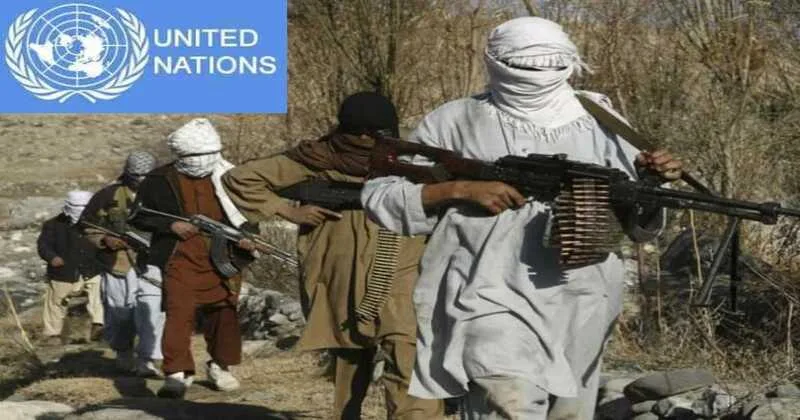
The latest report by the UN Security Council’s Analytical Support and Sanctions Monitoring Team has raised alarm over a rapidly expanding network of jihadist groups operating across South and Central Asia. Highlighting coordinated activities and shared infrastructure between ISIL-K (Islamic State Khorasan Province), Tehrik-i-Taliban Pakistan (TTP), Balochistan Liberation Army (BLA), and Al-Qaeda, the report points to a dangerous convergence of ideologies, resources, and training across porous borders.
The activities of ISIL-K (Islamic State – Khorasan Province), which continues to pose a major threat both regionally across South and Central Asia and globally, the report says. With a reported strength of approximately 2,000 fighters, ISIL-K remains active in Afghanistan and has expanded recruitment efforts across Central Asia and the Russian North Caucasus.
The group has established madrassas in northern Afghanistan near the Pakistan border, where children as young as 14 are being indoctrinated and trained as suicide bombers. Efforts by ISIL-K to set up operational networks in countries neighbouring Afghanistan have also been reported. The presence of several Al-Qaeda-linked training camps within Afghanistan, three of which were newly identified, was highlighted. These facilities, although relatively basic, are shared by Al-Qaeda and Tehrik-i-Taliban Pakistan fighters.
TTP, which maintains an estimated cadre of 6,000 fighters, continues to benefit from considerable logistical and operational support from the de facto Afghan authorities. Some member states informed the UN team that TTP maintains tactical-level ties with ISIL-K. The group has conducted a number of high-profile attacks across the region, often resulting in significant casualties.
In January 2025, according to one member state’s report, TTP provided training in Baluchistan. The report further revealed collaborative ties between the TTP and the Balochistan Liberation Army (BLA), particularly the BLA’s Majeed Brigade. Four shared training camps, such as those located in Walikot and Shorabak, were cited, with ideological and weapons training reportedly facilitated by Al-Qaeda operatives.
The complexity and lethality of recent BLA attacks were also noted. A particularly example was the March 11 hijacking of the Jaffar Express in a remote mountainous area, where improvised explosive devices and other weapons were used. The attack resulted in the deaths of 31 individuals, including 21 hostages, and was cited in the report as an example of the increasing operational capabilities of the BLA.
The report also expressed concerns over the growing ambition of Al-Qaeda in the Indian Subcontinent (AQIS), whose confidence and operational reach were reportedly on the rise.
Together, the revelations paint a deeply concerning picture of the evolving terror ecosystem in South Asia, with extensive linkages among groups like LeT, TRF, ISIL-K, TTP, AQIS, and BLA. The Pahalgam terror attack stands as a chilling reminder of the continued threat posed by well-networked, state-supported terror groups operating with transnational agendas.
These revelations of deepening collaboration between jihadist outfits across the region further underline the threats faced by neighbouring nations. The report also linked The Resistance Front to the April 22 Pahalgam terror attack, which killed 26 civilians in Jammu and Kashmir, noting TRF’s initial claim and subsequent retraction. Member states cited in the report asserted that such an attack would not have been possible without the support of Pakistan-based Lashkar-e-Taiba, reinforcing concerns over TRF’s operational ties to banned terror organisations and the continued role of state-sponsored jihad networks.















Comments