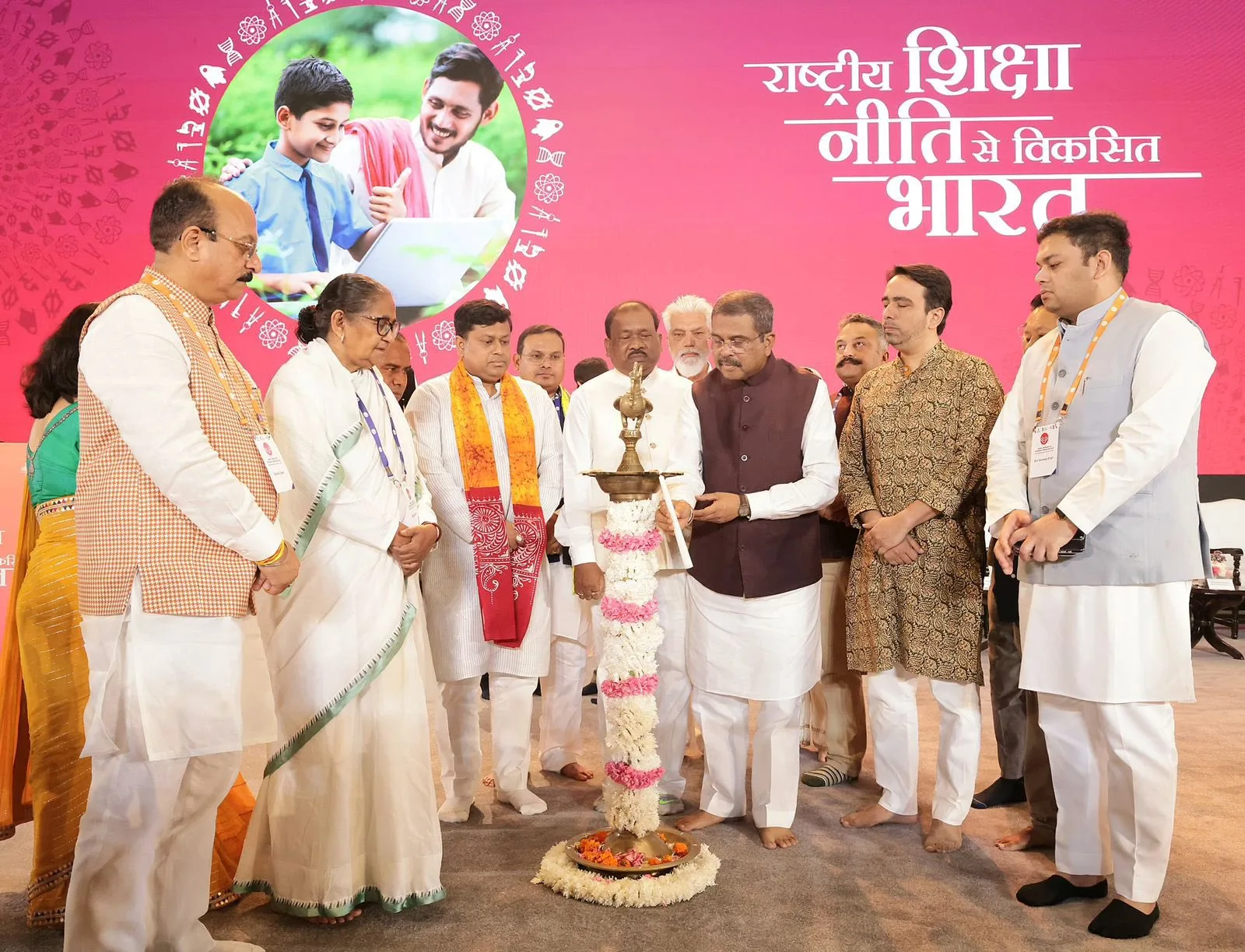
On July 29, 2025, the Bharat Mandapam in New Delhi transformed into a vibrant epicentre of India’s educational future as Union Education Minister Dharmendra Pradhan inaugurated the Akhil Bharatiya Shiksha Samagam (ABSS) 2025. Marking the fifth anniversary of the landmark National Education Policy (NEP) 2020, the event brought together an impressive gathering of policymakers, educators, students, and international academic leaders. The atmosphere brimmed with optimism, driven by a shared mission to elevate India’s education system to global prominence.
In his keynote address, Pradhan emphasised that NEP 2020 is not merely a bureaucratic policy document but a national mission deeply rooted in the Indian ethos. “NEP 2020 is designed to make our classrooms inclusive, creative, and future-ready,” he declared, underscoring the policy’s vision of guiding India towards Viksit Bharat @2047, a developed and empowered nation by the centenary of independence.
Rs 4,000 crore push for infrastructure and access
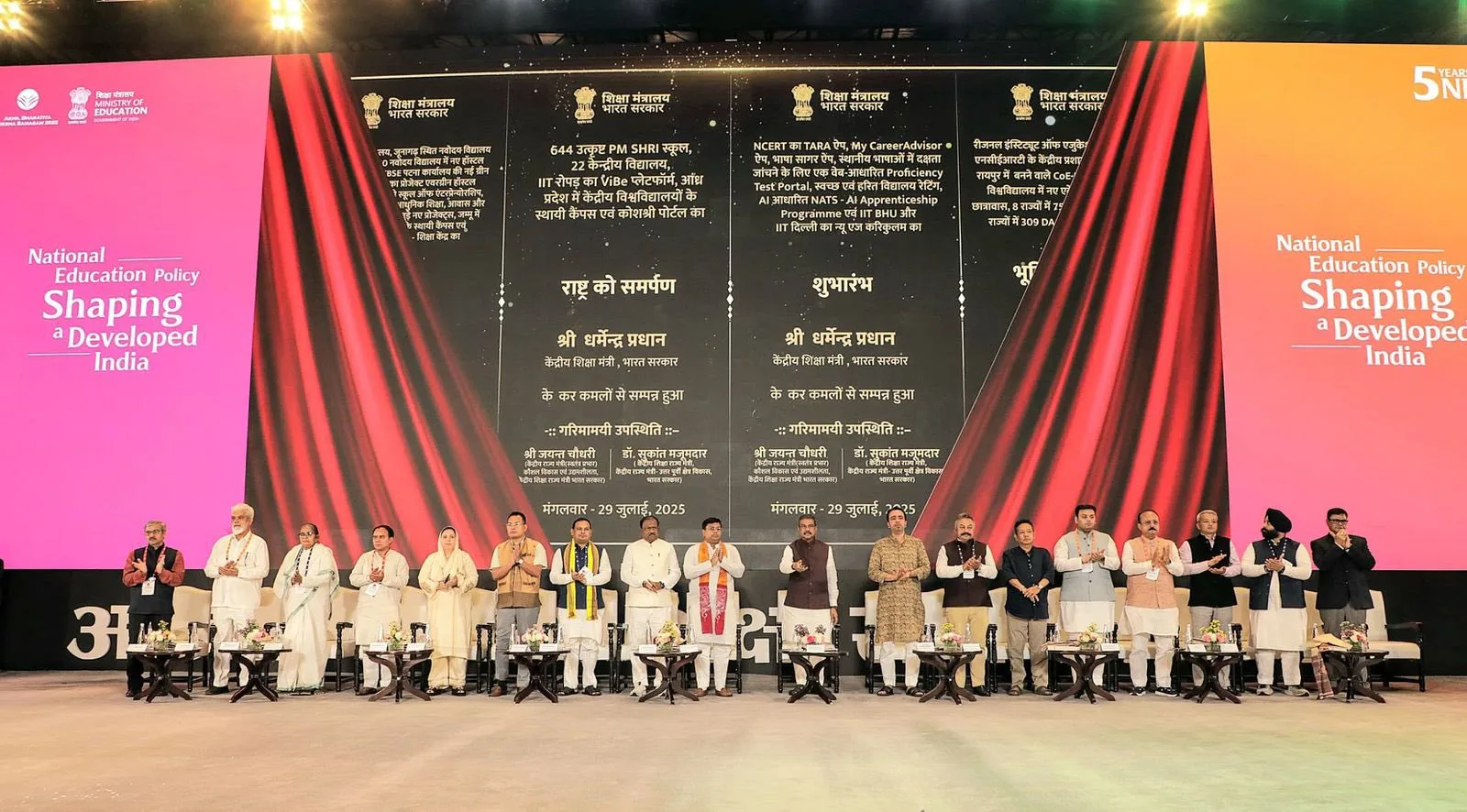
Central to ABSS 2025 was the unveiling of over Rs 4,000 crore worth of educational initiatives and infrastructure projects, signalling the government’s strong commitment to enhancing access, equity, and quality education across the country.
आज भारत मंडपम, दिल्ली में राष्ट्रीय शिक्षा नीति 2020 की 5वीं वर्षगांठ के उपलक्ष्य में श्री @jayantrld जी, @DrSukantaBJP जी और राज्यों के शिक्षा मंत्रियों के साथ अखिल भारतीय शिक्षा समागम, 2025 का शुभारंभ किया।
राष्ट्रीय शिक्षा नीति 2020 के सफल क्रियान्वयन के पांच वर्ष पूर्ण होने… pic.twitter.com/OmsSsoXtJC
— Dharmendra Pradhan (@dpradhanbjp) July 29, 2025
These investments include:
1. Establishment and upgradation of Kendriya Vidyalayas (KVs) and Navodaya Vidyalayas (NVs): Aimed at expanding quality schooling in urban, rural, and tribal areas.
2. Construction of hostels for tribal students under the Pradhan Mantri Janjatiya Adivasi Nyaya Maha Abhiyan (PM-JANMAN), facilitating greater inclusion of marginalised communities.
3. Modernisation of premier institutions like the Indian Institutes of Technology (IITs), National Institutes of Technology (NITs), and central universities with advanced facilities.
Pradhan remarked, “We are building schools not just as buildings but as temples of learning, where dreams are nurtured and futures are forged.”
His words highlight the vision of education as a transformative and equitable force, particularly for children from rural and tribal backgrounds, who have historically faced infrastructural disadvantages.
Digital Leap: Launch of tech-driven educational tools
A key highlight of the Samagam was the government’s push towards digitally-enabled education, which was showcased through the launch of several innovative platforms and tools designed to make learning more interactive, personalised, and accessible.
1. TARA App: Developed to improve early-grade reading fluency by engaging young learners with interactive exercises, animations, and games.
2. My Career Advisor: A student-centric, AI-powered platform providing personalised career guidance based on aptitude, interests, and emerging job market trends.
युवाओं को मौलिक विचार की तरफ़ ले जाने का रास्ता भारतीय भाषा और ज्ञान परंपरा है। #5YearsOfNEP2020 pic.twitter.com/OIPcyBaN1E
— Dharmendra Pradhan (@dpradhanbjp) July 29, 2025
3. ViBe: An AI-powered learning assistant that offers customised educational content catering to individual student needs.
4. Multilingual National Testing Portal: Designed to democratize assessments, this portal enables students across India’s linguistically diverse landscape to be tested fairly in their mother tongues.
5. Green and Hygienic School Rating System: An initiative promoting sustainable, eco-friendly, and healthy school environments.
Pradhan highlighted, “These tools are not just technological advancements; they are bridges to a future where every student can learn in their language, at their pace, and in their space.” This seamless integration of technology with inclusivity is a defining feature of NEP 2020’s educational reform.
Global Collaborations: Foreign universities come to India
Perhaps the most groundbreaking announcement was the receipt of Letters of Intent from prominent international universities, signalling a new era of academic globalisation and collaboration.
These prestigious universities are:
- Western Sydney University (Australia)
- Victoria University (Australia)
- La Trobe University (Australia)
- University of Bristol (United Kingdom)
These foreign institutions will establish campuses in India offering globally recognised programs in high-demand disciplines such as artificial intelligence, sustainability, data science, and entrepreneurship. Pradhan rhetorically asked, “Why should our students go abroad for quality education when the world can come to India?”
हमे भारत को global study destination बनाना है। आज लगभग 15 leading foreign university भारत में अपना कैंपस खोल रहे हैं।
मैं विश्व के सभी शीर्ष universities को भारत आने का न्योता देता हूँ। #5YearsOfNEP2020 pic.twitter.com/hDs2No976w
— Dharmendra Pradhan (@dpradhanbjp) July 29, 2025
This landmark development promises to make world-class education accessible on Indian soil, potentially curbing the outflow of talent and nurturing cross-cultural academic exchange. It also aligns with NEP’s goal of internationalising higher education while retaining India’s cultural and academic strengths.
Foundational Learning: Real impact of NIPUN Bharat
Since its launch in 2021, the NIPUN Bharat Mission has focused on foundational literacy and numeracy (FLN) for children up to Grade 3, a crucial building block for lifelong learning.
According to the Annual Status of Education Report (ASER) 2024:
- 23.4 percent of Class III students can now read Grade II-level text, a significant increase from 16.3 percent in 2022.
- 27.6 percent of these students can perform basic subtraction, up from 20.2 percent.
Innovative programs such as Vidya Pravesh (early childhood education), Balvatikas (pre-primary schooling), and the Jadui Pitara toolkit (play-based learning resources) have made classrooms more joyful and interactive.
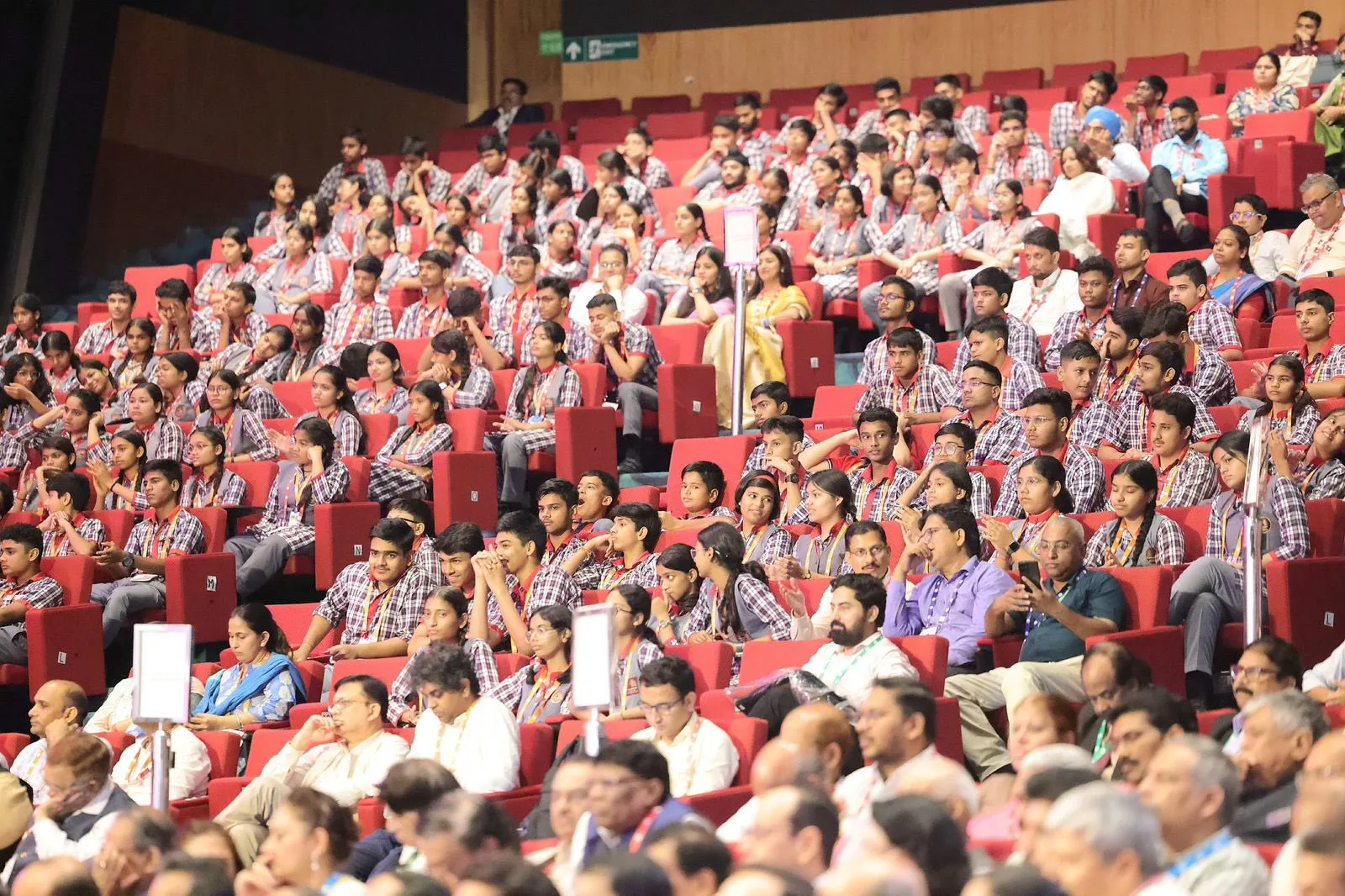
Pradhan noted, “We are not just teaching children to read and write; we are igniting their curiosity and creativity,” emphasising the mission’s transformative impact on early education.
मातृभाषा में शिक्षा को आगे बढ़ाने की दिशा में हम प्रयास कर रहे हैं। #5YearsOfNEP2020 pic.twitter.com/vz3z5wmkvq
— Dharmendra Pradhan (@dpradhanbjp) July 29, 2025
Curricular Reforms: From rote to rooted learning
NEP 2020’s 5+3+3+4 curricular structure has replaced the traditional 10+2 system, heralding a shift towards holistic and competency-based education. Key reforms include:
- Emphasis on multidisciplinary learning and competency-based assessment.
- Integration of Indian knowledge systems, cultural heritage, and ethics.
- Introduction of new textbooks such as Mridang, Sarangi, and Joyful Mathematics that reflect India’s linguistic and cultural diversity.
- Incorporation of vocational education starting from Grade 6, giving students early exposure to practical skills.
The National Credit Framework allows flexible subject choices and credit transfers to enable personalised learning paths.
“Education must not confine; it must liberate,” Pradhan asserted, highlighting the need for education systems that encourage creativity, critical thinking, and individual choice.
Equity and Inclusion: No child left behind
The government’s flagship Samagra Shiksha program has dramatically improved basic infrastructure and inclusion:
- Almost universal access to electricity, clean drinking water, and gender-segregated toilets in schools.
- Hostel facilities constructed for tribal and marginalised children under PM-JANMAN and Dharti
- Aaba Janjatiya Gram Utkarsh Abhiyan (DAJGUA).
- Expansion of 5,269 Kasturba Gandhi Balika Vidyalayas that focus on girls’ education.
Tools and initiatives for special needs and inclusivity include:
- PRASHAST: A comprehensive screening tool to identify and support children with disabilities.
- Introduction of Indian Sign Language as a secondary school subject, enhancing accessibility for hearing-impaired students.
“No child should be left behind, whether they are in a city or a remote village, able-bodied or differently-abled,” Pradhan declared, reinforcing the government’s commitment to bridging educational disparities.
आज National Curriculum Framework for Foundational Stage का क्रियान्वयन हो रहा है।
जादुई पिटारा से लेकर new-age textbooks हम देश के समक्ष ला रहे हैं। #5YearsOfNEP2020 pic.twitter.com/9Wk64J0GOt
— Dharmendra Pradhan (@dpradhanbjp) July 29, 2025
Smart classrooms and digital infrastructure
The digital transformation in education has been one of NEP’s major successes:
- Over 1,46,040 smart classrooms approved nationwide under Samagra Shiksha.
- Key states leading smart classroom deployment include Madhya Pradesh (9,531), Maharashtra (5,155), and smaller Union Territories like Dadra and Nagar Haveli (192).
- Each school receives a non-recurring grant of Rs 2.4 lakh for establishing two smart classrooms and an annual recurring grant of Rs 38,000 for e-content and electricity.
The Union Budget 2025 committed to broadband connectivity for all government secondary schools via the BharatNet project.
Digital platforms such as DIKSHA, PM eVIDYA, and Rashtriya Vidya Samiksha Kendra (RVSK) have been instrumental in content delivery and real-time outcome monitoring, significantly improving governance and learning quality.
“Technology is not a luxury; it is a necessity to ensure every child has access to quality education,” Pradhan emphasised.
NEP के कारण, निपुण भारत मिशन की दृष्टि के कारण बुनियादी साक्षरता और संख्यात्मकता में उल्लेखनीय सुधार हुआ है।
ग्रामीण क्षेत्रों में learning outcomes में बहुत सुधार हुआ। #5YearsOfNEP2020 pic.twitter.com/AJP9lTXNXB
— Dharmendra Pradhan (@dpradhanbjp) July 29, 2025
Empowering Teachers: backbone of NEP 2020
Recognising teachers as the backbone of the education ecosystem, the government has prioritised:
- Training over 14 lakh teachers through the National Initiative for School Heads’ and Teachers’ Holistic Advancement (NISHTHA) program.
- Assessment reforms via PARAKH, moving from marks-based grading to holistic report cards that evaluate academics, creativity, socio-emotional development, and well-being.
Thematic sessions and state participation
ABSS 2025 featured extensive thematic sessions focusing on:
- The integration of Artificial Intelligence in education.
- Promotion and preservation of Indian languages as mediums of instruction.
- Boosting funding and infrastructure for research and innovation.
- Revamping and strengthening secondary education.
Education ministers and officials from 13 states and Union Territories, including Minister of State Jayant Chaudhary and Dr. Sukanta Majumdar, actively participated in collaborative discussions to coordinate the next phase of NEP implementation.
Digital and global Synergy
Looking ahead, the Ministry of Education is advancing plans for: Biometric authentication systems for secure student logins, AI-powered adaptive learning and assessment tools and digital credentialing and certification platforms.
Partnerships with edtech startups within regulatory frameworks to enhance learning ecosystems. Pradhan concluded, “We are preparing our students not just for jobs but to be innovators and leaders in a digital world,” embodying NEP’s blending of tradition and cutting-edge technology.
देश में पहली बार pre-school, early childhood care and education एक institutional framework का रूप ले रहा है। #5YearsOfNEP2020 pic.twitter.com/ZAeZfqmwYH
— Dharmendra Pradhan (@dpradhanbjp) July 29, 2025
NEP@5 as a launchpad for Viksit Bharat
The fifth anniversary of NEP 2020 at Shiksha Samagam 2025 was far more than a ceremonial milestone. It was a clarion call for a renewed, nationwide commitment to transforming education.
The unveiling of a Rs 4,000 crore investment, the forging of global academic partnerships, and the emphasis on digital and inclusive reforms together signal a bold leap toward making India a global education powerhouse rooted in its rich cultural heritage.