





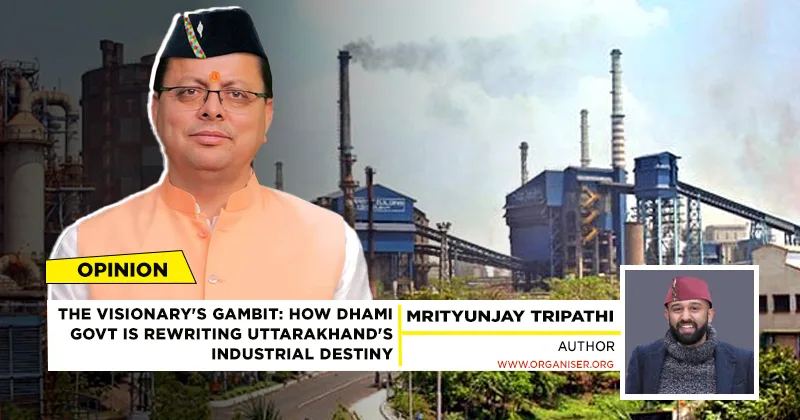
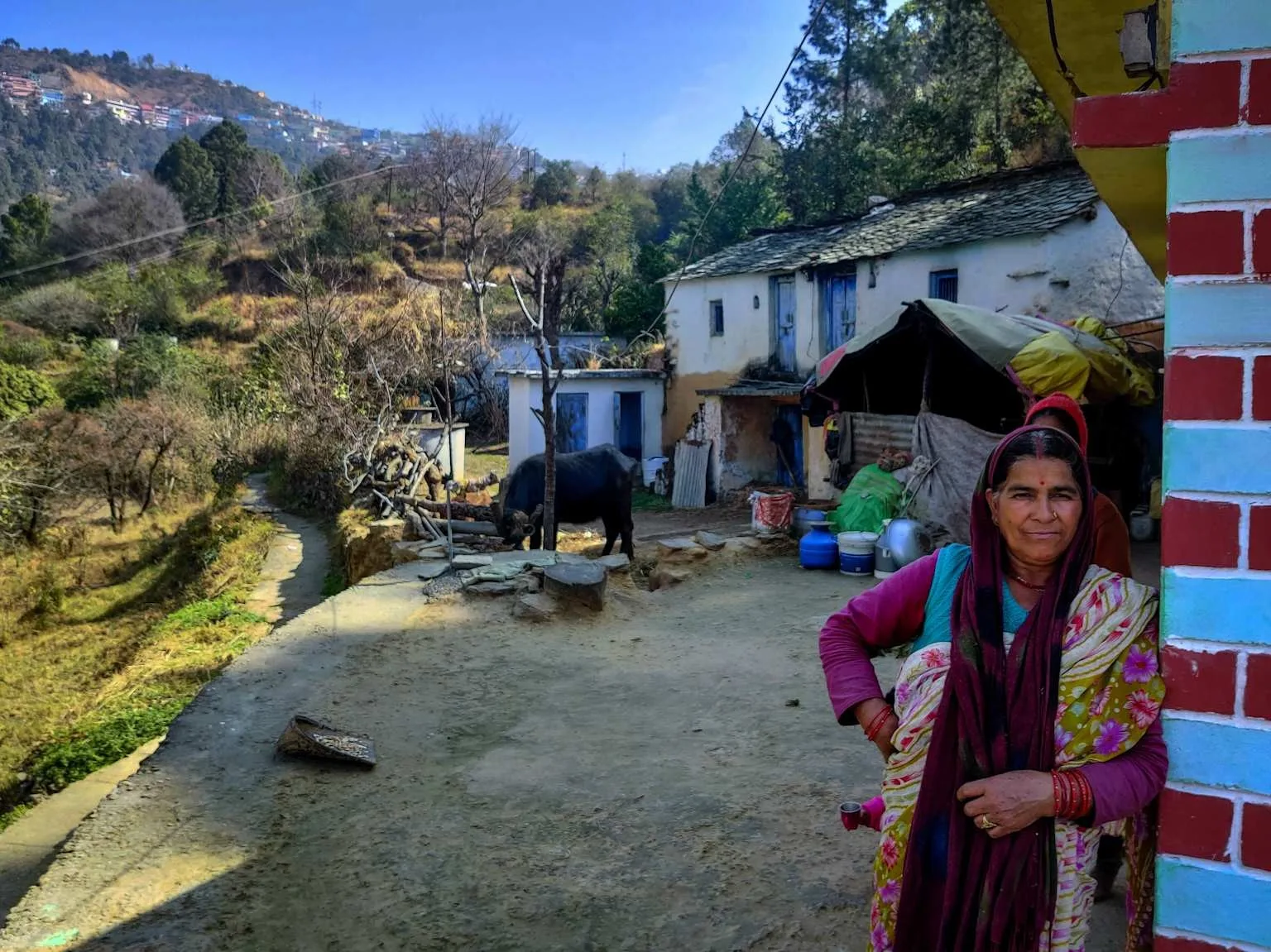
In the misty valleys of Uttarakhand, where the mighty Himalayas meet the sprawling plains, a remarkable transformation story is unfolding one that begins not with factories and investments, but with empty homes and silent villages.
Picture this: Raghunath Rawat, a 28-year-old engineer from Pauri Garhwal, packed his bags one morning in 2023, leaving behind his ancestral stone house perched on a terraced hillside. Like over 5 lakh people who have migrated from Uttarakhand in the last decade, Raghunath was drawn to the bright lights of Delhi, Mumbai, and Bangalore. His departure wasn’t just a personal choice it was a symptom of a deeper crisis that had been bleeding the hills dry for generations.
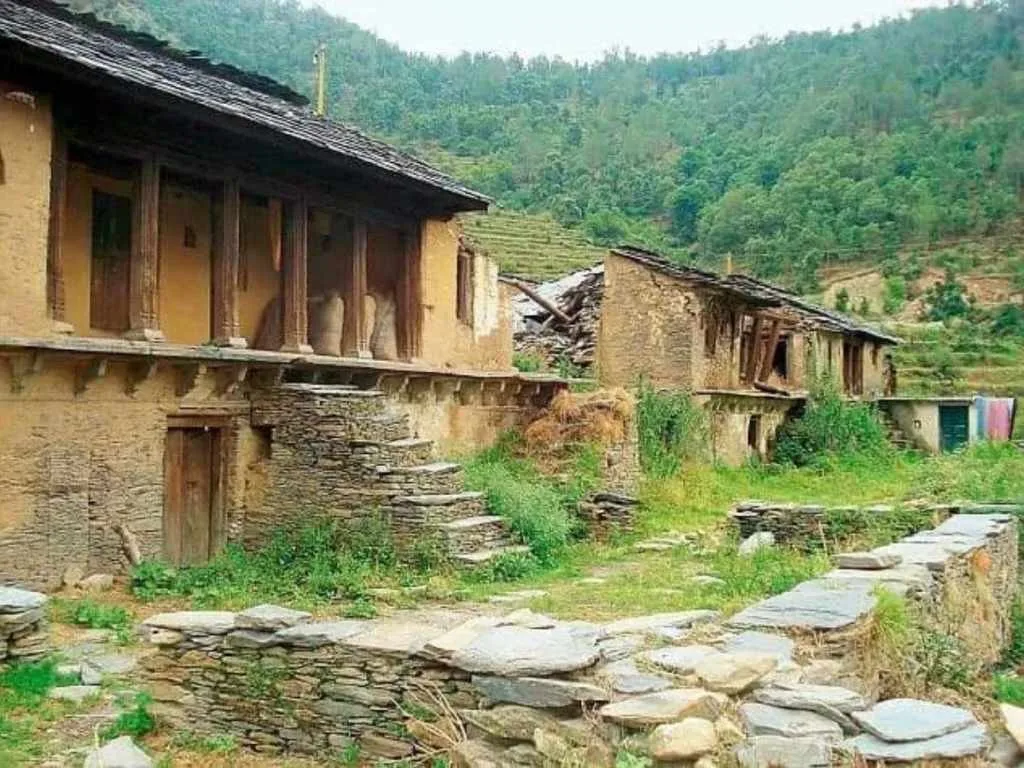
The statistics paint a sobering picture: by 2025, Uttarakhand has approximately 1,792 “ghost villages” entire communities abandoned as families sought better opportunities elsewhere. In districts like Pauri Garhwal, Almora, and Tehri, entire villages have become monuments to economic despair, their stone houses standing as silent witnesses to dreams deferred.
But in the gleaming offices of Dehradun’s secretariat, a different kind of dreamer was at work.
Enter the Mountain Mover: Pushkar Singh Dhami’s Vision
At 49, Chief Minister Pushkar Singh Dhami represents a new generation of leaders who refuse to accept the status quo. Born son of a retired Army Subedar, he understands intimately the struggles of hill communities. His journey from a student activist in Lucknow University to the youngest Chief Minister in Uttarakhand’s history reflects the very aspirations of the youth he now serves.
“When I see our young people leaving for the plains, I see not just individual tragedies, but the depletion of our state’s greatest asset our human capital,” Honorable CM remarked during a cabinet meeting in May 2025. It was in this moment of clarity that the idea for the Uttarakhand Mega Industrial and Investment Policy 2025 was born.
Unlike his predecessors who focused primarily on the already-developed plains districts like Haridwar and Dehradun, CM Pushkar Singh Dhami had a radical proposition: what if the hills themselves could become engines of prosperity?
The Policy Revolution: Turning Mountains into Gold Mines

On May 29, 2025, in a landmark decision that would reshape Uttarakhand’s economic landscape, CM Dhami’s cabinet approved the Uttarakhand Mega Industrial and Investment Policy 2025. But this wasn’t just another policy document, it was a declaration of war against regional disparity.
The genius of CM’s approach lay in its sophisticated understanding of scale and incentives. Rather than treating all investments equally, the policy created a tiered system that rewards larger investments with proportionally greater benefits:
The Four Pillars of Industrial Transformation:
· Large Enterprises (Rs 50-200 crore): 50+ jobs, 10 per cent capital subsidy
· Ultra Large (Rs 200-500 crore): 150+ jobs, 12 per cent capital subsidy
· Mega (₹500-1,000 crore): 300+ jobs, 15 per cent capital subsidy
· Ultra Mega (₹1,000+ crore): 500+ jobs, 20 per cent capital subsidy
But here’s where CM’s masterstroke becomes evident: for the first time in India’s industrial policy history, a state government offered additional subsidies specifically for hill region investments—an extra 2 per cent for Category A districts and 1% for Category B districts. This seemingly small percentage represents crores of rupees in additional incentives, making hill investments not just viable, but attractive.
The Digital Gateway: Simplifying Success
Understanding that good policies mean nothing without smooth implementation, CM championed the Single Window Portal system—a digital revolution that allows investors to complete all approvals through one online platform. The Common Application Form (CAF) process, once thought to be a very difficult task, now takes just a few clicks to initiate.
“We’re not just opening our doors to investors,” CM explained at the Uttarakhand Investment Festival 2025, “we’re rolling out the red carpet digitally”.
The Miracle Materializes: Rs 1 Lakh Crore and Counting
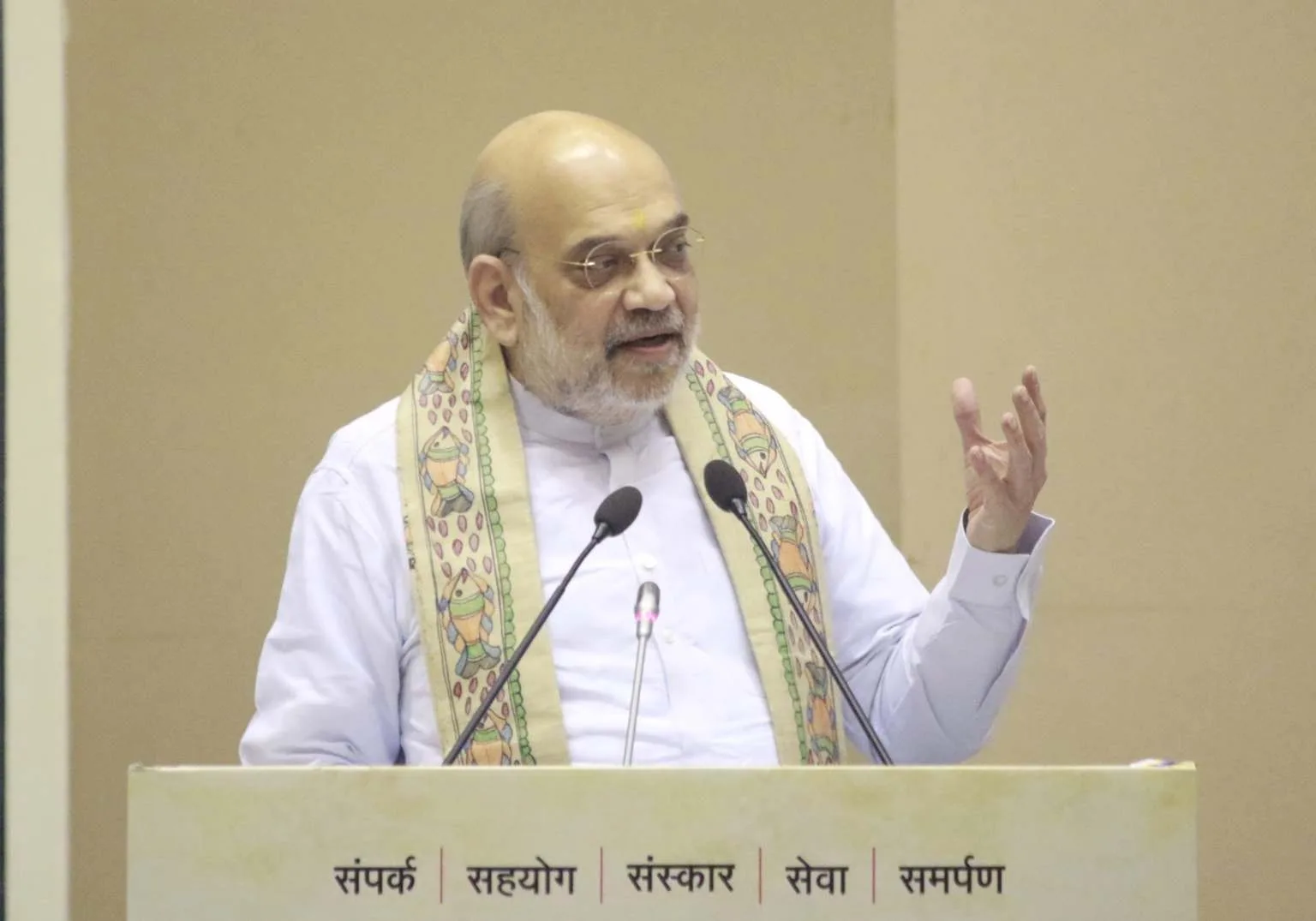
The results speak louder than any political rhetoric. In July 2025, Union Home Minister Amit Shah stood before a packed audience in Dehradun and announced a figure that seemed almost impossible just two years earlier: Rs 1 lakh crore worth of investments had materialized in Uttarakhand, creating over 81,000 direct jobs with an estimated 2.5 lakh more in ancillary industries.
“Bringing investment to landlocked and hilly regions is as challenging as climbing a mountain,” Shah acknowledged, “but Chief Minister Pushkar Singh Dhami has successfully brought in investments exceeding ₹1 lakh crore by breaking traditional perceptions”.
The transformation isn’t just in numbers—it’s visible on the ground. In the SIDCUL industrial areas of Haridwar, Pantnagar, and Sitarganj, new factories hum with activity. The Eldeco SIDCUL Industrial Park alone has created over 20,000 permanent jobs in 100 active industries.
But CM’s vision extends far beyond traditional manufacturing. Recognizing Uttarakhand’s unique strengths, his administration has crafted complementary policies for yoga and wellness tourism, leveraging the state’s spiritual heritage. The state has also pioneered policies for startups, with 192 recognized ventures already making their mark.
“Ayurveda, yoga, natural treatment and organic farming—these four are going to become the basis of development of Uttarakhand in the coming days,” noted Home Minister Shah, praising CM’s holistic approach.
The Human Story Behind the Numbers
Return to Raghunath Rawat, our engineer from Pauri Garhwal. In September 2025, he received a call that changed everything—a startup in Dehradun’s IT Park was offering him a position in sustainable technology development, with a salary competitive with Delhi standards but a lifestyle that allowed him to see the snow-capped peaks from his office window.
Stories like Raghunath’s are multiplying across Uttarakhand. The state’s migration commission reports that while 3.3 lakh people migrated between 2018-2022, the trend is beginning to reverse as new opportunities emerge in tier-2 and tier-3 cities within the state.
The Balancing Act: Development with Dignity
Perhaps most remarkably, CM Pushkar Singh Dhami has achieved this industrial revolution while maintaining environmental sustainability—no small feat in an ecologically sensitive state like Uttarakhand. The policy requires adherence to strict environmental norms, ensuring that the pursuit of prosperity doesn’t come at the cost of the pristine landscapes that define the state’s identity.
As the Uttarakhand Mega Industrial and Investment Policy 2025 enters its implementation phase, valid for five years with provisions for investments to be completed within 3-7 years, CM has effectively set in motion a transformation that could reshape not just Uttarakhand’s economy, but serve as a model for other hill states facing similar challenges.
The policy’s success will ultimately be measured not just in rupees invested or jobs created, but in something more precious: the sound of children’s laughter returning to villages that were once destined to become ghost towns, the sight of young entrepreneurs choosing to build their dreams in the shadow of the Himalayas rather than in distant metros.
In Pushkar Singh Dhami, Uttarakhand has found not just a Chief Minister, but a mountain mover-someone who dared to imagine that the hills could be not just scenic backdrops for tourism, but thriving centers of 21st-century industry and innovation. As the policy unfolds over the coming years, it may well prove that sometimes the most revolutionary act is simply believing that your homeland’s best days lie not in its past, but in its meticulously planned future.
The young man from Pithoragarh who once helped his father tend to their small mountain farm is now tending to the dreams of an entire state—and early signs suggest this harvest will be bountiful indeed.
















Comments