Setubandha Vidwan Yojana: Gurukul scholars join IITs
December 5, 2025
  • Read Ecopy
  • Circulation
  • Advertise
  • Careers
  • About Us
  • Contact Us
Android AppiPhone AppArattai
Organiser
  • ‌
  • Bharat
    • Assam
    • Bihar
    • Chhattisgarh
    • Jharkhand
    • Maharashtra
    • View All States
  • World
    • Asia
    • Europe
    • North America
    • South America
    • Africa
    • Australia
  • Editorial
  • International
  • Opinion
  • RSS @ 100
  • More
    • Op Sindoor
    • Analysis
    • Sports
    • Defence
    • Politics
    • Business
    • Economy
    • Culture
    • Special Report
    • Sci & Tech
    • Entertainment
    • G20
    • Azadi Ka Amrit Mahotsav
    • Vocal4Local
    • Web Stories
    • Education
    • Employment
    • Books
    • Interviews
    • Travel
    • Law
    • Health
    • Obituary
  • Subscribe
    • Subscribe Print Edition
    • Subscribe Ecopy
    • Read Ecopy
  • ‌
  • Bharat
    • Assam
    • Bihar
    • Chhattisgarh
    • Jharkhand
    • Maharashtra
    • View All States
  • World
    • Asia
    • Europe
    • North America
    • South America
    • Africa
    • Australia
  • Editorial
  • International
  • Opinion
  • RSS @ 100
  • More
    • Op Sindoor
    • Analysis
    • Sports
    • Defence
    • Politics
    • Business
    • Economy
    • Culture
    • Special Report
    • Sci & Tech
    • Entertainment
    • G20
    • Azadi Ka Amrit Mahotsav
    • Vocal4Local
    • Web Stories
    • Education
    • Employment
    • Books
    • Interviews
    • Travel
    • Law
    • Health
    • Obituary
  • Subscribe
    • Subscribe Print Edition
    • Subscribe Ecopy
    • Read Ecopy
Organiser
  • Home
  • Bharat
  • World
  • Operation Sindoor
  • Editorial
  • Analysis
  • Opinion
  • Culture
  • Defence
  • International Edition
  • RSS @ 100
  • Magazine
  • Read Ecopy
Home Bharat

Setubandha Yojana breaks Academic monopoly: Gurukul trained scholars without degrees now enter IITs with fellowships

The Setubandha Vidwan Yojana allows traditional Gurukul-trained scholars to enter IITs and top research institutes without formal degrees. Offering fellowships up to ₹65,000/month, the initiative bridges India’s ancient knowledge systems with modern science

WEBDESKWEBDESK
Jul 29, 2025, 03:40 pm IST
in Bharat, Education
Follow on Google News
FacebookTwitterWhatsAppTelegramEmail

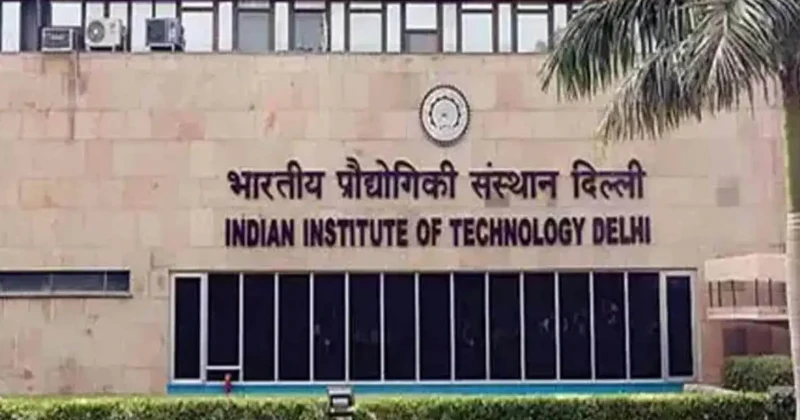
Can a scholar trained under a banyan tree, without a formal degree, conduct research at an IIT? Until recently, the answer would have been a firm no. But now, with the launch of ‘Setubandha Vidwan Yojana’, the Government of Bharat has shattered that long-standing academic barrier, heralding a paradigm shift in Bharat’s education ecosystem. This initiative, anchored in the National Education Policy (NEP) 2020, opens the gates of Bharat’s premier research institutions to students of the gurukul system Bharat’s ancient centres of learning recognising the depth of their knowledge and the rigour of their training.

In what experts are calling a historic convergence of tradition and modernity, scholars who have studied Shastras and Indic sciences in traditional gurukuls — often without ever stepping into a university will now be eligible to receive generous fellowships of up to Rs 65,000/month and pursue research across 18 interdisciplinary fields in IITs, IISERs, and Central Universities.

“Setubandha is not just a scholarship scheme. It is the long-overdue formal recognition of Bharat’s civilisational knowledge traditions,” said a senior Ministry of Education (MoE) official. “For the first time, the path from palm-leaf manuscripts to quantum labs has been institutionalised.”

Setubandha: A bridge between shastras and science

The Setubandha Vidwan Yojana, named after the Sanskrit word for “bridge”, is implemented by the Indian Knowledge Systems (IKS) division of the Central Sanskrit University (CSU) and backed by the MoE. It allows applicants from non-formal backgrounds those who have completed at least five years of intense, documented gurukul education — to pursue higher research in a wide range of fields, without needing a BA, MA, or PhD.

Instead of paper degrees, the focus is on demonstrable excellence in classical Indian knowledge systems — such as Nyaya (logic), Mimamsa (interpretation), Ayurveda, Sanskrit grammar, Vedanta, astronomy, music, architecture, and more.

Two categories have been defined

  • Category 1 (Postgraduate-equivalent): Rs 40,000/month + Rs 1 lakh annual research grant
  • Category 2 (PhD-equivalent): Rs 65,000/month + Rs 2 lakh annual research grant

The upper age limit to apply is 32 years. These scholars will now engage in research areas that integrate Bharatiya traditions with contemporary disciplines, including:

  • Anvikshiki Vidya – Philosophy and Cognitive Sciences
  • Ganit-Bhaut-Jyotish Vidya – Mathematics, Physics, and Astronomy
  • Bhaishajya Vidya and Arogya Vidya – Ayurveda and Health Sciences
  • Silpa and Vastu Vidya – Architecture and Engineering
  • Rasayan-Vidya and Jeevan Vidya – Chemistry, Biology, and Life Sciences
  • Rang-Kala, Sangeet and Natya Vidya – Performing Arts
  • Neeti and Rajniti Vidya – Political Thought and Ethics
  • Sanskrit Bhasha and Vyakarana – Linguistics and Grammar
  • Itihasa and Niti-Shastra – Strategic Studies and Statecraft

“The old divide between ‘puranic’ and ‘scientific’ learning is an artificial one,” said a faculty member from IIT-BHU involved in the initiative. “Bharat has produced logicians, mathematicians, surgeons and grammarians centuries before the modern university system. Setubandha is finally bringing that truth to the mainstream.”

The Gurukul System: Rigour beyond recognition

The gurukul tradition, often dismissed by colonial and post-colonial academia as outdated, is in fact a highly sophisticated model of immersive, teacher-student driven education. The students, or shishyas, study under the guidance of an Acharya, not just memorising texts but engaging in deep philosophical inquiry, debates (shastrartha), and real-life applications of knowledge.

A student of Ayurveda may learn anatomy through Ayurvedic Samhitas, observation of the body, and treatment practice — all before ever seeing a modern textbook. A student of Vedanga Jyotisha may calculate lunar cycles with astonishing accuracy without digital tools. A scholar of Vyakarana (grammar) may offer linguistic insights that challenge even AI-driven models.

Yet, until now, these scholars remained excluded from Bharat’s elite research and policy spaces, despite their brilliance.

Also Read: Operation Mahadev: Weeks of surveillance, encrypted intercepts led to killing of Sulaiman Shah, pahalgam mastermind

NEP 2020: The vision that lit the path

This bold step is a direct outcome of the National Education Policy 2020, one of the most participatory and transformative education policies in Bharat’s history, shaped under the chairmanship of late Dr. K. Kasturirangan. The NEP advocated for a systemic integration of Indian Knowledge Systems (IKS) into mainstream academia — not as cultural tokens, but as knowledge systems in their own right.

In just five years, the NEP has led to visible, measurable transformations

  • Nipun Bharat has ensured foundational literacy and numeracy by Class 2
  • Vidya Pravesh and Balvatikas have brought ECCE into the fold
  • Jaadui Pitara and e-Pitara now offer engaging content in 22 Bharatiya languages
  • 117 language primers, Bharatiya Sign Language, and Bhartiya Bhasha Pustak Yojana have democratised multilingual learning
  • PM Shri schools (14,500 of them) are being built as green, inclusive model institutions
  • Girls’ enrolment in disadvantaged sections has soared, supported by Kasturba Gandhi Balika Vidyalayas and hostels under tribal and PVTG schemes

In higher education

  • Enrolment has increased by 30.5 per cent (3.42 crore to 4.46 crore)
  • Women now make up 48 per cent of all students
  • Female PhD enrolment more than doubled in 5 years
  • Multiple Entry and Exit, Academic Bank of Credits, and APAAR IDs have transformed degree pathways
  • QS World University Rankings 2026 saw 54 Bharatiya institutions, up from 11 in 2014
  • Swayam and PM e-Vidya have expanded access with over 5.3 crore enrolments

As global interest rises in Ayurveda, Yoga, Sanskrit linguistics, and indigenous policy models, Bharat is finally positioning its intellectual heritage not as a relic, but as a living knowledge system. Scholars once seen as ‘non-academic’ will now walk the corridors of IITs. Vedic mathematics will intersect with quantum computing. Policy thinkers grounded in Arthashastra and Niti-Shastra will contribute to Bharat’s strategic doctrines. Gurukul-trained experts in Natya Shastra will influence performing arts pedagogy and therapy sciences.

Setubandha is not nostalgia it is national foresight.

The modern Bharatiya mind is being rebuilt on civilisational foundations, not despite them. The policy corridors that once ignored palm-leaf texts now translate them. The labs that once doubted Sutras now test their algorithms. India is not choosing between tradition and technology — it is synthesising them into a future-ready knowledge powerhouse.


 

Topics: NEPIITGurukul systemSetubandha YojanaGurukul trainingIIT Fellowships
ShareTweetSendShareSend
✮ Subscribe Organiser YouTube Channel. ✮
✮ Join Organiser's WhatsApp channel for Nationalist views beyond the news. ✮
Previous News

Odisha: DRDO successfully tests Pralay Missile twice in 48 Hours, showcases ULPGM-V3 strike power

Next News

Odisha: No hidden chambers found in Ratna Bhandar; ASI confirms after GPR survey at Puri Jagannath Mandir

Related News

Three IIT Madras Professors honoured with Rashtriya Vigyan Puraskar 2025

Representative image

Ancient Indian Education System: Wisdom through dialogue

Representative Image

57,000 colleges including IITs, IIMs, AIIMS defying student suicide survey

The Arthayam Conclave, jointly organised by Organiser Weekly and the National Stock Exchange (NSE)

Arthayam by Organiser-NSE: ‘Ekatma Manav Darshan in action’ brings ground realities and vision together

Union Education Minister Dharmendra Pradhan inaugurated the overseas campus of IIM- Ahmedabad in UAE

From Nalanda to Dubai: India expands global knowledge footprint, IIM Ahmedabad opens in Dubai

Representative image

Ministry of Education prepares bill to set up single higher education regulator, replacing UGC, AICTE and NCTE

Load More

Comments

The comments posted here/below/in the given space are not on behalf of Organiser. The person posting the comment will be in sole ownership of its responsibility. According to the central government's IT rules, obscene or offensive statement made against a person, religion, community or nation is a punishable offense, and legal action would be taken against people who indulge in such activities.

Latest News

BJYM leader Shyamraj with Janaki

Kerala: Widow of BJP worker murdered in 1995 steps into electoral battle after three decades at Valancherry

Russian Sber bank has unveiled access to its retail investors to the Indian stock market by etching its mutual fund to Nifty50

Scripting economic bonhomie: Russian investors gain access to Indian stocks, Sber unveils Nifty50 pegged mutual funds

Petitioner S Vignesh Shishir speaking to the reporters about the Rahul Gandhi UK citizenship case outside the Raebareli court

Rahul Gandhi UK Citizenship Case: Congress supporters create ruckus in court; Foreign visit details shared with judge

(L) Kerala High Court (R) Bouncers in Trippoonithura temple

Kerala: HC slams CPM-controlled Kochi Devaswom Board for deploying bouncers for crowd management during festival

Fact Check: Rahul Gandhi false claim about govt blocking his meet with Russian President Putin exposed; MEA clears air

Union Minister for Road Transport and Highways Nitin Gadkari (Right)

India set for highway overhaul as Union Minister Nitin Gadkari unveils nationwide shift to MLFF electronic tolling

RSS Akhil Bharatiya Prachar Pramukh Shri Sunil Ambekar

When Narrative Wars result in bloodshed, countering them becomes imperative: Sunil Ambekar

Ministry of Civil Aviation mandates emergency action: IndiGo ordered to stabilise flight operations by midnight

Chhattisgarh CM Vishnu Deo Sai at Panchjanya Conclave, Nava Raipur, Image Courtesy - Chhattisgarh govt

Panchjanya Conclave: Chhattisgarh CM Sai shares views on development projects in Maoist hotbed, women empowerment

Union Finance Minister Nirmala Sitharaman

‘TMC is holding Bengal back’: Sitharaman slams Mamata govt over industrial & healthcare setbacks

Load More
  • Privacy
  • Terms
  • Cookie Policy
  • Refund and Cancellation
  • Delivery and Shipping

© Bharat Prakashan (Delhi) Limited.
Tech-enabled by Ananthapuri Technologies

  • Home
  • Search Organiser
  • Bharat
    • Assam
    • Bihar
    • Chhattisgarh
    • Jharkhand
    • Maharashtra
    • View All States
  • World
    • Asia
    • Africa
    • North America
    • South America
    • Europe
    • Australia
  • Editorial
  • Operation Sindoor
  • Opinion
  • Analysis
  • Defence
  • Culture
  • Sports
  • Business
  • RSS @ 100
  • Entertainment
  • More ..
    • Sci & Tech
    • Vocal4Local
    • Special Report
    • Education
    • Employment
    • Books
    • Interviews
    • Travel
    • Health
    • Politics
    • Law
    • Economy
    • Obituary
  • Subscribe Magazine
  • Read Ecopy
  • Advertise
  • Circulation
  • Careers
  • About Us
  • Contact Us
  • Policies & Terms
    • Privacy Policy
    • Cookie Policy
    • Refund and Cancellation
    • Terms of Use

© Bharat Prakashan (Delhi) Limited.
Tech-enabled by Ananthapuri Technologies