





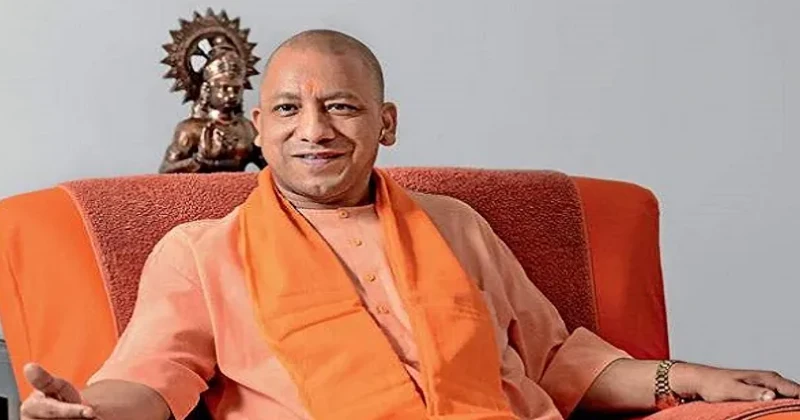
Uttar Pradesh Chief Minister Yogi Adityanath has officially become the longest-serving head of government in the state, crossing an uninterrupted tenure of 8 years and 132 days in office. This landmark achievement surpasses the previous record held by Bharat Ratna Govind Ballabh Pant, the first Chief Minister of Uttar Pradesh (then United Provinces), whose 3047-day term spanned both pre- and post-Independence years.
As of July 28, 2025, CM Yogi Adityanath has completed 3052 consecutive days as Chief Minister a monumental feat in a state known for political churn, short-lived coalition governments, and decades of alternating rule between regional parties. With this, Adityanath not only surpasses Pant but also sets a new standard of political continuity, electoral dominance, and ideological steadfastness in a state that sends the largest contingent of MPs to the Lok Sabha.
CM Yogi Adityanath’s tenure by the numbers:
- Days in Office: 3052 (as of July 28, 2025)
- Date First Sworn In: March 19, 2017
- Second Term Began: March 25, 2022
Historic Benchmark Surpassed: Govind Ballabh Pant’s 3047 days (1946–1954)
Born as Ajay Mohan Singh Bisht on June 5, 1972, in the hill district of Pauri Garhwal (then in Uttar Pradesh, now in Uttarakhand), CM Yogi Adityanath’s trajectory from a trained science graduate to the Mahant of the powerful Gorakhnath Math, and later a five-term MP from Gorakhpur, was already remarkable. However, his ascension to the Chief Minister’s post in March 2017, following the Bharatiya Janata Party’s overwhelming electoral victory in the state assembly elections, was both unexpected and historic.
CM Yogi was chosen not for administrative experience, but for his mass appeal, ideological clarity, and proven record as a Hindutva firebrand who commanded deep influence in eastern UP. At the time, critics doubted whether a monk-politician with a reputation for sharp rhetoric and street-level agitation could lead a complex and diverse state like Uttar Pradesh.
Eight years later, CM Yogi Adityanath has not only proved those doubts wrong but has also emerged as a symbol of decisive governance, hardline Hindutva, and developmental push. His tenure has redefined the state’s image from one perceived as crime-ridden and lawless to one viewed as a BJP model of governance.
March 19, 2017: The Day the Saffron Era Began
CM Yogi Adityanath was sworn in as the 21st Chief Minister of Uttar Pradesh on March 19, 2017, following a landslide BJP win in the Assembly elections. His selection was considered bold—choosing a saffron-robed spiritual leader to helm India’s most populous and politically complex state.
Since then, CM Yogi Adityanath has never looked back.
He not only completed his first full term—a feat achieved by few in the state’s history but also led the BJP to another resounding victory in the 2022 Assembly elections, returning to power on March 25, 2022. This made him the first CM in UP’s post-Independence history to complete a full term and return to office with a clear majority.
CM Yogi Adityanath’s long tenure has coincided with sweeping administrative reforms, a revamp of law and order, and a development-focused agenda. Once known for its rampant crime, communal tension, and sluggish bureaucracy, Uttar Pradesh under CM Yogi saw:
- Operation Clean-Up: A systematic crackdown on organised crime, land mafia, and gangster-politician nexuses. Notably, figures like Mukhtar Ansari and Atiq Ahmed were sidelined or neutralised through legal and police action.
- ‘Bulldozer Justice’: CM Yogi’s now-famous bulldozer became symbolic of his administration’s no-nonsense approach to illegal encroachments and mafia properties, drawing both praise and criticism.
- Massive Infrastructure Push: Expressways (Purvanchal, Bundelkhand, Ganga), airports (Jewar), defence corridors, and smart city projects have changed the state’s developmental narrative.
- Religious Tourism and Cultural Revival: Kashi Vishwanath Corridor, Ayodhya Ram Mandir, and Mathura-Vrindavan redevelopment became flagships of his cultural nationalism.
- Law-and-Order Focus: Encounters, strict policing, and new police stations—especially for women’s safety—have been heavily publicised and politically leveraged.
- Investment Summits and Skill India Drives: CM Yogi’s government attracted lakhs of crores in investment commitments through summits and focused on job creation, particularly in tier-2 cities.
While CM Yogi’s image is strongly tied to Hindutva and law enforcement, his government also undertook a massive infrastructure transformation agenda. From the Purvanchal Expressway to the Bundelkhand Expressway, and the ongoing Ganga Expressway, his administration fast-tracked long-pending infrastructure projects that now form the spine of the state’s industrial aspirations.
Under the UP Investors Summit and Global Investors Summit 2023, the state attracted significant investments across sectors such as electronics, data centres, defence manufacturing, food processing, and renewable energy. Uttar Pradesh, once synonymous with “BIMARU” underdevelopment, began to climb the ease-of-doing-business rankings and GSDP growth charts.
A staunch proponent of Hindutva, CM Yogi Adityanath has woven religion and governance into a cohesive political strategy. His term coincided with the landmark Supreme Court verdict in 2019 on the Ram Janmabhoomi case, followed by the historic Bhoomi Pujan of the Ram Mandir in Ayodhya, in which he played a key role in state-level coordination.
His government invested heavily in revamping religious tourism circuits:
- Kashi Vishwanath Corridor in Varanasi
- Ayodhya Deepotsav and Ram Path development
- Mathura-Vrindavan rejuvenation
- The Chitrakoot-Divya Kashi-Ayodhya triangle as spiritual tourism hubs
This merging of heritage with modernity reinforced CM Yogi’s image as the cultural guardian of Bharatiya identity in Uttar Pradesh.
In 2022, CM Yogi Adityanath led the BJP to another massive victory securing 273 seats in the 403-member UP Assembly, despite facing anti-incumbency. This made him the first CM in UP’s post-Independence history to complete a full term and return to power with a clear majority. In a state where no Chief Minister had been re-elected after a full term in over 70 years, this achievement cemented his status as the most electorally successful BJP CM after Narendra Modi.
Uttar Pradesh has seen 22 Chief Ministers since Independence, many of whom failed to complete even two years. Frequent President’s Rule, caste-based coalition collapses, and internal party rifts defined the politics of the state for decades.
CM Yogi’s era broke that mold. Backed by the BJP’s central leadership and Rashritya Swayamsevak Sangh (RSS)’s ideological apparatus, he cemented political stability by combining grassroots religious appeal with top-down governance. This continuity has also made UP a showcase model for the BJP’s national ambitions, particularly in terms of Hindutva-driven governance, electoral machinery, and cultural nationalism.
With nearly two years still left in his current term, speculation is rife about CM Yogi’s potential elevation to a national role in the future possibly even as a PM contender post-Modi era. While he remains silent on national ambitions, his increasing presence in BJP’s national campaigns and party-building initiatives signals his rising stature within the Sangh Parivar.
In 2024, he was one of BJP’s star campaigners in multiple states, and his administrative model is being emulated by BJP-led states like Madhya Pradesh and Gujarat in parts.
As of July 28, 2025, CM Yogi has served:
- 3052 days (8 years, 132 days)
- Surpassing Govind Ballabh Pant (3047 days, including pre-Independence)
- Far exceeding Sampurnanand (5 years, 344 days), Akhilesh Yadav (5 years), and Mayawati’s fragmented rule
CM Yogi is the first UP Chief Minister to complete a full five-year term and get re-elected with a clear majority—a feat never before achieved in a state notorious for revolving-door politics, caste arithmetic, and fractured mandates.














Comments