





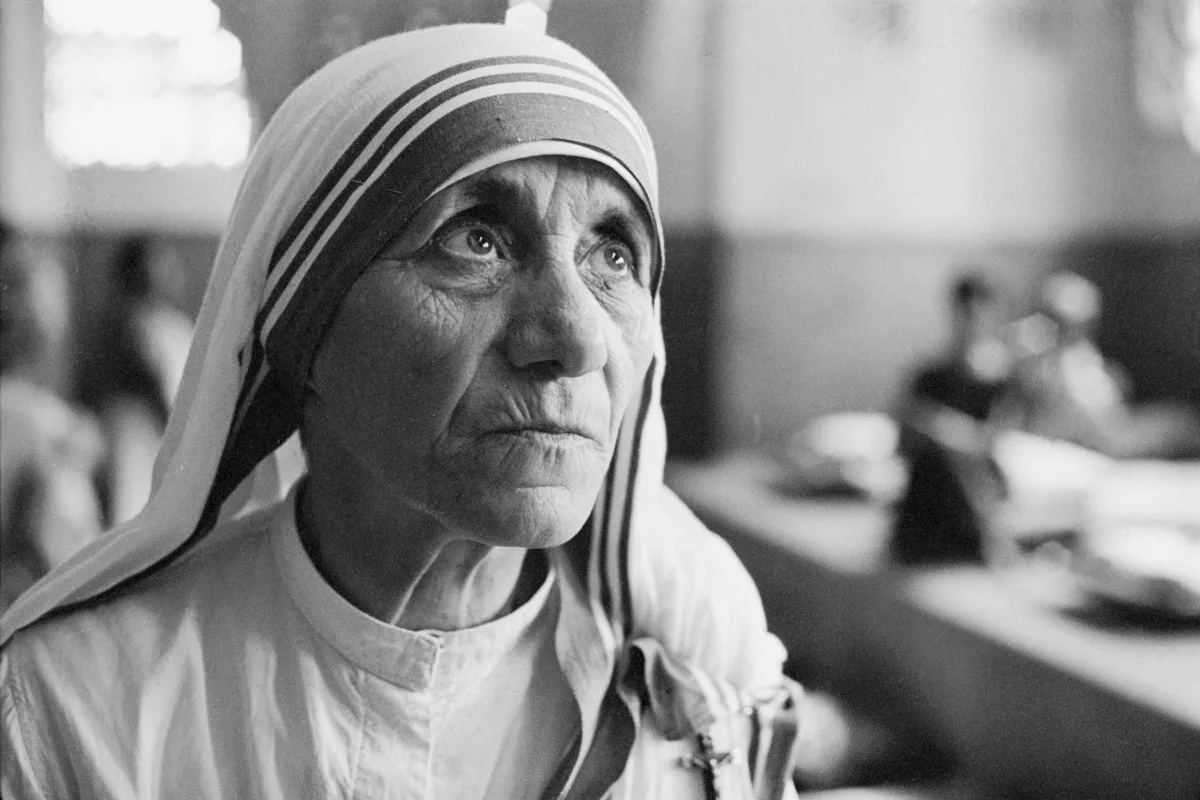
A move that has sparked widespread political outrage and reignited long-standing debates over religious conversions and missionary influence in India, the Jharkhand government under Chief Minister Hemant Soren has officially renamed the “Atal Mohalla Clinics” as “Mother Teresa Advanced Health Clinics.” The decision, announced on Thursday, July 24 2025, has raised eyebrows not only for the act of replacing the name of Atal Bihari Vajpayee, India’s former Prime Minister and a key architect in the creation of Jharkhand, but also for choosing Mother Teresa, a figure mired in controversy over forced religious conversions, medical negligence, and financial irregularities.
The clinics and their role
The Atal Mohalla Clinics, introduced as part of a welfare initiative in the state, have been pivotal in delivering essential healthcare to underserved communities. Offering primary medical services, basic diagnostic tests, and free medicines, these clinics have helped bridge a serious gap in healthcare access, especially in tribal and rural areas of Jharkhand. They were named in honour of Atal Bihari Vajpayee, whose government played a decisive role in granting Jharkhand statehood in the year 2000.
The rechristening was confirmed by Jharkhand’s Cabinet Secretary Vandana Dadel, who stated, “The Jharkhand Cabinet gave its approval to change the name of Atal Mohalla Clinic, being operated under the ongoing scheme under the State Plan, to Mother Teresa Advanced Health Clinic.”
Political backlash and allegations
The decision triggered immediate criticism from the Bharatiya Janata Party (BJP). Party spokesperson Pratul Shah Deo strongly objected to the move, stating, “You are removing the name of the person who helped create the State of Jharkhand and replacing it with that of Mother Teresa, whose organisation had been under the scanner for forced religious conversions and anti-constitutional activities.”
The renaming is being seen by many as an overt act of appeasement politics, raising concerns over secularism, the selective glorification of religious figures, and the erasure of Indian nationalist icons in favour of foreign missionaries with questionable legacies.
Unpacking the myth of Mother Teresa
Born Anjeze Gonxhe Bojaxhiu in present-day North Macedonia, Mother Teresa arrived in India in 1929 and began her missionary work in Kolkata. Though celebrated globally as a humanitarian icon and canonised as a Catholic saint by the Vatican in 2016, her legacy in India has increasingly come under critical re-evaluation.
While Western media and liberal elites continue to hail her “work for the poor,” several Indian intellectuals, including authors like Aroup Chatterjee and the late Christopher Hitchens, have questioned her real motives and the standards of care offered by her institutions. Hitchens, in his documentary Hell’s Angel, accused her of glorifying suffering and being more interested in conversion than cure. Chatterjee, who grew up in Kolkata, alleged that many patients in her care were denied painkillers and basic hygiene, and that large donations were often not used for medical relief.
In India, the Missionaries of Charity, the organisation she founded, has been under repeated scrutiny. In 2021, a Gujarat-based children’s home run by the order was booked under the Gujarat Freedom of Religion Act for allegedly coercing young girls into converting to Christianity. Later, in 2022, the Ministry of Home Affairs refused to renew the FCRA (Foreign Contribution Regulation Act) license of the Missionaries of Charity over irregularities, only to restore it following diplomatic pressure.
Medical negligence and ethical violations
A particularly scathing report came from Dr. Robin Fox of the world-renowned medical journal The Lancet in 1994. Upon visiting the “House of the Dying,” Dr. Fox reported an absence of basic medical practices, including the denial of painkillers to terminal patients. “I was disturbed to learn that the formulary includes no strong analgesics,” he noted. The ethos, he added, was more about suffering as a path to divine salvation than alleviation of human pain.
The approach starkly contrasted with modern hospice care, which emphasises dignity and comfort in a patient’s final days. According to Dr. Fox, no systematic diagnostic procedures were in place, and even curable patients were lumped in with the terminally ill, often without informed consent or adequate treatment.
First-hand accounts
Mary Loudon, a volunteer who worked inside the Missionaries of Charity in Kolkata, shared disturbing anecdotes in the 1994 documentary “Hell’s Angel.” She described how used syringes were merely rinsed in cold water and reused on patients, an unacceptable and dangerous practice by any global medical standard. Loudon also recalled the case of a 15-year-old boy with a treatable kidney ailment who was refused antibiotics. He died soon after.
In another explosive testimony, Sushan Shields, who worked with the Missionaries of Charity for nearly a decade, revealed in her unpublished manuscript “Mother’s House” that secret baptisms were routinely performed on dying patients, often without their knowledge or consent.
Shields explained how nuns were instructed to ask if a patient wanted a “ticket to heaven.” A yes would lead to a discreet baptism disguised as a cooling forehead wipe. “Secrecy was important so that it would not come to be known that Mother Teresa’s sisters were baptising Hindus and Muslims,” Shields wrote.
These revelations were cited by author and journalist Christopher Hitchens in his book The Missionary Position: Mother Teresa in Theory and Practice. In the book, Hitchens lambasts Mother Teresa for what he calls “a cult of suffering” and accuses her of ignoring real solutions to poverty in favour of religious glorification.
Conversion confessions and colonial attitudes
Perhaps the most damning piece of evidence came in 1992, when Mother Teresa herself admitted to converting over 29,000 people to Christianity on their deathbeds. For many, this directly contradicts the principles of religious freedom and human dignity. Such conversions, done in moments of extreme vulnerability, are tantamount to coercion.
Mother Teresa’s theology was rooted in the belief that suffering brought one closer to God. Yet she did not live by these standards herself. When she was ill, she sought care at some of the best hospitals globally, Gemelli Hospital in Rome, Scripps Clinic in California, and top private hospitals in Kolkata.
Wealth accumulated, poverty prolonged
Despite collecting hundreds of millions in donations over her lifetime, especially after winning the Nobel Peace Prize, there is little evidence that these funds were used to improve the lives of the poor in any meaningful or transparent way. The funds were instead channelled into expanding the reach of her congregation across over 100 countries, rather than upgrading basic amenities or medical care in existing centres.
This raises questions not just about hypocrisy but also about transparency and misuse of global goodwill for religious expansion.
Jharkhand’s own traumatic experience
The irony in renaming the clinics after Mother Teresa is particularly glaring when one recalls the 2018 baby-selling scandal that rocked her Missionaries of Charity centre in Ranchi, Jharkhand’s capital. That year, police arrested two nuns and a female employee for allegedly running a child trafficking ring. Babies were reportedly sold for as much as Rs 1 lakh, with one case involving an infant born at the Nirmal Hriday shelter sold for Rs 50,000.
O.P. Singh, the former chairman of the Ranchi Child Welfare Committee, had first raised the alarm back in 2014. “I received information about child trafficking at the Missionaries of Charity. I informed the social welfare department. But we were told no officer had come for investigation,” he said.
By the time the racket was exposed, 26 children had reportedly been born at the shelter in 2017, yet only two delivery records were available. A further investigation revealed that out of 450 pregnant women admitted between 2015 and 2018, only 170 deliveries were documented.
Following the incident, the Jharkhand police wrote to the Ministry of Home Affairs to freeze the Missionaries of Charity’s bank accounts, citing suspicious foreign funding and unaccounted assets running into crores.
A pattern of secrecy and exploitation
These are not isolated incidents. They point to a troubling institutional pattern, one that uses the garb of charity to mask medical malpractice, religious coercion, and financial mismanagement. The glorification of such an organisation, particularly in a state like Jharkhand with a history of tribal exploitation and religious conversion, is not just inappropriate, it is a betrayal of its people.
The decision by the Hemant Soren government to elevate Mother Teresa as a public icon by renaming clinics after her is thus not just a symbolic shift. It represents an ideological alignment.
A pattern or a precedent?
This is not the first time religious figures have been superimposed over nationalist icons in naming state infrastructure. In 2023, the Tamil Nadu government faced backlash for renaming several bus terminals and community centres after minority leaders. In Kerala, there was controversy over allocating state funds for Church-sponsored festivals amid budget cuts in tribal welfare.
A cultural flashpoint
The renaming of Atal Mohalla Clinics to Mother Teresa Clinics has become more than a local administrative decision, it has emerged as a cultural flashpoint. It questions what kind of legacy India wants to preserve for its coming generations.
Mother Teresa, while admired by many, remains a divisive figure whose work is viewed in India not just through the lens of charity but also through the prism of religious expansionism. Replacing the name of a universally respected former Prime Minister who worked for India’s unity, rural development, and international standing with that of a missionary nun tied to colonial overtones has left many Indians disturbed.
At a time when India is asserting its civilisational identity and decolonising its institutions, such decisions are seen as attempts to confuse global humanitarian branding with local reality. As the debate continues, one thing is clear: India’s cultural identity cannot afford to be compromised in the name of political convenience or selective secularism.










Comments