





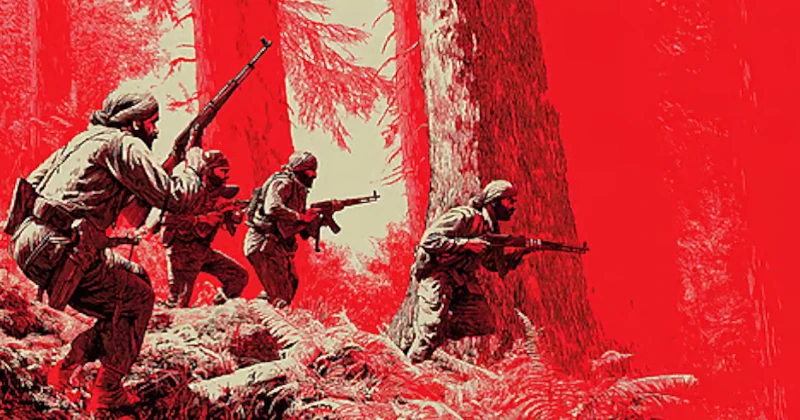
Recently, Prime Minister Narendra Modi reiterated his government’s resolve to eliminate Maoism, also called Maoism, from India by March 31. Union Home Minister Amit Shah had made a firm commitment to eradicate Maoism from India by March 2026 sometime in August last year. As Home Minister, Shah has taken a calculated risk by setting a deadline for the security forces. But it is to his credit that the Ministry of Home Affairs (MHA) has provided phenomenal support and firm political direction to end the menace of Maoism. The fight against Maoism has now reached a decisive phase, and the Modi 3.0 government is resolute in its goal to eliminate Maoism in less than one year from now.
The origins of Maoism in India can be traced back to Naxalbari, West Bengal, in 1967, from which the name Naxal or Maoism originated. Maoism is a form of insurgency against the state, similar to one in the North East, with a secessionist agenda to disown the democratically elected government. The thought process was motivated by leftist ideologies, thus the term Left Wing Extremism (LWE) came about, which the MHA uses. Globally, similar armed struggles have been labelled as Maoism, and there is no doubt that LWE received moral, financial, and armed support from the inimical forces within the country, as well as from abroad, particularly from China. With their support, all Naxal groups operating in India came under the umbrella organisation called the Communist Party of India (Marxist-Leninist) in 1969, and by 1975, they had further organised themselves as the Maoist Communist Centre (MCC). Another avatar of this organisation came up in the form of the People’s War Group (PWG). From 2004 onwards, the complete control of Maoism in India came under the CPI (Maoist).
From 2004 onwards, the LWE in India took a serious turn, and the Naxalites carried out a series of violent activities which shook the nation. By this time, the districts affected by LWE were in the states of West Bengal, Bihar, Jharkhand, Chhattisgarh, MP, Odisha, Telangana, Andhra Pradesh, Karnataka, Maharashtra and even parts of Uttar Pradesh and Tamil Nadu. The term’ Red Corridor’ refers to the LWE-affected region in India, stretching from the Indo-Nepal border in the north to the fringes of Tamil Nadu in the south. Such was the reach and influence of this Red Terror menace.
The influence of LWE has shrunk with the sustained efforts of the government. From the high of 107 Districts and 565 Police Stations affected by Maoism in 2010, the current state has reached a manageable figure of just 38 Districts and 141 Police Stations. Most affected districts have been reduced to just six districts, four in Chhattisgarh and one each in Jharkhand and Maharashtra. After coming to power in 2014, Prime Minister Modi identified the serious challenge posed by this menace and the LWE Division under MHA has worked tirelessly to root out this major internal security threat. In my opinion, the decline in LWE is one of the major success stories of the PM Modi government, and a significant amount of credit is due to the Union Home Minister, Amit Shah, for executing the fight against Maoism in a planned and calibrated manner.
It is noteworthy that the fight against the Red Terror was entrusted to the paramilitary forces and the local police from the very beginning. It was unlike the terrorism in Jammu & Kashmir and counterinsurgency operations in India’s North East, where the Army was actively employed. Considering the size of the Red Corridor, a huge number of forces and resources have been used over the years. The fight against LWE has been a bloody one, and in the last 25 years alone, close to 2750 security forces personnel have been killed in action. I believe that successive Union governments have wisely avoided employing the Army in the fight against LWE. Such an approach has prepared and groomed a large section of the paramilitary forces and police, now fully capable of defending the nation’s internal security.
The fight against LWE is similar to a marathon race. A marathon race is run over a distance of 42.195 km and is considered the ultimate test of human endurance. For an average marathon runner, the first 30-odd kilometres are relatively easy, the next 7 kilometres are tough, and the remaining 5.195 kilometres are the most taxing. In my opinion, the fight against LWE has reached the most taxing phase. The final phase of the fight against LWE should not lead to complacency among the local police and paramilitary forces. Still, a huge number of coordinated operations are needed to break the back of the menace. The people should also be warned of the dangers of Urban Maoism, where a new crop of educated people continues to support the secessionist ideology.
As the nation celebrates the victory of the Indian armed forces in Operation Sindoor, we should also recognise the valiant efforts of the police and paramilitary forces in their fight against Red Terror. Now that 25 hours have been allocated for discussion on Operation Sindoor, I also believe that all political parties should acknowledge the contributions of the paramilitary and police forces in combating LWE in the Parliament. Such a gesture would go a long way in further motivating the security forces, now involved in the most taxing phase of combating LWE and ushering in near normalcy in the region.
Under the PM Modi government, India, which was in a perilous state of internal instability in 2014, is now on the cusp of eradicating the menace of Maoism after making determined efforts over the last 11 years. The final phase would require a massive effort in coordinating operations and ushering normalcy in the affected districts through developmental projects. The faith of the people, particularly the tribals, needs to be restored through quality governance and respect for their land. Restoring faith in democracy, ensuring the dividends of development reach the last village, promoting fair & transparent governance, creating jobs, engaging the media, and fostering public participation are some of the major vectors in eradicating LWE from the map of India by 2026. This success would be a major precursor to a safe and stable India becoming a Viksit Bharat by 2047. The Indian Parliament, as the voice of the nation, can recognise the stellar contributions of the warriors of the Red Terror during the ongoing Monsoon session.













Comments