





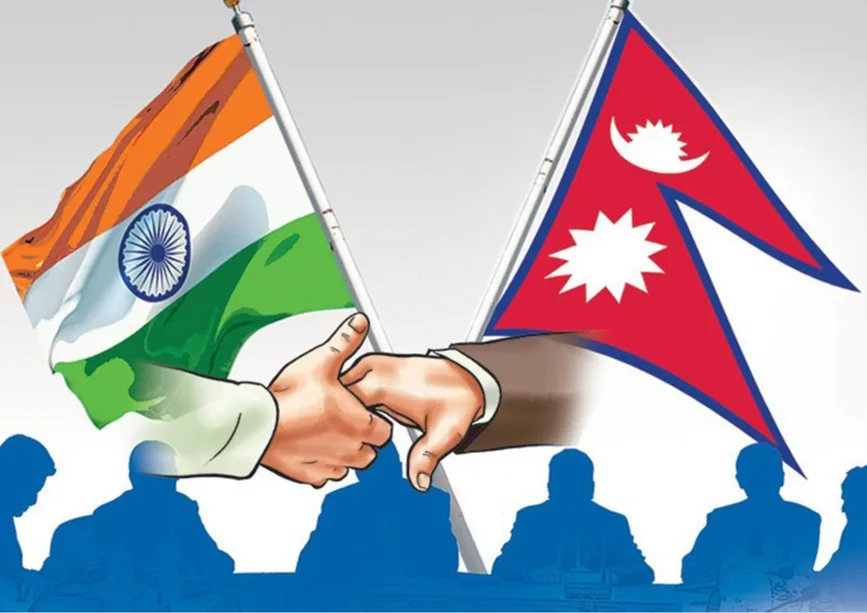
After a prolonged six-year pause, New Delhi and Kathmandu are set to resume the boundary talks from July 27 to 29, thus giving a renewed impetus to the bilateral relations.
The Boundary Working Group (BWG), the highest-level bilateral mechanism to resolve border disputes between India and Nepal, is set to meet in New Delhi from July 27 to 29 to resume boundary talks and resolve the disputes over border regions. “The meeting has been fixed. It’s a regular meeting which was halted due to COVID pandemic,” said Lok Bahadur Chettri, the spokesperson of Nepal Foreign Ministry.
Prakash Joshi, Director General of Nepal’s Department of Survey, will lead the Nepal delegation, accompanied by the officials from Nepal’s Defence, Law, Home, Foreign, and Land Management Ministries. The representatives from the Indian side are yet to be announced.
The previous meeting of the Boundary Working Group (BWG) happened in 2019 at Dehradun, India. The meeting aimed to resolve the boundary tasks by 2022. However, the talks were halted and no progress was seen in the resolution of boundary disputes due to the outbreak of COVID pandemic and also due to heightened boundary tensions between India and Nepal that erupted around 2019-20 over territories such as Kalapani.
As the boundary talks by BWG were halted, the border management tasks were given to the respective security forces. Sashastra Seema Bal from the Indian side and the Armed Police Force from the Nepal side managed the Indo-Nepal borders and indulged in tasks such as joint patrolling, intelligence and surveillance, local meetings to resolve border disputes, etc.
The Boundary Working Group (BWG)
The India-Nepal Boundary Working Group was established in the year 2014, in the backdrop of Prime Minister Narendra Modi’s visit to Nepal. The BWG predominantly handles construction, restoration, maintenance and repair of boundary pillars. It also involves in fieldwork, inspection and clearing no-man’s land for the purpose of installing new pillars. It will conduct cross-border inspections to demarcate properties held by citizens in each other’s territories. However, the disputed territories such as Kalapani, Susta, and Limpiyadhura will be addressed at the level of foreign secretaries along with the support of BWG.
India and Nepal share a border of 1,751 kilometres, and the latest push to hold bilateral talks to resolve the border disputes will rebuild the momentum to reset the neighbourhood relations. As well, the anticipated visit of Nepal Prime Minister K.P. Sharma Oli to India in the month of September will give a new boost to the bilateral relations in an era where India-Nepal relations are fluctuating as an impact of changing domestic political dynamics of Nepal.










Comments