





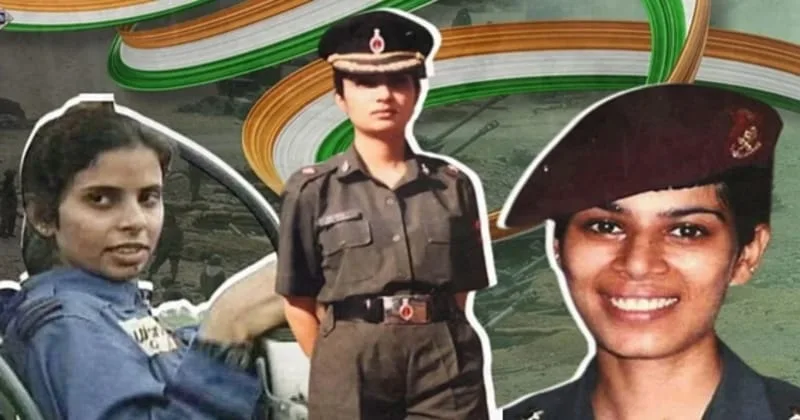
Every year on July 26, India observes “Kargil Vijay Divas” (Kargil Victory Day), a solemn occasion to pay homage to the valiant soldiers who displayed unparalleled courage, heroism, and patriotism during the 1999 Kargil War. This conflict, which began on May 3, 1999, culminated in India’s historic triumph on July 26, 1999. While the war itself was a defining moment for the nation, it also shone a spotlight on an often-unseen aspect of military might: the bravery of women soldiers. Their indomitable spirit not only fortified the Indian Army’s strength but also became a profound source of inspiration for women across the country, weaving a new chapter into the narrative of national service and sacrifice.
Highlighting their extraordinary contributions during the 1999 Kargil War, this report tells the stories of 10 remarkable women – including pilots, medical officers, logistics personnel, communication specialists, legal advisors, and technical managers. They were instrumental in the Kargil victory, demonstrating unparalleled bravery, commitment, and selflessness.
Gunjan Saxena: The Kargil girl, honoured with Shaurya Chakra
Former Indian Air Force Flight Lieutenant Gunjan Saxena, famously known as the ‘Kargil Girl,’ hails from Delhi. In 1999, she made history as the only woman IAF officer to participate in the Kargil War against Pakistan. She was part of the first batch of women trainee pilots in the Indian Air Force, joining in 1994. During the conflict, Gunjan undertook numerous daring rescue missions in her Cheetah helicopter, playing a pivotal role in evacuating wounded soldiers from treacherous locations amidst intense enemy shelling. Her extraordinary bravery and unwavering courage earned her the prestigious Shaurya Chakra award.
Flight Lieutenant Sreevidya Rajan: A braveheart in the Kargil War
Flight Lieutenant Sreevidya Rajan from Kerala played a crucial role in the 1999 Kargil War. After serving for over a year as a Flight Lieutenant in the Indian Air Force, she was deployed to Udhampur in J&K. During the intense conflict, Sreevidya, alongside Gunjan Saxena, was part of a cohort of 25 women trainee pilots in the IAF. Both women actively participated in vital missions, piloting Cheetah helicopters to evacuate injured soldiers and deliver much-needed supplies to forward operating bases.
Operating from the Srinagar Air Base, Sreevidya undertook numerous perilous missions into the Kargil sector. These missions included transporting critically wounded soldiers to hospitals and ensuring the delivery of essential rations to remote outposts. Her unwavering bravery and dedication during these operations directly contributed to saving dozens of lives.
Captain Ruchi Sharma: Ensuring vital communication in the Kargil war
During the 1999 Kargil War, Captain Ruchi Sharma of the Indian Army’s Signals Corps flawlessly handled the critical responsibility of maintaining communication lines. She played a pivotal role in ensuring uninterrupted communication between Indian soldiers deployed at extremely high altitudes. Captain Sharma began her career in the Indian Army in 1996 as an officer in the Signals Corps and is notably recognised as “India’s First Woman Operational Paratrooper.”
In the midst of the Kargil conflict, Captain Sharma was entrusted with the crucial task of establishing and maintaining communication channels in rugged and challenging terrain. This ensured that soldiers on the front lines remained constantly connected. In 1999, her exceptional bravery led her to win the ‘General Oberoi Trophy’ as the “Best Lady Adventurer” of her corps. She was later honoured with the “President’s Commendation” for her outstanding service.
Dr. Pachi Garg: A lifeline for soldiers in Kargil
Hailing from Ghaziabad, Uttar Pradesh, Major Dr. Pachi Garg holds the distinct honour of being the only woman medical officer to serve in the Kargil War. In 1999, she was the sole female military officer actively involved in the war effort with the 8 Mountain Division. Dr. Garg began her service in the Indian Army as a medical officer in 1997. Over her nearly five-year tenure in the army, she made critical contributions during the Kargil conflict.
During the war, Dr. Garg was deployed as a medical officer in the Drass sector, where she treated approximately 200 injured soldiers. Her unwavering dedication and medical expertise were a true lifeline for those on the front lines, providing essential care under the most challenging circumstances.
Captain Yashika Tyagi: A frontline logistician during the Kargil War
From Dehradun, Uttarakhand, Captain Yashika Hatwal Tyagi began her service with the Indian Army in 1994. By 1997, she achieved the distinction of becoming the first woman officer in the Indian Army to be deployed to the extremely cold climate of Leh. It was during her tenure in Leh, and despite being in her second trimester of pregnancy, that Captain Harwal courageously managed crucial logistical operations for the Kargil War.
She flawlessly handled vital responsibilities such as supplying rations and strategic equipment during the conflict. For her exceptional contributions, she was honoured with several medals, including the ‘Operation Vijay Star’. Furthermore, she became the first woman officer in the Indian Army to receive a War Despatch.
Priya Jhingan: The legal warrior of Kargil
From Shimla, Himachal Pradesh, Major Priya Jhingan stands as a pioneering woman officer in the Indian Army. During the Kargil War, she played a crucial role across various departments, including long-term logistics, general logistics, and the Judge Advocate General (JAG) department. Her responsibilities extended to providing vital legal assistance and counsel to soldiers deployed in the war zones.
In February 2018, Major Priya Jhingan was honoured by the then President of India, Shri Ram Nath Kovind, as one of 112 prominent women who have contributed significantly to various fields in the country. This recognition was a testament to her being one of the first women to join the Indian Army, marking a significant milestone in the integration of women into the armed forces.
Major Vandana Sharma: A distinguished contributor to the Kargil War
Major Vandana Sharma played a pivotal role in the 1999 Kargil War, with her military contributions being both recorded and lauded in the history of the Army Ordnance Corps. Throughout a diverse career spanning over 25 years, she has achieved excellence in various fields, from national defence to the corporate sector. Her outstanding achievements have garnered international recognition. In 2017, Vandana Sharma was honoured as the “Woman Icon” for the Asia-Pacific region by BERG Singapore. In the same year, she also received the prestigious “Woman of Substance” award from SHL Diagnostic.
Wing Commander Deepika Misra: A Kargil heroine’s unyielding courage
On June 8, 1999, during the Kargil War, Lucknow’s Wing Commander Deepika Misra was on a critical mission in the Batalik sector, involved in both the deployment and safe evacuation of soldiers via her Mi-17 helicopter. Despite her helicopter being struck by an enemy surface-to-air missile, which caused a severe injury to her leg, she courageously continued to fly. Her unwavering determination ensured that troops were deployed on time and the wounded were safely evacuated. For this extraordinary act of valour, she was awarded the Vayu Sena Medal (Gallantry) in 1999, becoming the first woman IAF officer to receive a gallantry award.
Wing Commander Manisha Krishnatri: Kargil War’s technical commander
Joining the Indian Air Force in 1994 at the age of 23, Wing Commander Manisha Krishnatri from Hoshangabad, Madhya Pradesh, played a crucial role during the Kargil War. She expertly managed the Punjab-based Air Defence Control System, which involved continuous analysis of information from border areas and intense surveillance. Her efficient guidance led to immediate and informed decisions, ensuring the transparency and speed of operations and significantly enhancing the overall effectiveness of IAF operations. Her leadership skills and discipline made her an inspiration for young officers.
Anju Manchanda: A lifesaver for wounded soldiers in Kargil
Major General Anju Manchanda from Delhi became the first woman officer in the Indian Army to hold the post of Deputy Director General Medical Services. During the 1999 Kargil War, deployed at the Army R&R Hospital in Delhi, Anjum Manjchanda played a vital role in the treatment of soldiers wounded in the conflict. She spearheaded the care for injured soldiers arriving at the hospital, ensuring they received the necessary medical attention.
The narratives presented unequivocally highlight the extraordinary and indispensable contributions of women during the 1999 Kargil War. Far from being relegated to supporting roles, these ten individuals served as frontline warriors, critical lifelines, and essential strategic assets, demonstrating unparalleled bravery and dedication under immense pressure.
From piloting helicopters through treacherous combat zones to evacuate the wounded and deliver vital supplies, to providing crucial medical care amidst the chaos, their direct involvement saved countless lives and sustained operations. Beyond the immediate battlefield, women also managed complex logistics, maintained vital communication networks in extreme conditions, and provided crucial legal guidance to troops. Their presence in diverse and often dangerous roles, including technical command and strategic overview, underscored their versatility and unwavering commitment to national defence.
These accounts collectively paint a powerful picture of resilience, expertise, and selflessness. The contributions of these pioneering women not only significantly impacted the outcome of the Kargil conflict but also shattered traditional barriers, paving the way for greater inclusion and recognition of women in combat and critical support roles within the armed forces. Their actions stand as a lasting inspiration, reinforcing the profound impact of individual courage and collective determination in the face of adversity.










Comments