





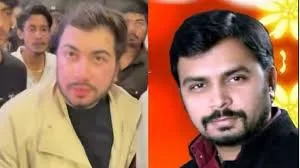
In one of the city’s most shocking and publicised drug scandals of recent years, the Madhya Pradesh Crime Branch has busted an expanding narcotics and exploitation ring. What began as a routine drug bust has now unravelled into a horrifying saga where synthetic narcotics met predatory intent, and crime merged seamlessly with communal designs.
At the centre of this dark web are Shahwar alias “Machhli” and his nephew Yaseen Ahmad, two men whose crimes go far beyond trafficking MDMA. They stand accused of systematically targeting young Hindu college girls and gym-goers, not just for addiction and abuse, but for blackmail, conversion, and psychological domination.
Their method was as deceptive as it was sinister, lure through glamour, trap through addiction, control through shame. Parties, gym invites, and so-called fitness drugs became tools to draw unsuspecting youth into a carefully crafted snare. Once entrapped, the victims, mostly young Hindu women, were sexually exploited, filmed, and then blackmailed. Some were coerced into running drugs; others, according to emerging evidence, were allegedly pushed toward religious conversion, stripped not only of their dignity but of their very identity.
This was not merely a gang, it was a criminal syndicate emboldened by power, protected by silence, and driven by a radicalised mindset that saw vulnerable Hindu youth as targets for conquest. Now, as investigators peel back the layers of this grotesque operation, a haunting question lingers, how many more such cells are hiding behind the veil of DJ parties, gym culture, and curated Instagram profiles? And how did a network so dangerous grow so freely under the noses of those sworn to protect?
Arrest and Seizure: A Cinematic Operation
The arrests followed the interrogation of two suspected drug peddlers, Saifuddin and Ashu alias Shahrukh, on July 18 near the Tin Shed vegetable market in Govindpura, according to officials in the Crime Branch. Acting on a tip, police recovered 15.14 grams of MDMA (commonly referred to as MD), a man-made party drug that fetches around Rs 3 lakh on the international market. The duo admitted to procuring the drugs from Shahwar and Yaseen, exposing a wider supply chain well entrenched in the city’s youth culture.
Taking a cue from this, the operation was well-coordinated. Shahwar and Yaseen were spotted on July 22 near Gammon Mall. When police closed in, Yaseen tried running away in his white Scorpio, knocking two cars in the process and behaving badly with the policemen. His car was discovered with a “Press” sticker and an Assembly pass, an act of claiming power and dodging questioning.
The pursuit culminated in both of them getting arrested. Police seized from them 3 grams of MD drug and an unauthorised country-made pistol.
Exploitation, Violence, and a Shocking Cyber Footprint
The true terror of the case came to the fore with the forensic report of Yaseen’s smartphone.
Experts found several obscene and explicit videos, some featuring Yaseen and other accused persons committing acts of sexual exploitation on young women. Other videos showed violent beatings of young men who were naked and abused. Police confirmed the videos were made by the accused as a means of blackmail and psychological domination.
Most damning, though, were the interrogation confessions. Yaseen and Shahwar purportedly confessed to targeting young women, especially college students and gym rats, on the pretence of fitness-enhancing drugs or invitations to nightclubs. Once hooked, these women were forced to work as drug couriers, facilitating deliveries to evade suspicion from the police.
In other instances, victims were exploited for sex and then blackmailed with explicit videos.
A Party That Never Happened: The VIP Trap
Yaseen had supposedly organised an extravagant “VIP Party” on August 2 in Bhopal. The party, police sources said, was a smokescreen for a massive drug peddling and honey-trapping racket. Party posters were already in circulation, inviting Bhopal’s prosperous and influential elite to the bash. The party was cancelled at short notice after Yaseen’s arrest.
The suspects took advantage of their position as self-made DJs and party organisers to gain entry into lounges, bars, and gyms. Police now have in their net over a dozen such joints. The owners of some of these establishments can be booked criminally if complicity is proved.
Drug Network Stretching Beyond Bhopal
Police suspect that this drug trafficking racket is not restricted to the city. With connections to Mumbai and potential links to interstate cartels, the case has prompted the Madhya Pradesh Police to expand their investigation. Police are also probing reports of money exchanges through the dark web and coordination via encrypted social media websites such as Snapchat and Instagram.
One senior officer who participated in the investigation said, “This network is established on influence, fear, and manipulation. The employment of women as peddlers, blackmail threats, and the use of official-sounding credentials made them seem unscalable.”
Political and Human Rights Storm
The case has gone political after Priyank Kanoongo, a member of the National Commission for Protection of Child Rights (NCPCR), made a tweet accusing the police probe of being highly inadequate and being driven by internal collusion.
In a now-viral tweet, Kanoongo had accused the culprits of operating a “criminal syndicate” targeting Hindu school and college-going girls. He also alleged that such girls were coerced into addiction, sexually exploited, taped, and then blackmailed into religious conversion.
He posted, “In our investigation findings, we have clearly written that the police investigation is inadequate, and the direction of the investigation should be towards the protectors of the crime; hence, instructions have been given for an investigation.”
Kanoongo’s post contained a photo with one of the accused in a respectful pose with police officials, prompting outrage over possible VIP treatment of the perpetrators.
He also alleged that one of the accused persons’ relatives is close to top police officers, and it would be impossible to conduct a fair investigation. He wanted these officers taken away from Bhopal so that they could remain impartial.
The Role of Social Media and the Dark Web
Digital forensics has uncovered how Yaseen and Shahwar employed new platforms to run their illicit network. While peddling drugs through Snapchat to luring girls through photoshopped Instagram profiles of glitsy “parties,” their online trail is now being reconstructed by cyber specialists.
The police reveal that even recruitment rallies and fitness classes were utilised as fronts to entice vulnerable people, especially young women, to drugs and, subsequently, exploitation.
One police officer commented, “The online trail is as sick as the physical evidence. They knew how to navigate the online world as easily as the streets.”
A Test Case for Police Reform and Child Protection
As the case develops, the Bhopal drug racket is turning out to be more than a simple crime conspiracy. It is an indication of a systemic failure across several systems, law enforcement, cyber monitoring, and civic vigilance.
Though arrests have occurred and drug supplies were broken, there is the overarching mission of dismantling the socio-political environment that supported the existence of such a network in plain sight.
The episode has cast a bitter light on the rising danger of party drugs in India’s metros. Once limited to cities like Mumbai and Delhi, the party-drug culture has now firmly set up shop in Tier-2 cities like Bhopal, entwined with glamour, technology, and unregulated nightlife.
What started as a run-of-the-mill drug bust has now come out as a mirror to the seamy underbelly of Bhopal’s nightlife and youth culture. The exposes brought on by Yaseen and Shahwar’s arrest have rocked the public conscience, compelling lawmakers, law enforcers, and civil society to ask themselves how many such rackets could be running beneath the radar.
This is not simply a tale of crime and drugs. It is a warning bell for a culture in danger of becoming desensitised to the exploitation of its youth, criminalisation of its nightlife, and breakdown of its institutional morals.
















Comments