





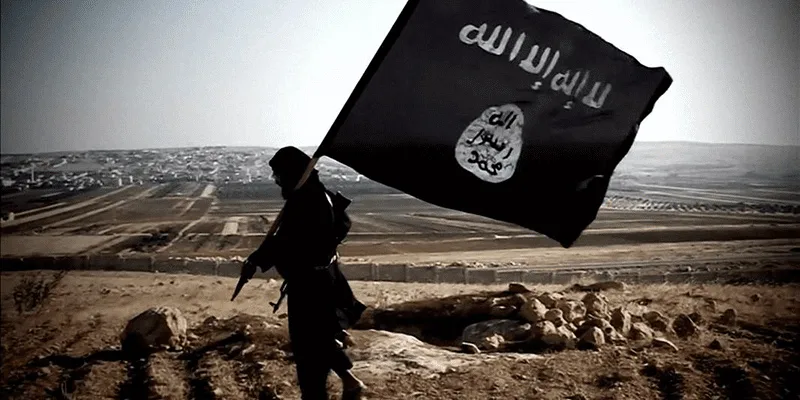
The resurgence of jihadist extremism in West Africa has reached an alarming new threshold, as evidenced by the recent killing of two Indian nationals and the abduction of a third in the West African nation of Niger on Tuesday, July 15, 2025. Once considered a relatively stable frontier in the Sahel region, Niger has now become a hotbed of violent insurgency, marked by frequent attacks, foreign hostage-takings, and mass civilian massacres orchestrated by Islamist terror groups linked to al-Qaeda and the Islamic State. The latest tragedy involving Indian workers reflects not only the regional collapse of law and order but also the global reach of these jihadi networks, which now operate with near impunity across vast stretches of West Africa.
One from Jharkhand, another from Southern part of Bharat
Among those killed was Ganesh Karmali, a 39-year-old construction worker from Jharkhand’s Bokaro district. The identity of the second deceased has been confirmed only as Krishnan, believed to hail from a southern Indian state. The Indian Embassy in Niger is reportedly coordinating with local authorities to repatriate the bodies and offer assistance to the families.
Meanwhile, a third Indian national, Ranjit Singh, a worker from Jammu and Kashmir, was abducted by unidentified armed men in the Dosso region of Niger. Singh was working at a construction site when he was taken hostage.
In a swift response, Jammu and Kashmir Chief Minister Omar Abdullah urged External Affairs Minister Dr. S. Jaishankar on July 20 to intervene at the earliest to ensure the safe release and return of Ranjit Singh. His family in India has made repeated pleas to the Indian government, fearing for his life amidst the deteriorating law and order in Niger.
Niger’s security situation worsens after 2023 coup
The killings come amid mounting violence and political instability in Niger following a military coup in July 2023. The democratically elected President Mohamed Bazoum was detained and placed under house arrest by members of the Presidential Guard, led by General Abdourahamane Tchiani, who declared himself the new head of state.
The coup received widespread international condemnation, with Niger subsequently expelling Western forces, including United States military personnel, who had been assisting in counterterrorism operations. The military regime has since turned to Russia for military and diplomatic support, further complicating the geopolitical situation in the Sahel region.
Terrorism on the rise: Foreigners now prime targets
The United Nations Security Council earlier reported that terrorist attacks have intensified in Niger in recent months. In March 2025, militants affiliated with the Islamic State in Greater Sahara (ISGS) launched an attack in the town of Kokorou, killing at least 44 civilians and injuring 13 others.
The situation has worsened considerably due to:
A limited national defence force, Poor coordination among security agencies, Severe budgetary constraints, and
The spillover of instability from neighbouring conflict-ridden nations, including Burkina Faso, Libya, Mali, Nigeria, and the Lake Chad Basin.
June 2025 was reported as one of the deadliest months in recent years, with IS-backed fighters launching a massive offensive across Tillaberi and Dosso regions. More than 100 civilians were killed, marking a grim return to mass atrocities in rural regions, many of them remote and lacking proper security presence.
Unclaimed kidnappings and unanswered questions
The kidnapping of foreigners, particularly those associated with aid work or migrant labour, has been on the rise. In one such chilling case, an Austrian aid worker, who had lived in Niger for over two decades, was kidnapped by unidentified assailants. To date, no terrorist outfit has claimed responsibility for her abduction, raising further concerns about the fragmented and shadowy network of armed groups operating in the region.
The recent attack on Indian nationals echoes a larger trend of foreign workers and NGOs becoming soft targets for these well-armed and ideologically driven groups, many of whom are linked to al-Qaida and the Islamic State (IS).
India’s response
The Indian government is yet to issue a detailed statement on the killing and abduction incident, but officials are said to be in close coordination with Nigerien authorities. The Ministry of External Affairs has been urged to review the safety protocols for Indian nationals working in high-risk regions like West Africa.
The tragedy has sent shockwaves across India, especially in the tribal and rural districts of Jharkhand and Jammu & Kashmir, where many low-income workers migrate abroad in search of better livelihoods. For their families, these foreign assignments often come with a heavy emotional and financial cost.
The broader crisis in Niger
Once seen as a relatively stable outpost in the turbulent Sahel region, Niger’s fall into authoritarian rule and its subsequent pivot towards Russia have isolated it internationally. Its expulsion of French and American forces, coupled with internal mismanagement, has left large swathes of the country vulnerable to jihadist violence.
The jihadist insurgency, which originated in neighbouring Mali, has now firmly taken root in Niger, threatening to spill further into Benin, Togo, and even coastal West Africa.
The military junta’s inability to protect civilians or secure rural zones has also led to displacement of thousands, destruction of agricultural livelihoods, and an impending humanitarian crisis.
Another failed US attempt?
Despite the presence of over 800 U.S. troops and advanced CIA and Air Force drones, Niger continued to witness a spike in Islamist attacks, culminating in the deadly 2017 Tongo Tongo ambush that exposed the hidden scope of America’s military footprint in West Africa.
Many argue that the U.S. mission failed to stem the tide of jihadist violence, which only grew worse after the 2023 military coup in Niger.
As Islamist groups like IS-Sahel, al-Qaeda in the Islamic Maghreb, and Boko Haram continue to wreak havoc across the Sahel, the broader West African public is left to wonder whether these foreign military interventions were truly about security or if they were part of a larger geopolitical play with little regard for long-term regional stability.
Jihadist network in West Africa
Over the past few years, West Africa has seen a dramatic surge in Islamist terrorist attacks, with militant groups affiliated to al-Qaeda and the Islamic State (IS) launching brutal assaults on civilians, military bases, and foreign workers. Countries like Burkina Faso, Mali, Niger, and Benin have been the worst hit, with the Sahel region becoming the epicenter of jihadist violence and extremism. This escalation has coincided with the retreat of democratic governance in some nations, weakening security coordination and enabling militant control in rural regions.
One of the deadliest and most haunting incidents occurred in Barsalogho, Burkina Faso, in August 2024, where al-Qaeda affiliate Jama’at Nusrat al-Islam wal-Muslimin (JNIM) reportedly massacred civilians in villages where residents were digging trenches for self-defence. Initial reports cited nearly 100 people killed, but later investigations and French security assessments suggested that the actual number may have reached 600, making it one of the largest terrorist massacres in recent history in the region. Human rights observers indicated that the victims included women, children, and the elderly who were executed in cold blood.
Just a couple of months earlier, on June 11, 2024, another devastating attack shook Mansila, located in Yagha Province, Burkina Faso. JNIM militants overran a military base and reportedly captured the entire town. The attack left over 100 soldiers dead and at least 20 civilians executed, whom the terrorists accused of cooperating with the government. The scale of this attack exposed the growing inability of the Burkinabe state to maintain territorial control in the north.
Religious institutions have also been prime targets. On February 16, 2020, suspected militants from the Islamic State in the Greater Sahara (ISGS) attacked a Protestant church in Pansi, Burkina Faso. The assailants opened fire during Sunday worship, killing 24 people and injuring at least 18 others, while also abducting several hostages. This attack marked a disturbing trend of targeting Christians in the region, further polarising the already fragile social fabric.
In Mali, a country long battered by extremist violence, a series of coordinated terrorist attacks occurred on September 17, 2024, in the capital city Bamako. JNIM operatives launched a double assault targeting Bamako International Airport and a national gendarme training academy. The attacks left 77 people dead and 255 wounded, and reportedly caused damage to military aircraft and critical security infrastructure.
The jihadist threat has not spared Niger, where IS-Sahel (formerly ISGS) and JNIM have repeatedly attacked security forces and civilians. In December 2024, Islamic State-backed fighters ambushed a military convoy in Chatoumane, western Niger, killing around 130 soldiers. A few days later, between December 12 and 14, separate attacks in Libiri and Kokorou towns led to the deaths of 39 civilians.
The violence continued into March 2025, when on the 2nd of the month, JNIM fighters ambushed a convoy in the Ekade Malane region of Niger, killing 11 soldiers. On March 15, IS operatives attacked a gold mining site in Tillabéri, killing nine soldiers and injuring several others. Just two days later, on March 17, nearly 300 Boko Haram militants stormed a military outpost in eastern Niger, utilising suicide car bombs and heavy weapons, leading to four confirmed soldier fatalities and injuries to more.
In Benin, a relatively new frontline in the Sahel conflict, JNIM launched a surprise assault on an army post in Karimama province on January 11, 2025. Located along the Niger-Burkina Faso border, the attack claimed the lives of at least 28 Beninese troops. Reports suggest the militants seized a cache of weapons, including surveillance drones, raising fears about JNIM’s growing sophistication and reach.
The situation escalated further in June 2025, with what is being referred to as one of the most lethal months for security forces in recent history. On June 1, JNIM launched a massive assault on the Boulkessi military base in Mali, located near the Burkina Faso border. The group claimed it killed over 100 Malian soldiers. This attack was part of a broader campaign from May to June 2025, during which jihadist groups killed more than 400 soldiers across Mali, Niger, and Burkina Faso.
These coordinated and increasingly deadly attacks demonstrate how Islamist groups like JNIM and IS-Sahel are no longer just launching sporadic ambushes, they are conducting complex operations involving multiple targets, heavy weaponry, and intelligence gathering. The groups are also now filling administrative voids by enforcing Sharia law, levying taxes, and resolving disputes in territories where the state has no reach, particularly in rural Mali, Burkina Faso, and eastern Niger.
Many warn that the coastal states like Benin, Togo, and Ivory Coast could become the next theatres of jihadist expansion, especially as state institutions fail to address the economic and ethnic grievances that extremists exploit. Human rights groups have also highlighted growing civilian casualties, displacements, and food insecurity triggered by this wave of violence
The killing of two Indian nationals and the abduction of a third are not isolated incidents but part of a wider pattern of deteriorating law and order in Niger. It shows the urgent need for international cooperation to restore democratic governance and counterterrorism operations in the Sahel region.
For the families of Ganesh Karmali, Krishnan, and Ranjit Singh, this tragedy is not a geopolitical issue, it is a personal catastrophe. As their families wait with bated breath, the onus lies on both the government and the international community to take concrete steps to secure the release of those abducted and ensure the safety of others working in volatile regions like Niger.










Comments