





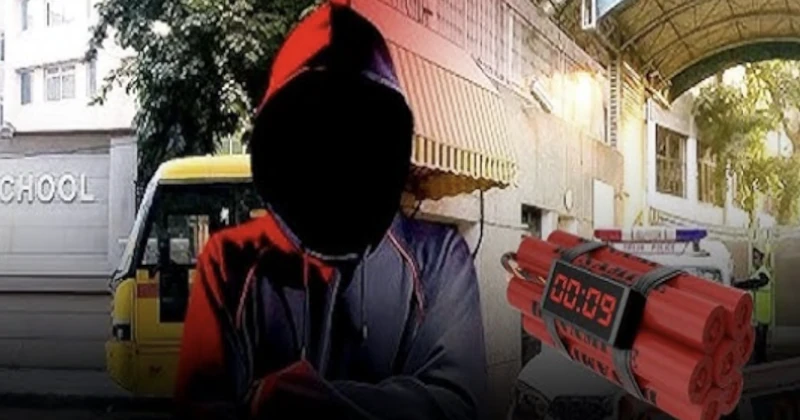
In the last week, a large number of reputed schools in Delhi and Bengaluru have received bomb threats through emails. So far, all the threats have turned out to be hoaxes, but they have caused significant security threats and an avoidable drain on the manpower of security agencies. The police and security agencies had to carry out mass evacuations, conducting a check of the school premises and deploying Bomb Detection and Disposal Squads (BDDS). Last time, a series of bomb threats were received by various airlines of India in October 2024. The whole threat to the schools now appears to be a part of a well-orchestrated campaign to disrupt the normal life in schools and instil fear psychosis amongst the students, parents and the school administration.
Unlike airports, schools do not have dedicated security. Most of the schools have a few people from private security providing the basic security cover, mostly confined to entry and exit. Once schools close in the late afternoon, there is no major activity in the schools till the next day. Most of the school ferries students by buses, and these buses could also be targeted. Thus, schools are more vulnerable to bomb threats than other public places. The aim of such threats, even if a hoax, is to get the media publicity too. Any threat to the schools in metros is sensational news and will be carried by the media of all types.
Though such a threat could be part of a well-planned fear campaign amongst the public, it is possible that such an email has been sent by a psychologically deranged person. But since such threats are not easy to pinpoint, it is likely that these are being sent by a highly skilled person or an organisation. Such prank threats can cause massive psychological breakdowns and have the potential to disturb the psyche of innocent young children. Whether we like it or not, this type of threat, even if a hoax, clearly falls under the ambit of terrorism, though of a totally different dimension.
Since India appeared on the radar of bomb threats to civilian airlines last year, and schools now, a pattern is clearly visible. Earlier, it had caused a huge amount of anxiety amongst the air passengers; now, the target seems to be vulnerable school premises. The perpetrators of this condemnable act are exploiting a new form of Cyber Terrorism to adversely impact the psyche of the students, teachers and parents, and they seem to be succeeding to some extent. Cyber Terrorism is defined as the act of using the internet and other forms of communication technology to threaten or cause bodily harm or intimidate for political or ideological power. It is a new form of terrorism, but difficult to pinpoint as cyberspace does not recognise country borders and is more often faceless. Chinese and Russians have emerged as key destinations for hackers, and there may be other nations like Pakistan that also patronise this form of terrorism.
A quick analysis of the hoax threats in recent times reveals that it was aimed at some sort of disruption, particularly aimed at causing discomfort to the people at large. The objective of such threats is to cause panic and tie down police and intelligence agencies, which it seems to have succeeded in doing. The security agencies are being stretched to carry out thorough checks after each threat. The security agencies are constrained to treat every threat as the real one. A repeated pattern of threats is likely to cause fatigue, and security agencies may overlook other vulnerable areas. Therefore, we have to find a foolproof approach to deal with such threats in the future.
The immediate solution is to beef up the physical and electronic security on the school campus. Each school can hire a qualified private security guard who carries out a detailed security audit of the school premises. Here, I suggest that private agencies can hire ex-servicemen who have experience dealing with such threats in their military careers. A well-planned CCTV network with a control room which is manned 24 hours is essential now. Electronic surveillance is a very effective tool in detecting any suspicious movement. If a school administration learns the technique of securing the school premises, every threat is not likely to disrupt the school routine as is happening now.
Having dealt with various shades of terrorism in my military career, some suggestions and recommendations to manage such threats to institutions and important venues are being offered. The first long-term step is to build a robust intelligence network in the country. Traditionally, we have lacked strategic culture as a nation and a lack of credible intelligence has resulted in many bomb blasts in the past. Fortunately, we have much more effective policing now, and bomb blasts of the 1990s and the first decade of this century are largely a remote possibility. In times to come, the threats to internal security require a much more robust intelligence network, including the ability to deal with cyber threats.
We, as a society, also have to build security consciousness amongst the citizens. With massive urbanisation, the population has migrated and settled throughout the country as per job requirements. New habitats have come up, and demographic patterns have also changed, particularly in the border states. In the big cities and metros, we do not even know our neighbours. The citizens have to be sensitised to the threats beyond local law & order through a concerted campaign. But this threat offers a great opportunity to empower our students to deal with the future challenges of security. I strongly recommend such education as part of the school curriculum.
With the employment of correct and reliable technology, our eyes and ears can be strengthened. CCTV coverage of key installations, busy streets, malls, shopping centres, airports, railway stations, etc., under an effective control centre is almost a necessity. The technology is fairly cheap now, and each district administration must increase the CCTV coverage with adequate redundancy. If a school, a hospital, or an airport receives a bomb threat, then we should have the full CCTV footage of the last month. Such CCTV footage would largely specify our approach to a bomb threat, and valuable time and resources, thus may be saved.
We as a nation cannot appear helpless against such cyber threats. Our children should know that India can deal with such new threats. Besides internal laws, here we need effective international protocols and bodies like Interpol for swift coordination amongst the nations. Cyber terrorism of any dimension can weaken a strong nation like India with its persistence, scope, reach and dominance. India can ill afford to take this potent threat to airlines, hospitals or schools lightly and dissipate precious manpower and resources in reacting to every hoax threat. Security is a collective responsibility of a nation and its citizens for the overall well-being and prosperity of the society. Bharat would give a befitting reply to such a new dimension of terrorism and emerge stronger.















Comments