





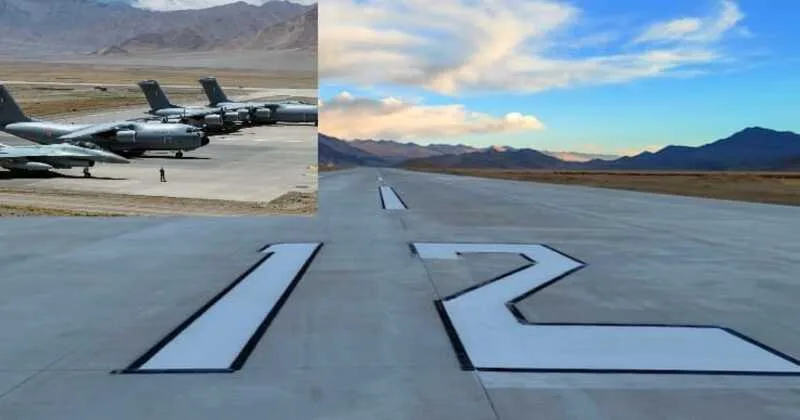
India is set to operationalise a high-altitude airbase in eastern Ladakh, significantly enhancing defence preparedness and strategic connectivity along the Line of Actual Control (LAC) with China. The advanced landing ground (ALG) at Mudh-Nyoma, the highest airbase in the country, is expected to be fully functional by October.
Located at an altitude of approximately 13,700 feet, Nyoma is the closest ALG to the LAC. The upcoming airbase has been designed to support rapid military operations, offering critical infrastructure to ensure swift deployment and logistical support in the high-altitude region. The facility features a newly constructed three-kilometre-long runway capable of handling emergency and combat operations.
Approved in 2021 with a budget of Rs 214 crore, the project is a key component of India’s broader strategy to fortify border security and improve infrastructure near its northern frontiers. The strategic location of Nyoma enables the armed forces to deliver supplies, personnel, and equipment quickly to remote and mountainous regions where road access is limited.
The development of the Nyoma airbase comes amidst India’s intensified push to enhance border infrastructure following the military standoff with China that began four years ago. Since then, New Delhi has fast-tracked the construction of roads, tunnels, and bridges in Ladakh and surrounding areas to strengthen response capabilities and mobility along the border.
Nyoma’s strategic value has risen considerably in the aftermath of tensions in areas like the Demchok and Depsang plains. While patrolling has resumed in some areas, the close proximity of Nyoma airbase to these sensitive zones allows for rapid mobilisation and support in any potential crisis.
Importantly, high-altitude ALGs such as Nyoma are not limited to military use. They also facilitate civilian air operations, improving transportation and access to essential services for local populations in remote areas.
India’s continued focus on border infrastructure signals a long-term commitment to securing its territorial integrity while ensuring that both defence and developmental needs in border areas are adequately met.
















Comments