





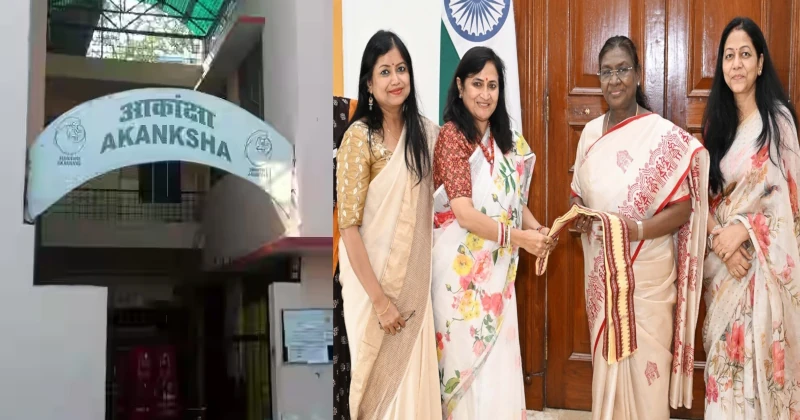
President Droupadi Murmu hosted an extraordinary interaction at Rashtrapati Bhavan with women from humble backgrounds—Guddi Devi, Munni Kharwar, Halima, Maya Lodhi, and others—who are part of the Lucknow-based “Masala Mathri Kendra” under the Aakanksha Committee Uttar Pradesh.
These women, once confined to economic and social margins, found themselves seated in the grand halls of the President’s official residence, engaged in heartfelt conversation with the First Citizen of India. This historic meeting was orchestrated by Dr. Rashmi Singh, an IAS officer and current President of the Aakanksha Committee, whose unwavering commitment turned a distant dream into a living moment of recognition and dignity.
What began as a modest livelihood initiative in Lucknow—the Masala Mathri Kendra—grew under the Aakanksha Committee into a symbol of women-led micro-entrepreneurship and self-reliance. The unit provided these women with a means to earn, learn, and live with dignity. But few among them ever imagined that their efforts would be recognised at the very heart of India’s power corridor.
As they stepped into Rashtrapati Bhavan, awe and joy were etched on their faces. For women who had spent their lives in modest homes and workspaces, the grandeur of the presidential palace was more than a sight—it was a validation of their worth, struggle, and transformation.
In her interaction with the women, President Murmu delved into issues critical to the empowerment of women—income generation, healthcare access, children’s education, and social upliftment. She commended the Aakanksha Committee’s work, specifically the Masala Mathri Kendra, as a model of bottom-up development.
“Economic self-reliance is the most effective tool for true empowerment,” she said, urging that the Aakanksha model be expanded to every district of Uttar Pradesh.
In a powerful and poignant remark, President Murmu appealed to the wives of administrative officers to use their social privilege not as a cushion for personal comfort, but as a tool of public service. Her call was clear: development must become personal, compassionate, and deeply embedded in local realities.
At the heart of this transformative initiative is Dr. Rashmi Singh, whose tenure as President of the Aakanksha Committee Uttar Pradesh has redefined what public service can mean. Rather than limiting her role to ceremonial functions, she actively mobilised resources, motivated women, and ensured that policy translated into progress at the grassroots.
She presented a detailed report of the Committee’s year-long achievements to the President and handed over a compendium documenting the transformation of dozens of women under Aakanksha’s umbrella.
Dr. Singh was accompanied by Aakanksha Committee Secretary Pratibha Singh and Vice President Dr. Preeti Chaudhary, who briefed the President on upcoming projects focused on livelihood creation, skill training, and micro-enterprise development across rural and semi-urban Uttar Pradesh.
This meeting at Rashtrapati Bhavan was not a ceremonial photo-op; it was a visionary intervention. It brought national attention to the quiet but powerful revolution brewing in places like Lucknow, where women are becoming breadwinners, leaders, and changemakers—armed not with political slogans but with spices, snacks, and steel determination.
It also sent a strong message to government functionaries and policy implementers across the country: Empowerment is not about token representation—it is about structural access, economic tools, and social respect.
The success of Masala Mathri Kendra is just the beginning. Under the proactive leadership of the Aakanksha Committee, plans are now in place to replicate the model across districts, empowering thousands of women through micro food processing, local brand building, and skills-based enterprise development. With the moral and institutional endorsement from the President of India, Aakanksha’s mission now carries national legitimacy, and its women—once ignored—now carry newfound pride and purpose.













Comments