





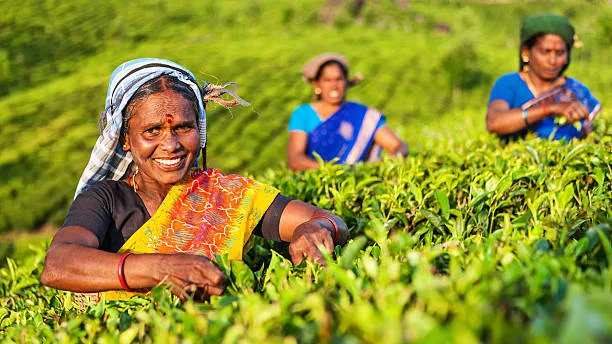
With a deep commitment to empowering Bharat’s forgotten farmers and reviving the rural soul of the nation, the Union Cabinet, led by Prime Minister Narendra Modi, on Wednesday (July 16) gave a historic nod to the “Prime Minister Dhan-Dhaanya Krishi Yojana (PM-DDKY).” More than just a scheme, it is a heartfelt promise to transform the lives of those who till the land yet often remain untouched by development.
To be implemented over six years (2025–26 to 2030–31), the scheme will breathe new life into 100 of India’s most neglected agricultural districts, where fields lie parched, yields are meagre, and farmers struggle in silence. With an ambitious outlay of Rs 24,000 crore, PM-DDKY aims to bring hope and support to over 1.7 crore small and marginal farmers, many of whom have laboured for generations without access to irrigation, storage, credit, or modern farming infrastructure. For them, this is more than policy, it is long-overdue recognition, respect, and a pathway to self-reliance.
A New Chapter in Agricultural Reform
The PM Dhan-Dhaanya Krishi Yojana marks a new phase in agricultural policymaking that is district-focused, data-driven, and multi-stakeholder in nature. It draws its conceptual framework from the widely acclaimed Aspirational Districts Programme initiated by NITI Aayog in 2018, which has successfully improved health, education, and infrastructure indicators in some of India’s most lagging districts.
The Union Cabinet approved the ‘Prime Minister Dhan-Dhaanya Krishi Yojana’ for a period of six years, beginning with 2025-26 to cover 100 districts. #CabinetDecisions pic.twitter.com/XIvrmDfWep
— Ministry of Information and Broadcasting (@MIB_India) July 16, 2025
However, unlike previous agricultural reforms that have taken a pan-India or sectoral approach, this scheme is unique in its granular, bottom-up design. Each district will have a tailor-made Agricultural and Allied Sector Plan, co-created by local committees, experts, and progressive farmers, aligning local needs with national goals such as food security, water conservation, and natural farming.
Objectives of the Scheme
The Prime Minister Dhan-Dhaanya Krishi Yojana is built around five core pillars, which together form a blueprint for rural revival:
1) Enhancing Agricultural Productivity: By providing inputs, technology support, and extension services, the scheme will help farmers transition to higher-yielding and climate-resilient cropping systems.
2) Promoting Crop Diversification: Moving beyond wheat-rice monocultures, the scheme will incentivise pulses, oilseeds, and horticultural crops, especially in water-stressed and nutritionally vulnerable regions.
3) Post-Harvest Infrastructure Development: Panchayat-level godowns, drying yards, and cold chains will be constructed to minimise post-harvest losses, enable price realisation, and reduce distress sales.
4) Irrigation and Water Management: Water-use efficiency will be a central focus through micro-irrigation, rainwater harvesting, and revival of traditional water bodies.
5) Credit Facilitation: By linking farmers to institutional credit, through enhanced Kisan Credit Cards and digital finance access, the scheme aims to reduce dependence on moneylenders and increase financial inclusion.
District-Level Customisation and Committee System
The scheme will deploy an integrated, decentralised approach to planning and implementation. Each district will set up a District Dhan-Dhaanya Samiti, chaired by the District Collector or Magistrate and include representatives from line departments, banks, civil society, and at least two progressive farmers.
The Samiti will be responsible for:
- Conducting a baseline assessment.
- Drafting a District Agriculture and Allied Activities Plan (DAAAP).
- Monitoring monthly progress against 117 Key Performance Indicators (KPIs).
- Coordinating with State and National Level Committees.
To support these efforts, the Centre will appoint Central Nodal Officers for each district, ensuring cross-ministerial synergy and real-time troubleshooting.
Selection of Districts: Data-Backed Identification
The 100 districts will be identified using three primary indicators:
1) Low Agricultural Productivity: Based on per-hectare yield data across major crops.
2) Low Cropping Intensity: Focus will be on districts where land lies fallow due to water or infrastructure constraints.
3) Inadequate Credit Flow: Districts where institutional agricultural credit penetration is below the national average.
Each state and union territory will have a minimum representation of one district, with the overall distribution determined by the share of Net Cropped Area (NCA) and the number of operational holdings. This ensures geographical balance and equity in the scheme’s reach.
Monitoring and Real-Time Dashboard
In a first-of-its-kind innovation for the farm sector, the government will establish a digital dashboard to monitor district-level performance on 117 indicators such as:
- Crop yield improvement
- Fertiliser use efficiency
- Farmer income rises
- Water availability per hectare
- Number of soil health cards issued
- Area under organic farming
- Institutional credit uptake
This dashboard will be updated monthly and reviewed at multiple levels, from the district headquarters to the Cabinet Secretariat. NITI Aayog will serve as the technical advisory body, guiding data collection, analysis, and performance audits.
Convergence of Schemes: Maximum Impact, Minimum Redundancy
A major innovation of the Dhan-Dhaanya Krishi Yojana is its ability to synchronise and leverage resources from 36 central government schemes under 11 Ministries, including:
- Ministry of Agriculture and Farmers’ Welfare
- Ministry of Rural Development
- Ministry of Jal Shakti
- Ministry of Food Processing Industries
- Ministry of Environment, Forest and Climate Change
- Ministry of Finance
This convergence eliminates overlaps and ensures that funds, manpower, and institutional capacities are directed in a coordinated manner. State-level schemes and public-private partnerships (PPPs) will also be dovetailed for larger scale and faster impact.
#Cabinet approves the “Prime Minister Dhan-Dhaanya Krishi Yojana” for a period of six years, beginning with 2025-26 to cover 100 districts.
Prime Minister Dhan-Dhaanya Krishi Yojana draws inspiration from NITI Aayog’s Aspirational District Programme and first of its kind… pic.twitter.com/mVutJSKBui
— PIB India (@PIB_India) July 16, 2025
Expected Impact: Building a New Rural India
By focusing on the 100 weakest links in India’s agricultural chain, the scheme is expected to generate a cascading effect. As these districts improve in productivity, income, and resilience, their progress will raise the national average, contributing directly to India’s GDP, food security, and rural employment.
Key Anticipated Outcomes:
- 15–25 percent increase in average crop yield over six years.
- 30–40 percent reduction in post-harvest losses.
- 50 lakh hectares under sustainable farming practices.
- 1 crore new institutional credit-linked farmers.
- 25,000+ village-level storage and agri-infrastructure units created.
Modi Government’s Track Record: A Decade of Rural Empowerment
The PM-DDKY is not an isolated initiative. It builds on a decade-long legacy of rural-focused schemes launched by the Narendra Modi-led government. Some major milestones include:
1. PM-KISAN (2019–Present): Direct income support of Rs 6,000 annually to over 11 crore farmer families. Total disbursement has exceeded Rs 3 lakh crore till date.
2. Pradhan Mantri Krishi Sinchayee Yojana (PMKSY) (2015): Focusing on ‘Har Khet Ko Pani’, this scheme enhanced irrigation coverage through 99 Accelerated Irrigation Benefit Projects (AIBPs) and micro-irrigation initiatives.
3. e-NAM (2016): A pan-India electronic platform connecting 1,260 Agricultural Produce Market Committees (APMCs), enabling transparent pricing and interstate trade.
4. Pradhan Mantri Fasal Bima Yojana (2016): A restructured crop insurance scheme with low premiums and fast claim settlement, covering over 30 percent of gross cropped area.
5. Soil Health Card Scheme (2015): Issued over 25 crore soil health cards to farmers with tailored fertiliser and crop recommendations.
6. 10,000 Farmer Producer Organisations (FPOs) Mission: Creating collective bargaining groups to improve market access and reduce input costs.
These schemes have provided the foundational infrastructure, income stability, and data systems necessary for launching a focused and outcome-oriented programme like Dhan-Dhaanya.
Political Significance
Aimed at India’s heartland, Uttar Pradesh, Bihar, Madhya Pradesh, Chhattisgarh, Jharkhand, Odisha, and parts of Maharashtra and Rajasthan, the Dhan-Dhaanya Krishi Yojana will resonate deeply among the rural electorate, where agriculture remains the dominant occupation.
By focusing on livelihood, self-sufficiency, and value addition, the government is crafting a narrative of empowerment rather than entitlement, a shift from welfare to capability.
With the 2029 general elections approaching, the Dhan-Dhaanya Krishi Yojana is being viewed as a politically significant move, reinforcing the government’s commitment to rural India, a key electoral constituency. Beyond politics, the scheme has the potential to:
- Reduce rural-urban migration by making agriculture a viable and attractive livelihood.
- Bridge income disparities by empowering farmers in backwards districts.
- Promote inclusive growth by prioritising small and marginal farmers, who constitute the majority of India’s farming community.
Sowing the Seeds of Agricultural Atmanirbharta
The Prime Minister Dhan-Dhaanya Krishi Yojana is not just another government scheme it is a strategic shift in agricultural governance, combining precision planning with grassroots empowerment. It recognises that India’s true transformation lies in revitalising its villages, where 60% of its population still resides.
By zeroing in on the most disadvantaged districts and giving them tools, resources, and accountability frameworks, the scheme can unlock trapped potential, revive rural economies, and set India on a path of sustainable agricultural growth.
In the words of Prime Minister Modi: “We cannot build a Viksit Bharat (Developed India) unless every farmer, every village, and every district rises together. Dhan-Dhaanya Yojana is a promise, that no region will be left behind.”
Indeed, as India marches towards its 100th year of independence in 2047, the success of this scheme may well determine whether its rural Bharat walks alongside its urban India, in dignity, prosperity, and pride.











Comments