





India is not only the world’s largest democracy but also the cradle of democracy. Democracy is the soul of India deeply woven into the breath and ethos of its people. The evolution of democratic values and concepts in India did not originate from England’s 1215 Magna Carta, but rather from the ancient and eternal cultural thought streams and philosophical traditions rooted in cooperation, harmony, and coexistence. In this country, democracy is not merely a system of governance; it is a way of life and worldview shaped by millennia of historical experience and the ability to see unity in diversity and harmony among opposites.
Compared to Western nations like England or the United States, the democratic roots of India run much deeper. So deep, in fact, that India not only accepted diverse beliefs, ideologies, and ways of life but also developed the inner vision to perceive beauty in their diversity an insight grounded not merely in tolerance, but in genuine coexistence.
Tolerance often implies enduring others under compulsion, whereas coexistence reflects a spirit of mutual understanding and voluntary acceptance. This vision of coexistence and unity in diversity is the hallmark of eternal India and a testimony to its rich cultural legacy spanning thousands of years. This uninterrupted and unbroken democratic stream was obstructed only once and that too, not in ancient times, but in independent India by a despotic exercise of power. However, the Indian psyche, which has deep-rooted faith in democracy, wholeheartedly rejected this act.
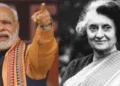
On June 12, 1975, a decision was made in India’s democratic history that can be termed as “unprecedented and unparalleled.” Justice Jagmohan Lal Sinha of the Allahabad High Court delivered a historic judgment invalidating the election of the then Prime Minister, Indira Gandhi. The case pertained to the general elections of 1971, in which Indira Gandhi had contested from Rae Bareli against the socialist leader Raj Narain. He alleged that Indira Gandhi had misused government machinery and resources to win the election and had employed corrupt practices during the election process.
Based on the available evidence and legal arguments, the court found that Indira Gandhi had clearly violated the Model Code of Conduct and the Representation of the People Act. Under Section 123(7), it was proven that she had won the election by abusing official machinery. Consequently, the court nullified her election and declared her ineligible to contest elections for the next six years. When the case reached the Supreme Court, Justice V.R. Krishna Iyer temporarily allowed her to remain a Member of Parliament but barred her from participating in debates or voting in Parliament. Ethically and in keeping with democratic traditions, Indira Gandhi was expected to resign from the post of Prime Minister and honor the court’s verdict. However, instead of doing so, she imposed a state of Emergency on the country an act that is considered the most severe blow ever dealt to Indian democracy.
On the night of June 25, 1975, the Emergency was declared. This period became a dark chapter in Indian democratic history, during which the Constitution and civil liberties were ruthlessly crushed. Fundamental rights were suspended, and freedom of the press was taken away. Censorship was imposed on newspapers, publications like “Motherland” were shut down. The government’s tyranny extended beyond political opponents and descended upon ordinary citizens as well. Democracy, freedom of expression even the right to life were trampled. Many individuals who opposed the Emergency faced brutal repression.
Some even lost their lives. Renowned actress from Karnataka, Snehalata Reddy, and Pandurangpant Kshirsagar, then the All-India Vyavastha Pramukh of the RSS, were among those who died due to their resistance. Lawrence Fernandes, brother of the famous socialist leader George Fernandes, was tortured in police custody to the extent that he couldn’t walk for months. On June 26, 1975, RSS Sarsanghchalak Balasaheb Deoras was arrested from Nagpur. On July 4, 1975, around 26 social and cultural organisations, including the Rashtriya Swayamsevak Sangh (RSS), were banned. Thousands and lakhs of people were thrown into jails without proper charges or evidence. The number of arrests was so high that schools, universities, and government buildings were converted into temporary jails.
Among the most organised and powerful resistances to the Emergency was that of the Rashtriya Swayamsevak Sangh (RSS). Of those arrested under the Maintenance of Internal Security Act (MISA), more than 25,000 were RSS volunteers. In this great struggle to protect democracy, a total of 1,30,000 satyagrahis (non-violent protesters) participated, more than 1,00,000 of whom were RSS members. Over 100 RSS workers sacrificed their lives in the process. Thousands of RSS pracharaks and karyakartas worked underground to keep the resistance alive and launched a sacred campaign to restore democracy.
This was a time when thousands gave up personal comfort, risked their lives, and fought for a noble purpose to revive the democratic spirit of India. During this period, the power-hungry government not only took away people’s freedoms but also trampled the soul of the Constitution. Democratically elected governments in opposition-ruled states like Tamil Nadu and Gujarat were dismissed. Arbitrary amendments were made to the Constitution. The term of the Lok Sabha, Rajya Sabha, and state assemblies was extended from 5 to 6 years. The powers of the judiciary were curtailed, and attempts were made to alter the basic structure of the Constitution.
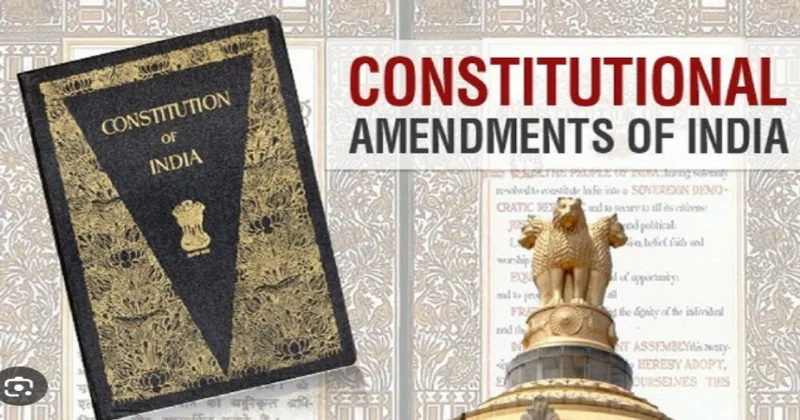
On November 2, 1976, the 42nd Constitutional Amendment was passed by the Lok Sabha and later by the Rajya Sabha on November 11, and it came into force on January 3, 1977 . This amendment even altered the Preamble of the Constitution, considered its soul. Words like “ Secular ” and “ Socialist” were added to the Preamble without any public or parliamentary debate, even though these terms were not part of the original draft or consensus of the Constituent Assembly. Generally, the Preamble is seen as an inseparable and inviolable part of the basic structure of the Constitution it reflects the essence that should never be altered. But the authoritarian government violated even this moral sanctity.
It is noteworthy that during the meetings of the Constituent Assembly (1946–1949), extensive discussion took place regarding the inclusion of the words “secular” and “socialist” in the Preamble. Constituent Assembly member Khushal Talakshi Shah better known as K.T. Shah had moved an amendment to incorporate the terms “secular” and “socialist” into the Preamble. He advocated for the inclusion of these terms on three separate occasions, including in November and December of 1948. His demand was that Article 1 should state: “India shall be a secular, federal, and socialist union of states.” However, Dr. B.R. Ambedkar, the Chairman of the Drafting Committee, along with many other members of the Constituent Assembly, rejected the proposal. They not only dismissed it with sound reasoning and examples, but also deemed it unnecessary and contrary to Indian tradition and culture. Dr. Ambedkar believed that the Constitution should not be viewed as a document that imposes a particular social philosophy or economic ideology on future generations.
Responding to K.T. Shah’s proposal, he said, “What should be the policy of the state, how the society should be organized in its social and economic aspects these are matters that must be decided by the people themselves according to the circumstances of the time.” According to him, codifying an ideology like socialism in the Preamble would constrain future generations from choosing their own path, which would be inappropriate and impractical in a living, dynamic, and responsive democratic system. He went so far as to say, “It cannot be inserted into the Constitution because it would completely destroy democracy.” To emphasize the irrelevance of inserting the word “socialist,” Dr. Ambedkar pointed out that the Directive Principles of State Policy already contained ample provisions promoting equality, the abolition of exploitation, and dignity of labor. Referring to Article 31, he mentioned that it outlines steps to prevent the concentration of wealth and ensures equal pay for equal work provisions that are, in essence, socialist in nature. In a tone of irony, he remarked: “If these Directive Principles… in their direction and content are not socialist, then I do not understand what socialism means.”
Just like “socialism,” the majority of members in the Constituent Assembly were not in favor of inserting the term “secular” into the Preamble either. Among those who opposed it were Dr. Ambedkar, Alladi Krishnaswamy Iyer, C. Rajagopalachari, and even Jawaharlal Nehru himself. Dr. Ambedkar noted that the essence of secularism was already embedded in various articles of the Constitution that dealt with religious freedom and the non-alignment of the state with any particular religion. For instance, Articles 19 and 16 explicitly prohibit discrimination against any individual based on religion.
There was a broad consensus among most members of the Constituent Assembly, including Nehru, that secularism is a concept imported from the West particularly Europe where it emerged out of intense power struggles between the religious authority (the Church) and the political authority (the State). India, by contrast, has no such historical conflict between these two spheres. In the Sanatan (eternal) tradition of India, the concept of dharma is expansive, inclusive, and deeply humanistic. In fact, terms like sect, creed, religion, or mazhab are not true synonyms of dharma, although they are often mistakenly considered interchangeable. One is expansive, extending from the individual to the cosmos and the divine, while the other is narrow and confined to a specific group. Mazhab or religion often mandates belief in one book, one path, one symbol, one prophet excluding or rejecting all others. In extreme cases, it even fosters hatred or hostility toward those who think differently. These traditions treat difference and distinctiveness as absolute identity markers.
In contrast, dharma seeks unity within diversity, aims to expand consciousness and sensitivity, and pursues inner evolution. It does not impose uniformity but protects diversity, uniqueness, and sentience. It is not an external, aggressive campaign to impose a belief system, but a quest for truth. Dharma is the realization of what is to be done or not done, of duty and responsibility. For instance, there is a king’s dharma, a subject’s dharma, a father’s dharma, a son’s dharma, a teacher’s dharma, and so on. Dharma is also used in the sense of intrinsic nature or quality like fire’s dharma is heat, water’s dharma is coolness, and a human being’s dharma is compassion and empathy. I
In Sanatan culture, dharma is a universal concept meant for all of humanity not for any particular group or caste. This is why, at the conclusion of every yajna or ritual, Sanatan tradition expresses universal blessings such as “May dharma triumph, may adharma be vanquished, may there be goodwill among all beings, may the world be blessed.” It never offers victory chants in favor of a particular sect or community. In the Bhagavad Gita, Lord Krishna proclaims: “Whenever dharma declines and adharma rises, I incarnate.” Importantly, he does not say that he incarnates whenever a particular sect or creed is endangered. In essence, dharma is something that is internalized; it arises from conscious realization, whereas mazhab or religion is something that is accepted or imposed externally. One stems from self-inspiration and elevates consciousness, while the other often stems from external compulsion or indoctrination.
Dharma emphasizes inclusion, harmony, and the spirit of coexistence. It is rooted in the principle of universal concord. Dharma establishes a bridge of integration between the individual, society, nature, the Divine, and the entire cosmos. It promotes the welfare of all and accepts the validity of all forms and paths of truth. It proclaims: Ekam sat vipra bahudha vadanti” Truth is one, sages call it by different names. “Sarve bhavantu sukhinah, sarve santu niramayah, sarve bhadrani pashyantu, ma kashchit duhkhabhag bhavet” May all be happy, may all be free of illness, may all see auspiciousness, may no one suffer. While defining dharma, Manu outlined ten characteristics: “Dhritiḥ, kṣama, damaḥ, asteyam, saucham, indriya-nigrahaḥ, dheer, vidya, satyam, akrodhaḥ these ten are the marks of dharma.” Nowhere among these is there any trace of intolerance, narrowness, or rejection of others not even the slightest hint of dogmatism or exclusivity.
In contrast, all Abrahamic religions consider the words of their respective prophets to be the final, exclusive, and divine truth dismissing all else as worldly or false. This belief in exclusivity, the mindset of superiority, and a tendency toward imposition and expansionism has led to continual conflict not just with others, but even within their own traditions. One can often observe a persistent internal struggle over who is more pure, more truthful, or more devout. In Islam, divisive and rigid doctrines such as Dar al-Harb, Dar al-Islam, Jihad, Jannat, Jahannam, and Maal-e-Ghanimat contribute to such conflict. Similarly, Christianity’s unilateral belief that salvation is possible only through surrender to Jesus has further intensified tensions, making the situation more complex, distressing, and conflict-ridden. Because all Abrahamic religions have historically experienced conflict between religious authority and political power, they developed the concept of secularism as a solution to separate the two. To blindly replicate this concept in India is sheer folly it reflects mental colonization, a slavish adherence to Western models, and a deeply entrenched colonial mindset.
To insert this term into the Preamble of the Indian Constitution without convening a formal session or initiating any meaningful debate not only amounts to an insult to the Constitution but also to an affront against India’s great parliamentary and cultural traditions. The larger question is why should we shy away from or fear open and comprehensive discussions on past constitutional amendments or historical misjudgments? Rather, the common citizen, especially the youth and students, should be made aware of the original intentions of the Constituent Assembly members and the circumstances or compulsions that later led to such amendments.
A reasoned examination of the causes and justifications can help us arrive at a more balanced and truthful conclusion. Undoubtedly, independent India’s democratic journey has been both remarkable and a matter of great pride. The statement made by RSS Sarkaryavah Dattatreya Hosabale should not be viewed as a criticism, but rather as a mirror reflecting where we need introspection. It is only by learning from past mistakes especially those made during the Emergency that we can lay a stronger foundation for the future of India and its democracy. The call for thoughtful deliberation on the unconstitutional actions and undemocratic decisions of the Emergency period is not just welcome it aligns with India’s rich tradition of debate (shastrarth) and the best spirit of post-independence parliamentary discourse.







Comments