





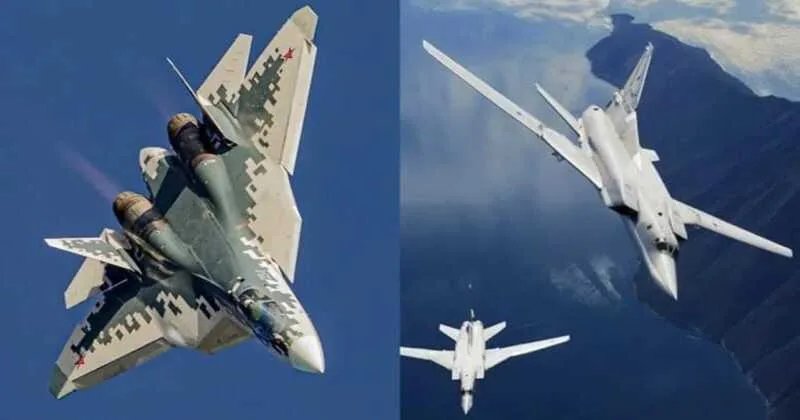
Russia has promised to significantly enhance defence cooperation with India, in a bid to retain its long-standing strategic position as a key arms supplier. As part of this renewed effort, Russia has offered India its fifth-generation fighter jet, the SU-57E, and, in a dramatic shift, pledged to share the aircraft’s complete source code. This includes technology transfer rights for manufacturing the jet in India, an offer that signals a rare level of strategic trust.
This development was soon followed by Russia’s offer to supply the SU-35 multirole fighter jet to augment India’s fighter fleet. However, New Delhi has so far remained non-committal on the proposal. Historically, India and Russia have enjoyed deep defence ties, with Russian-origin systems accounting for nearly 60 percent of India’s military inventory. Russian platforms form the backbone of India’s air and ground forces, including the SU-30MKI fighter jets, T-90 main battle tanks, submarines, and various missile systems.
Russia is also a co-developer of the BrahMos supersonic cruise missile, which played a critical role during Operation Sindoor, a military action that unsettled Pakistan’s defence calculus. However, in recent years, India has shifted towards a diversified defence procurement policy, reducing reliance on any single source. The country has steadily increased imports from the United States, France, and Israel, while simultaneously ramping up indigenous defence manufacturing under the Modi government’s Atmanirbhar Bharat initiative. This strategic realignment has triggered unease in Moscow, especially as its naval dominance in India continues to wane.
A case in point is India’s recent deal with Germany’s ThyssenKrupp Marine Systems to build six advanced submarines, marking a significant departure from Russian naval support. The move has reportedly made Moscow more attentive to India’s defence demands.
In what appears to be an effort to retain India’s strategic confidence, Russia is now offering not just weapons but full-scale technological collaboration. The SU-57E stealth fighter, once planned for joint development with India under the FGFA programme (which India had withdrawn from), is back on the table. This time, Russia is offering comprehensive technology transfer and source code access, allowing Indian engineers to integrate indigenous weapons and systems into the aircraft, an unprecedented gesture.
Moreover, Russia has made an extraordinary offer to provide India with its strategic long-range bomber, the Tu-160 ‘Blackjack’. This supersonic bomber has never been offered to any other country before, making this proposal particularly significant. No Western nation has matched such a high-level offer, underlining Russia’s intent to deepen its strategic outreach.
India has already found considerable success with the Russian-made S-400 Triumph air defence system. With New Delhi preparing to develop a domestic equivalent under the name Project Kusha, Russia has now proposed to supply the more advanced S-500 Prometheus system. The S-500 is capable of neutralising stealth aircraft and hypersonic missiles, making it a vital future-proof asset in India’s evolving defence doctrine.
On the maritime front, Russia has agreed to extend the operational life of India’s Kilo-class (Sindhughosh-class) submarines through major overhauls. These submarines will be upgraded to carry the Kalibr cruise missile, capable of striking targets up to 2,000 kilometres away. Additionally, Russia has reiterated its willingness to lease another Akula-class nuclear-powered attack submarine to India, building on a previous leasing agreement that allowed India to operate the INS Chakra.
However, the path to these ambitious deals is not without obstacles. Chief among them is the threat of secondary sanctions under the US CAATSA (Countering America’s Adversaries Through Sanctions Act), which penalises countries engaging in major defence transactions with Russia. Though India has so far managed to walk a tightrope, further deals could test Washington’s patience.
Another concern is Russia’s own capacity to deliver on these promises in a timely manner. The ongoing war in Ukraine has strained Russian military-industrial supply chains, and several key defence firms are under US-led sanctions. These limitations have raised questions about the feasibility and timeline of the proposed deliveries.
Despite these uncertainties, Russia’s latest overtures appear aligned with India’s military modernisation goals and its quest for greater strategic autonomy. Whether New Delhi reciprocates with concrete commitments remains to be seen, but the message from Moscow is clear: it is ready to go further than ever before to remain India’s trusted defence partner.
This implies India’s rising strategic clout and defence autonomy, where global powers like Russia are compelled to offer unprecedented access to cutting-edge military technologies, including the SU-57E fighter jet’s complete source code, Tu-160 bombers, and S-500 missiles, to retain India’s partnership. It underscores how India’s Atmanirbhar Bharat initiative and diversified procurement strategy have shifted global defence dynamics, placing New Delhi in a commanding position to demand full-scale technology transfers and strategic collaboration on its terms. This reflects India’s transformation from a buyer to a key global player dictating the rules of engagement in defence cooperation.










Comments