





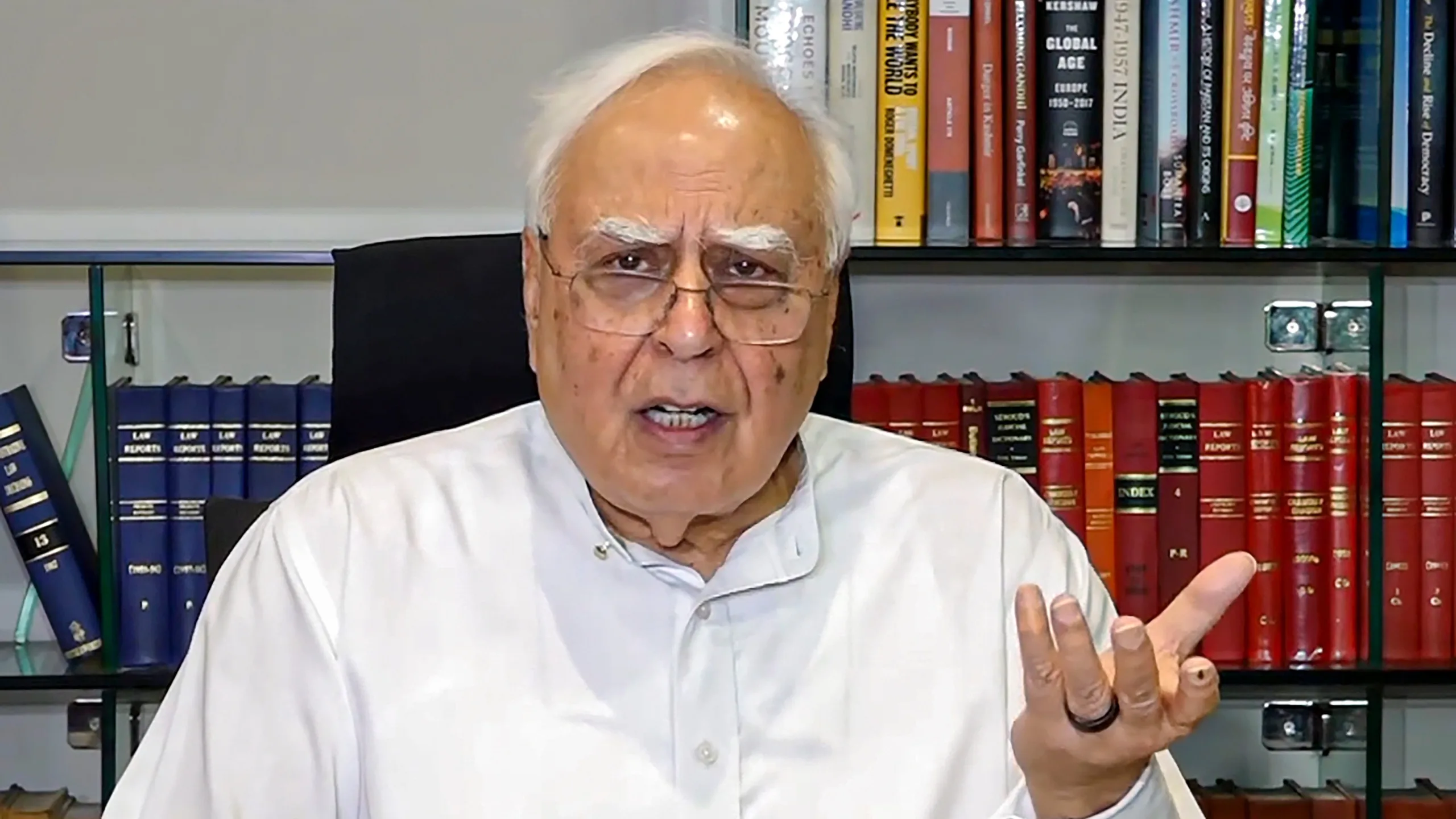
During the Supreme Court hearing of petitions challenging the Special Intensive Revision (SIR) of electoral rolls in Bihar, Senior Advocate Kapil Sibal argued that the burden of proving citizenship does not lie on individuals but instead on the Election Commission of India (ECI). The remark came as the court deliberated on petitions filed by political leaders and activist groups opposing the Election Commission’s move to verify voters’ citizenship.
“Burden is not on me”: Sibal’s Argument Sparks Row
During the hearing on July 10, Justice Sudhanshu Dhulia observed that it is within the Election Commission’s mandate to ensure that only citizens are listed as voters. He noted, “They have to see citizenship because only citizens can vote.”
To this, Sibal offered a strikingly counterintuitive submission, saying, “The burden is not on me to prove citizenship. Before they remove me from the electoral roll, they have to show that they have some document in their possession that proves that I am not a citizen.”
Sibal further argued that most people in Bihar do not possess formal citizenship certificates, suggesting that expecting documentation would unjustly disenfranchise large sections of the population. According to him, the onus lies on the State to prove who is not a citizen, not the other way around.
Reality Check: Sibal’s claim contradicts Indian Law
Sibal’s remarks have been met with widespread criticism, not only for their legal inaccuracy but also for their implications on national security and voter integrity.
According to Section 9 of the Foreigners Act, 1946, the onus of proving citizenship lies with the individual, not the State. The provision clearly states: “If any person is suspected of being an illegal immigrant, then the onus of proving that the person is an Indian citizen lies upon such person.”
Legal experts clarify that while the State must present prima facie evidence, once suspicion is established, the individual must prove their citizenship. Sibal’s attempt to invert this legal burden has been dubbed misleading and dangerous.
Social Media Reacts: “What a Crazy Logic!”
Following Sibal’s remarks, social media erupted in satire and disbelief, with many users highlighting how such logic defies everyday norms and national security protocols.
One user on X (formerly Twitter) wrote: “As per Mr @KapilSibal, the Election Commission of India has to provide documentation to show that a Bangladeshi is not a citizen of India. What a crazy logic.”
Another joked: “I told the exam invigilator to prove I wasn’t the real candidate. They called the police. @KapilSibal bro, your logic got me thrown out!”
Others went further, pointing to the political motives behind such arguments: “Illegals infiltrated illegally and made fake documents with help from Sibal-type leaders. Now when the State identifies them, these same leaders cry victim and charge crores to protect them.”
One post criticised Sibal’s comparison with banking: “Go to a bank and try to withdraw money without proving identity. They don’t have to prove you’re not Sibal, you have to prove you are. Is this man really an SC lawyer?”
Petitioners and Hearing Outcome
The batch of petitions before the Supreme Court were filed by several opposition figures including: Mahua Moitra (TMC MP), Manoj Jha (RJD MP), Yogendra Yadav (ex-AAP leader), Association for Democratic Reforms (ADR).
They argued that the Election Commission’s verification process unfairly shifted the burden of proof onto poor and migratory citizens, many of whom lack the documents being demanded. They warned that this could lead to mass disenfranchisement in a state like Bihar, which experiences high migration and low documentation rates.
However, the bench of Justices Sudhanshu Dhulia and Joymala Bagchi refused to stay the Special Electoral Revision. The court directed the ECI to accept Aadhaar cards, Voter ID, and ration cards as valid documents during the verification process. The case will next be heard on July 28, 2025.
With the case ongoing and public reaction intensifying, the spotlight now remains firmly on the Supreme Court and the Election Commission’s evolving role in balancing voter rights and national security.











Comments