





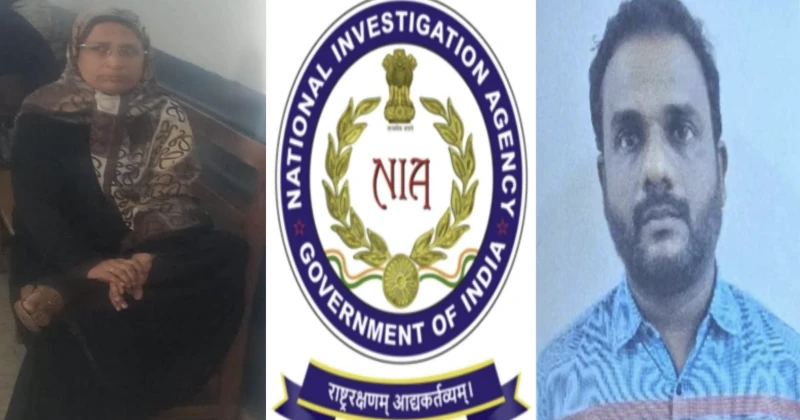
In a development that has sent shockwaves through Karnataka’s security establishment, a doctor working inside Bengaluru’s high-security Parappana Agrahara Central Jail has been accused of secretly supplying mobile phones to over 100 prisoners — including suspected terrorists, hardened criminals, and drug peddlers — raising serious questions about the security and surveillance inside the state’s largest prison.
The National Investigation Agency (NIA) probe has revealed that Dr. Nagaraj, who was officially posted to provide medical services to inmates, turned his trusted position into a covert criminal enterprise. According to investigators, he allegedly smuggled mobile phones into the prison premises on his scooter, using his assistant Pavithra to help move the devices past security checks.
The probe indicates that Dr. Nagaraj sold mobile phones worth just Rs 10,000 each to desperate inmates who wanted to stay in touch with their networks outside for up to Rs 50,000. Even more alarming is the revelation that these phones often ended up in the hands of suspected terrorists lodged in Parappana Agrahara, allowing them to plan and coordinate illegal activities while behind bars.
A medical mask for a criminal network
Investigators believe that Dr. Nagaraj was no ordinary rogue employee, but the mastermind of an organised mobile mafia operating under the guise of a medical service. The phones are suspected to have been crucial for coordinating terrorist plots, recruiting new operatives, threatening witnesses, and even extortion rackets from inside the prison walls.
This latest revelation comes just months after the NIA and Central Crime Branch (CCB) busted terror sleeper cells operating in Bengaluru. Notably, the NIA had arrested a key terror suspect named Salman from Sultan Palya three months ago, following raids in Bhadrappa Layout. Shockingly, it was discovered that ASI Chan Pasha had helped Salman escape. The NIA suspects that Parappana Agrahara’s terror accused, including dreaded terrorist T. Nasir, may have directly benefited from Dr. Nagaraj’s illegal supply of communication devices.
How terrorist Nasir turned jail into a planning hub
One of the most disturbing aspects of this scandal is the role of terror convict T. Nasir. A seasoned jihadist, Nasir has a long history of masterminding bomb blasts in South India, including the 2008 serial blasts, the Mangaluru cooker bomb incident, the Rameswaram Café blast, and extremist activities in Shivamogga.
Inside Parappana Agrahara, Nasir allegedly used the smuggled mobile phones to brainwash undertrial prisoners. He is believed to have recruited a team of six radicalised youths — Junaid, Mohammed Harshad Khan, Suhail, Faizal, Zahid Tabrez, and Mudassir — who were serving time for murder and other offences. Nasir’s objective, according to the NIA, was to form sleeper cells that could launch coordinated attacks once the recruits were released.
The 2023 arrests of five terror suspects with live grenades, pistols and explosives in RT Nagar and Hebbal areas of Bengaluru are directly linked to this covert network. After the CCB cracked the module, the NIA took over the probe and has been widening its net ever since.
Explosives, cash, and more: What the NIA found
In their ongoing probe, the NIA recently arrested three more suspects who were allegedly part of Nasir’s extended network. Searches yielded cash, sophisticated walkie-talkies, and other communication devices believed to have been used for secret planning.
The main conspirator, Junaid, who was radicalised in jail, is still absconding. Intelligence reports suggest he was tasked with executing a large-scale sabotage plot in Bengaluru and parts of coastal Karnataka. He allegedly used the prison-provided mobile phones to pass instructions to operatives outside.
Parappana Agrahara is supposed to be the state’s most secure prison, housing the country’s most dangerous criminals and terror suspects. This scandal has sparked outrage and calls for an overhaul of the jail’s internal security and surveillance systems. Questions are now being asked about how routine security checks failed to detect such repeated breaches, and how a single doctor could run such a lucrative illegal operation without the knowledge — or perhaps complicity — of other prison staff.















Comments