





The sun hung high over New Delhi, casting a golden glow over Yashobhoomi, a sprawling convention center that stood as a testament to India’s commitment to sustainability. Its rooftop solar panels gleamed, its energy-efficient systems hummed quietly, and its wastewater recycling units worked tirelessly to minimise waste.
On this warm July morning in 2025, the venue buzzed with anticipation as global leaders, scientists, policymakers, and industry pioneers gathered for the 11th India Energy Storage Week (IESW). The air was thick with optimism, and at the heart of the event was a monumental announcement that would redefine India’s place in the global clean energy landscape.
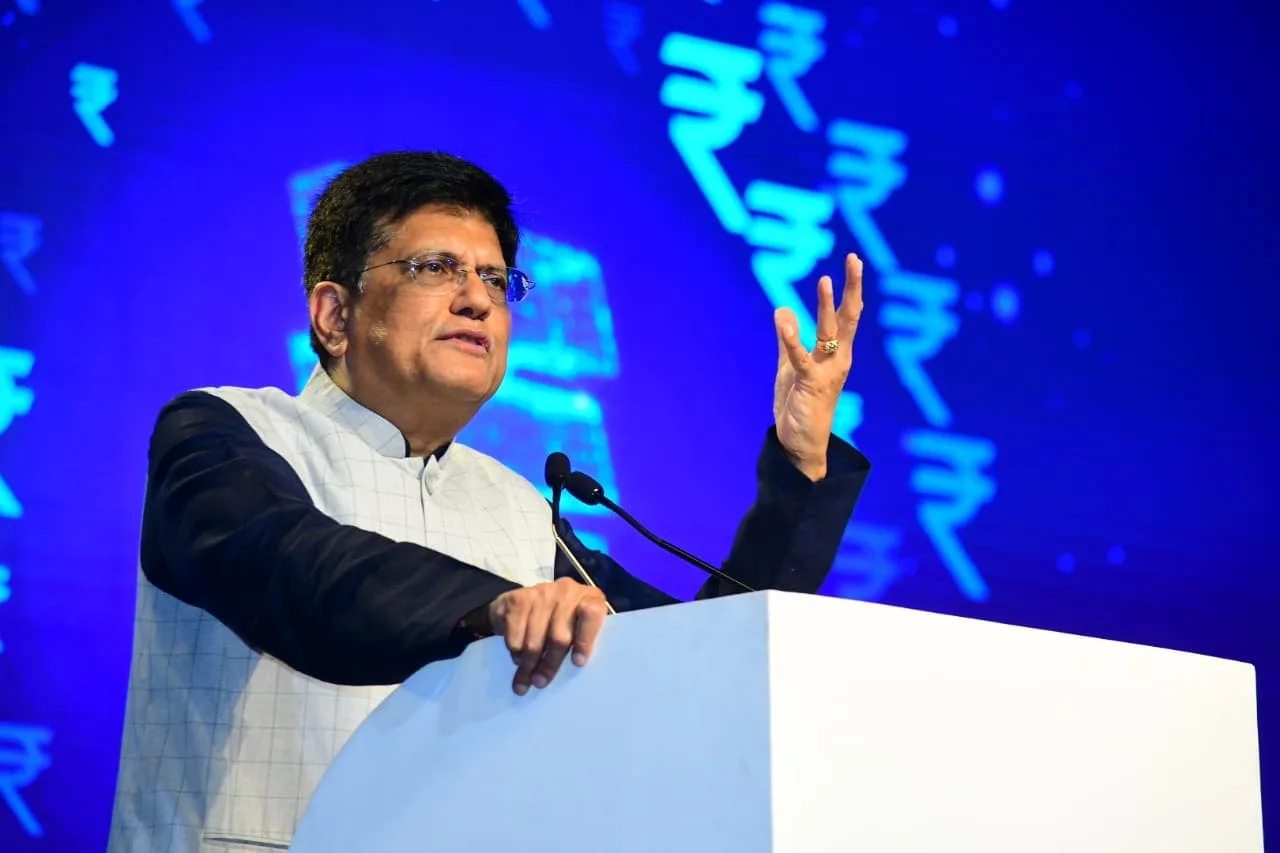
Union Minister of Commerce and Industry Shri Piyush Goyal stepped onto the stage, his presence commanding the attention of the packed auditorium. With a confident smile, he delivered news that sent ripples of pride through the audience: India’s installed solar energy capacity had soared to an astonishing 227 gigawatts (GW), marking a staggering 4,000 percent increase over the past decade.
The milestone was more than a number; it was a symbol of India’s relentless pursuit of a cleaner, greener future. “This is not just a statistic,” Shri Goyal declared, his voice resonating with conviction. “It is a testament to the vision of Prime Minister Narendra Modi, the resilience of our people, and the power of innovation. India is likely the first G20 nation to meet its Nationally Determined Contributions under the Paris Agreement, and we are just getting started.
”The crowd erupted in applause, but Shri Goyal’s words carried a deeper message. The journey to this moment had been one of grit, ambition, and transformation, a story of a nation that had turned its gaze toward the sun and harnessed its boundless energy to power a brighter future.
The Dawn of a Solar Revolution
Ten years ago, India’s solar energy sector was a fledgling industry, overshadowed by coal and other conventional fuels. The country’s solar capacity was modest, barely scratching the surface of its potential. But a series of bold policy decisions, coupled with a national resolve to combat climate change, set the stage for a revolution.
By 2025, India had transformed into a global leader in renewable energy, with solar power at the forefront of its green transformation.
Shri Goyal painted a vivid picture of this journey, recounting the government’s flagship initiatives that had fueled the solar boom. The PM Surya Ghar Yojana, launched to bring rooftop solar systems to 1 crore households, had become a game-changer for urban and rural families alike.
In cities, solar panels adorn rooftops, slashing electricity bills and empowering households to become energy producers. In villages, the program brought light to homes that had long relied on flickering kerosene lamps.
Then there was the PM Kusum Yojana, a scheme that had revolutionised agriculture by promoting solar-powered pumps. Farmers, once tethered to diesel generators, now harnessed the sun to irrigate their fields, reducing costs and carbon emissions.
Shri Goyal shared the story of Palli, a small village in Jammu and Kashmir that had earned the distinction of being India’s first carbon-neutral panchayat. Powered entirely by solar energy and supported by energy-efficient systems, Palli was a beacon of what was possible when innovation met determination.“Palli is not just a village,” Shri Goyal said, his eyes alight with pride. “It is a model for the world—a reminder that sustainability begins at the grassroots.”
Building a Solar-Powered Nation
The numbers were staggering, but the story behind them was even more compelling. Over the past decade, India’s solar photovoltaic (PV) manufacturing capabilities had grown exponentially. Solar PV module capacity had increased 38 times, while PV cell capacity had surged 21 times. This manufacturing boom was no accident, it was the result of targeted policies, incentives, and a relentless focus on self-reliance.
Shri Goyal recounted the early days of the solar revolution, when India relied heavily on imported solar panels and components. Determined to break this dependency, the government rolled out initiatives to boost domestic manufacturing. Production-linked incentives, tax breaks, and investments in research and development transformed India into a hub for solar technology. Factories sprang up across the country, producing everything from solar cells to advanced battery systems. Young engineers and technicians, trained in cutting-edge technologies, became the backbone of this burgeoning industry.
But the Minister was quick to point out that the journey was far from over. “Solar panels are just one piece of the puzzle,” he said. “To truly achieve energy independence, we must focus on the entire ecosystem, from raw materials to recycling, from generation to storage.”
The Power of Storage
As the sun dipped below the horizon, Shri Goyal shifted his focus to a critical piece of India’s clean energy puzzle: energy storage. Solar power, for all its promise, was intermittent, available only when the sun was shining. To ensure round-the-clock renewable energy, India needed robust storage solutions. Batteries, pumped storage, hydro, and even geothermal technologies were essential to bridging the gap between supply and demand.
The Minister announced a bold new initiative that drew gasps from the audience: the Cabinet had approved a Rs 1 lakh crore Research, Development, and Innovation Fund to drive advancements in next-generation battery technologies. The fund, one of the largest of its kind in the world, aimed to position India at the forefront of battery innovation. Researchers would explore solid-state batteries, hybrid storage systems, and circular supply chains that prioritised recycling and sustainability.
“This is our moment,” Shri Goyal said, his voice brimming with urgency. “We have the talent, the resources, and the cost advantages to lead the world in battery technology. Let us seize this opportunity and build a future where clean energy is accessible to all.”
A Four-Pillar Strategy for Energy Independence
Shri Goyal outlined a four-pronged strategy to achieve energy self-reliance, a roadmap that would guide India toward a sustainable future:
Targeted Innovation: Investing in next-generation battery chemistries, recycling technologies, and energy storage solutions to stay ahead of the global curve.
Infrastructure Development: Expanding battery swapping networks and electric vehicle (EV) charging stations to accelerate the adoption of e-mobility.
Supply Chain Resilience: Reducing reliance on imported raw materials by building a domestic supply chain for critical components like lithium and cobalt.
Value Chain Integration: Creating an end-to-end ecosystem that encompasses raw material extraction, cell production, battery assembly, and sustainable disposal.
The Minister emphasised that India’s ambition extended beyond energy generation. Semiconductors, battery management systems, and recycling facilities were all part of the vision for a self-sufficient clean energy economy. “We cannot afford to be dependent on others,” he said. “Our future lies in our own hands.”
India Energy Storage Week: A Platform for Progress
The IESW 2025 was more than a conference, it was a celebration of India’s clean energy journey. Now in its 11th year, the event had grown into a global platform for innovation, collaboration, propagation, and policy dialogue. Scientists showcased cutting-edge battery technologies, policymakers debated regulatory frameworks, and industry leaders forged partnerships to drive the green revolution forward.
The discussions at IESW 2025 were as diverse as they were forward-thinking. Panels explored topics like financing green energy, developing skills for the renewable sector, and integrating green hydrogen into India’s energy mix. Startups displayed prototypes of next-generation batteries, while established companies unveiled plans for gigafactories that would produce millions of battery cells annually.
For the attendees, the event was a reminder of India’s unique position in the global energy landscape. With its vast population, growing economy, and abundant renewable resources, India had the potential to lead the world in clean energy. But it was the government’s proactive policies, coupled with the ingenuity of its people, that made this potential a reality.
A Global Model for Sustainability
As the day drew to a close, Shri Goyal’s words lingered in the air. “Ensuring energy security for our citizens is not just a priority but a responsibility,” he said, echoing Prime Minister Modi’s vision for an energy-resilient India. The Minister’s address was a call to action, urging stakeholders to scale up operations, enhance competitiveness, and strengthen India’s position as a global leader in clean energy.
India’s journey was far from over, but the milestones achieved by 2025 were nothing short of remarkable. The 4,000% growth in solar capacity, the manufacturing boom, and the ambitious push for innovation had positioned India as a role model for the world. From the carbon-neutral village of Palli to the cutting-edge laboratories developing next-generation batteries, the country was writing a new chapter in the story of sustainability.
As the sun set over Yashobhoomi, casting long shadows across the solar panels, the message from IESW 2025 was clear: the future belonged to nations that dared to innovate, embrace sustainability, and forge strategic partnerships. India, with its unwavering commitment to a cleaner, greener tomorrow, was ready to lead the way.












Comments