





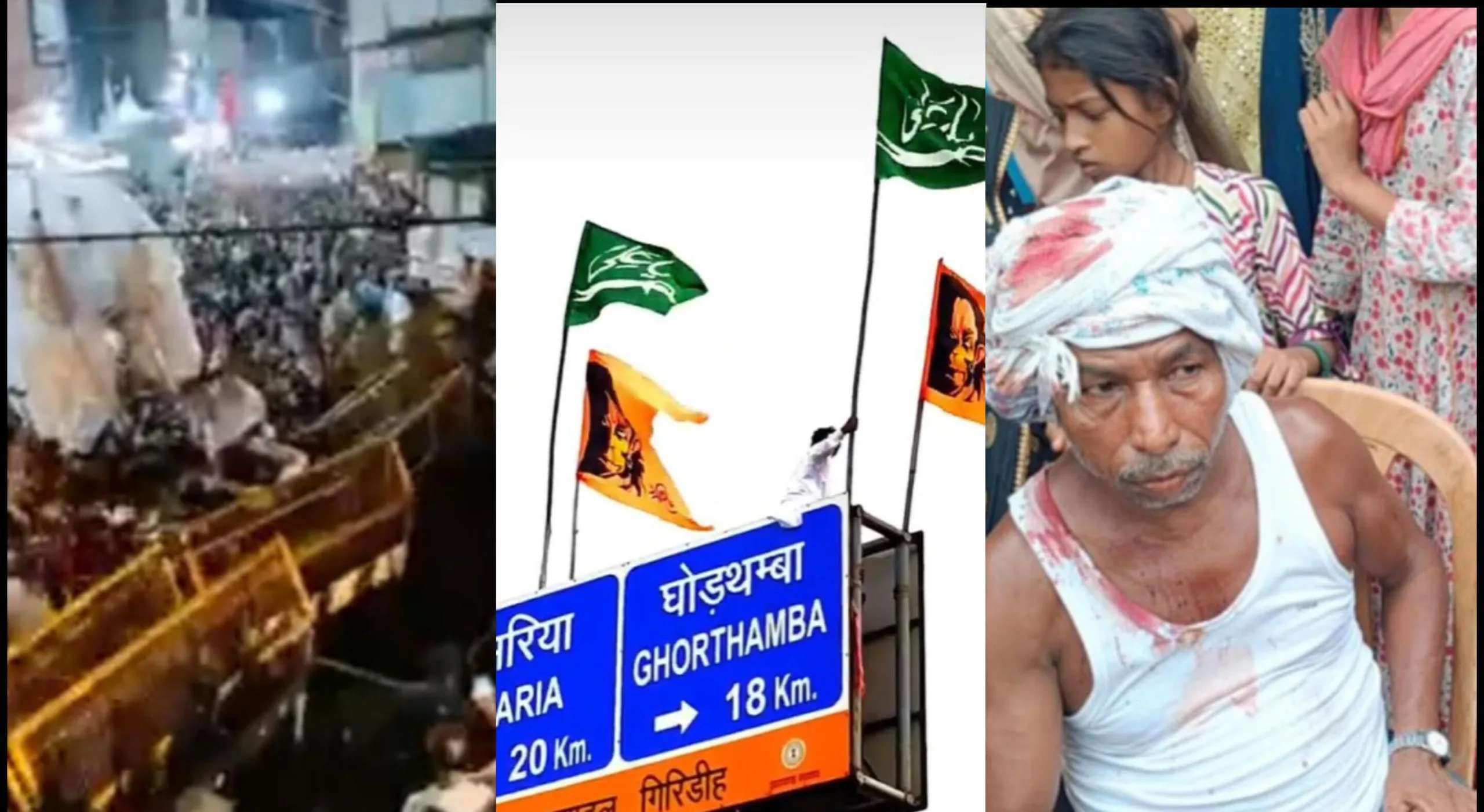
Muharram, a solemn occasion traditionally marked by processions in memory of Imam Hussain’s martyrdom, was once again overshadowed by a disturbing wave of communal violence across multiple Indian states on July 6, 2025. Instead of being observed as a peaceful religious event, this year’s Muharram processions, like many in recent years, descended into acts of provocation, aggression, and even bloodshed. In what appears to be one of the most alarming outbreaks of religious mob violence in recent times, at least 25 major incidents of clashes, stone-pelting, vandalism, police assaults, and even a barbaric public murder were reported from different parts of the country in a single day.
The question that needs to be asked, and which many are hesitating to raise publicly, is: why do these processions increasingly turn into platforms for open intimidation? Year after year, reports of provocative slogans, offensive songs, aggressive street shows, and violent outbursts have become disturbingly common. The disturbing pattern suggests that sections of the Muslim community use the cover of religious gatherings to assert a form of street power aimed at instilling fear among local Hindus.
This year, the provocations reached new lows. From blaring music outside temples, deliberately disrupting Hindu religious observances, to the shocking act of climbing temple structures and desecrating them by hoisting Islamic flags, the aggression was visible and deliberate. In some places, mobs even played the infamous “15-minute” hate-filled speech of AIMIM leader Owaisi, long criticised for its veiled threats, on loudspeakers during the processions. The message, whether overt or subtle, seemed clear: the processions were not just religious commemorations but were increasingly being used as occasions to demonstrate dominance, provoke, and assert religious supremacy over Hindus.
25 incidents of violence reported across Bharat
Case-1: The first and perhaps the most shocking incident was reported from Kanakati Bazaar in East Champaran, Bihar, where a 35-year-old Hindu youth, Ajay Kumar Rai, was hacked to death in full public view by a mob wielding swords during a Muharram procession. The violence was reportedly the result of an ongoing local dispute between Ajay’s family and another local resident, Badruddin. Ajay’s brother Rajesh Rai had an old rivalry with Badruddin, allegedly linked to panchayat elections, and this simmering tension exploded violently during the procession. While Ajay was merely watching the tazia procession, he was attacked without warning by a youth brandishing a sword, leading to his death on the spot. The gruesome killing not only shook the local community but also sparked outrage across social media. This incident underscores how localised disputes can dangerously intersect with religious processions to result in fatal violence.
Case-2: In a second incident, in Katihar, Bihar, a Muharram procession descended into chaos when a Muslim mob began pelting stones at Hindu homes and even a local temple. Several motorbikes were vandalised during the incident. The unprovoked aggression left the local population terrorised until a heavy police presence restored order. The pattern of targeting religious places during such processions marks a deeply troubling trend of intolerance and disregard for communal harmony.
Case-3: A third serious clash unfolded in Ujjain, Madhya Pradesh, where the Muharram procession tried to force its way through a police-restricted area. When police officers attempted to stop the mob, they were attacked. The mob broke barricades, resulting in injuries to at least two policemen. An FIR was filed against procession organiser Irfan Khan at the Kharakuan police station. The brazen attack on law enforcement reflects the mob’s complete disregard for legal boundaries and public order.
Case-4: The violence was not limited to urban centres. In Gopalganj, Bihar, two different villages, Bishkemi and (+1)Chhihi Taki, were each carrying out separate Muharram processions when a dispute over procession timing and route sparked a full-scale violent clash. Stones, sticks, and other weapons were used as the situation spiraled out of control, leaving around 12 people injured. The communal nature of the violence prompted urgent intervention by local authorities, but not before significant injuries were reported.
Case-5: In Palamu, Jharkhand, violence broke out when rival groups clashed over the right of way for the Muharram procession passing through a disputed route. The scuffle escalated into physical violence, leaving two people injured. This incident once again highlights how disputes over procession paths, often seen as symbolic territorial claims, can quickly turn violent without timely intervention.
Case-6: One of the more disturbing incidents occurred in Lakhimpur Kheri, Uttar Pradesh, where members of the Muharram tazia procession were reportedly throwing white powder and bursting firecrackers. When some Hindu villagers objected, the mob retaliated by storming the homes of villagers Basyaram and Ramunadeen and physically assaulting them. The violence sparked palpable tension in the village, leading to heavy police deployment. Such home invasions by processional mobs represent a dangerous escalation from street-level disputes to direct targeting of private homes.
Case-7: The situation took a shocking turn in Hajipur, Bihar, where a simple accident involving a bus grazing two youths during a procession led to violent mob retaliation. The enraged crowd vandalised the bus and set it on fire. Quick response by the police and fire brigade prevented further escalation, but the incident reveals how volatile such gatherings can become over minor provocations.
Case-8: In Dholpur, Rajasthan, another potentially dangerous situation was narrowly averted when a Muharram procession deliberately amplified music near an ongoing Hindu Ekadashi religious prayer gathering. The aggressive loudness of the tazia procession appeared to be an intentional provocation. Local villagers’ attempts to request volume reduction led to further tension. Thankfully, police managed to intervene in time, preventing the situation from deteriorating into violence.
Case-9: Another incident of slogans and clash was reported in Kushinagar, Uttar Pradesh, where the Muslim mob raised provocative slogans during a procession, leading to an argument with local Hindus. This escalated into a physical altercation, leaving at least one child injured in the resulting stampede. Police quickly restored order and detained some of those involved.
Case-10: In Bhagalpur, Bihar, two groups clashed over procession routes during the Muharram tazia, leading to intense stone-pelting, lathicharge, and even firing. Multiple individuals were injured in this violent confrontation, highlighting once again the underlying tensions associated with religious processions in sensitive areas.
Case-11: In Shivamogga, Karnataka, a Muslim man desecrated a Bhagwan Ganesha idol and threw another idol into a drain, triggering outrage among the Hindu community. The man, identified as Syed, was arrested along with his accomplice, but not before his brazen act, captured on video, went viral.
Case-12: In Bihar’s Jamui district, Muharram processions saw shocking displays of Pakistani and Palestinian flags. In one case, a man openly waved a Pakistani flag while standing atop a DJ system.
(+1) Another procession in Jamui town witnessed Palestinian flags being raised, both incidents stirring widespread anger. The police admitted to lapses but assured investigations were underway.
Case-13: Violence erupted in Bhagalpur’s Goradih area where Muharram processions turned into chaos with stone-pelting, sword fights, and gunfire.
Case-14: Similar violence broke out in Katihar, where stones were thrown at the Mahavir Mandir, shattering windows and damaging vehicles.
Case-15: In Darbhanga, a Muharram procession turned violent when a Muslim youth stabbed a police officer who tried to control the unruly crowd.
Case-16: Tensions also gripped Kumbhalgarh in Rajasthan’s Rajsamand, where Muslims demanded permission for Muharram processions inside a fort where Hindus are not allowed to hold religious events. Hindu groups protested, pointing out this double standard, leading to heavy police deployment.
Case-17: In Raebareli, Uttar Pradesh, a violent unauthorised procession attacked Hindu homes and vehicles when challenged, while in Maharajganj, BJP leader Shiv Bhushan Chaubey was assaulted during a Muharram event.
Case-18: In Gorakhpur, another sinister incident unfolded when a Muslim youth invoked AIMIM leader Akbaruddin Owaisi’s infamous genocidal “15-minute” speech, threatening that Hindus would need only five minutes to be “taught a lesson.” The video went viral, leading to protests and arrests.
Case-19: In Birbhum, West Bengal, a Muslim mob brutally assaulted a Hindu e-rickshaw driver for refusing to pay additional Muharram ‘chanda’ (donation), leaving him seriously injured. The incident sparked road blockades by angry locals demanding justice.
Case-20: Similarly, in Deoria, Uttar Pradesh, Islamists were seen wearing Palestinian T-shirts during Muharram processions, further adding to the tension.
Case-21: Even Kolkata’s Sealdah railway station witnessed bloodshed as sword-wielding Muslim youths attacked a man inside a train, leaving him covered in blood.
Case-22: Meanwhile, in Azamgarh, intra-Muslim clashes erupted during Muharram, injuring seven, while in Kashmir, Hezbollah and Iranian flags were waved alongside images of Iran’s Ayatollah Khamenei during processions, raising concerns over the growing radicalisation of public religious events.
Case-23: Finally, one of the most provocative acts was captured in Giridih, Jharkhand, where during a Muharram procession, Muslim youths used a dumper truck to hoist an Islamic flag above a Hanuman temple flag on a signboard. The group raised loud “Allahu Akbar” chants while committing the act, and the video of the incident quickly went viral on social media, sparking outrage and calls for action. This act of religious desecration has further exacerbated communal sentiments in the area.
These 25 incidents on July 6, 2025, paint a deeply troubling picture of religious intolerance, unchecked mob behaviour, and the fragility of communal harmony in various parts of India. From public killings to attacks on police, from torching buses to storming homes, the sheer variety and violence of these incidents reveal a systemic failure in anticipating and preventing such chaos.
The troubling trend also raises uncomfortable questions about selective outrage. Had such violence been perpetrated by any other community, national and international media would have raised an uproar. Yet, much of this violence was met with silence or downplaying by sections of the press, while law enforcement often seemed reluctant to act decisively.
As the nation reflects on the tragic events of Muharram 2025, one cannot help but wonder: Is this truly about faith, or has Muharram in some parts of India become a license for Islamist mobs to flex their muscles, spread fear, and challenge the very fabric of communal harmony? If the core of Muharram is sacrifice and reflection, then what explains the hatred, the desecration, and the violence witnessed year after year?
These are uncomfortable but necessary questions that demand honest answers, from the community, from the leadership, and from the state.














Comments