





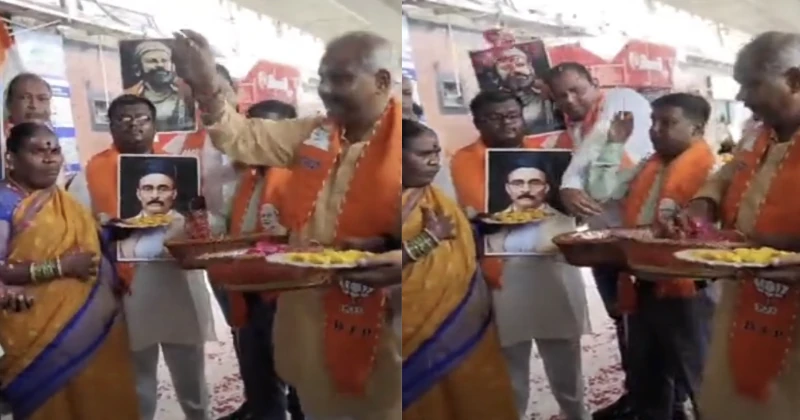
A group of people and BJP leaders from Uttar Pradesh turned a railway platform into a site of national solidarity. As reports continue to emerge of attacks and intimidation of Hindi-speaking people by Maharashtra Navnirman Sena (MNS) workers, citizens at Cantt Railway Station in Varanasi chose to counter hatred not with protest, but with flowers, garlands, and a unifying message: India belongs to all Indians regardless of language, caste, or state.
On July 9, Anoop Jaiswal, regional vice president of the BJP Backward Front (Kashi region), led a delegation of over a dozen volunteers to Platform No. 1 of Varanasi’s Cantt Railway Station to welcome passengers arriving on Train No. 11061 the Mumbai-Jaynagar Express.
The train arrived at 12:43 PM, and as Marathi-speaking families began to disembark, they were met not with fear or suspicion, but warmth and respect. Garlands were placed around their necks, flowers were showered over them, and handshakes conveyed a message that transcended state boundaries.
Many of the passengers, initially taken aback by the unexpected welcome, were visibly emotional. Some smiled; others looked confused. But when they learned the reason behind the gesture, they responded with heartfelt gratitude. Several even admitted that what is happening in Maharashtra, harassment in the name of language is not just unfair, but dangerous for national unity.
Speaking to reporters after the event, Anoop Jaiswal minced no words in condemning the actions of MNS workers, who have been accused of attacking and intimidating Hindi-speaking migrants in cities like Mumbai, Pune, and Nashik.
“We want to give a clear message whether someone is from Uttar Pradesh, Maharashtra, Madhya Pradesh, Rajasthan, or any other part of Bharat, every Indian is equal. India is not made of language barriers. India is unity in diversity. And what MNS is doing in Maharashtra is a threat to that idea,” Jaiswal said.
He added that linguistic chauvinism has no place in a country as multilingual and multicultural as India. He reminded the media that the Constitution guarantees every citizen the right to live, work, and speak their language in any part of the country. “This act of welcoming our Marathi brothers and sisters is a message, that Uttar Pradesh doesn’t believe in hate. We believe in harmony,” he said.
The initiative was not a political spectacle but a grassroots expression of unity. The event was conducted by regional minister Deepak Arya, while Om Prakash Yadav and Shankar Jaiswal extended a formal vote of thanks.
Also present were numerous local volunteers and citizens. Together, they stood as a living example of the Ganga-Jamuni tehzeeb the cultural and social fabric of Uttar Pradesh that has historically celebrated unity amidst diversity.
The Maharashtra Navnirman Sena, founded by Raj Thackeray, has often drawn criticism for its aggressive regionalism. In the past week, several videos have surfaced on social media allegedly showing MNS cadres targeting workers, daily wagers, and shopkeepers from Hindi-speaking states primarily UP and Bihar accusing them of “snatching jobs” and “not respecting Marathi.”
This isn’t new. Similar attacks occurred in 2008, 2012, and 2020, leading to waves of panic migration and nationwide outrage. What is concerning now is that these incidents have resumed with greater intensity, triggering fears of a new wave of regional intolerance.
What played out at Cantt Railway Station on July 9, was more than a welcome ceremony. It was a defining contrast between two visions of India: One where divisive regionalism is used to breed hate and political gain. The other where humanity and national brotherhood override all boundaries.
As passengers from Mumbai were embraced in Varanasi with garlands and flowers instead of suspicion or fear the message was loud and clear, “Bharat is one. And no linguistic mafia can divide its soul”.












Comments