





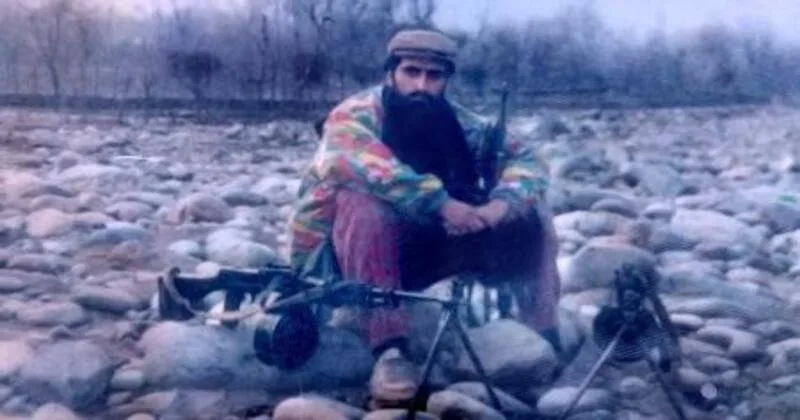
Mushtaq Ahmed Bhat has lived the kind of life that feels almost too cinematic to be real, a man known by different names at different crossroads of his life, Ishfaque, the identity he carried as a teenage militant, Romeo, the codename given to him when he became an undercover operative for the Indian Army. Born in the heart of Pulwama, he was just a teenager who believed that power came from the barrel of a gun.
“A man with a gun commanded respect. I thought if I also got a gun, I could save my family,” with that belief, he made a decision that changed everything. He slipped across the border into Pakistan under the cover of night. There, he trained with Afghan warlords, fought side by side with Islamist forces against both the Afghan government and the legendary Northern Alliance leader, Ahmad Shah Masoud.
He lived like a ghost, trusted by no one, hunted by both, constantly moving, constantly watching. Few knew his real story. Fewer still had ever seen his real face. But Mushtaq didn’t stop at all. In his later years, he began reaching out to Kashmiri youth, trying to pull them away from the same path he once walked. Several young men dropped their weapons and joined the Territorial Army instead. His message to them was simple: “The real fight is not against your own land or your own people. The real strength lies in building, not destroying.” His story is now published in S. Ramachandran’s book The Bravehearts: A testament to those who risk their lives in silence so others can live in peace. In an extraordinary gesture of courage and trust, Mushtaq chose to reveal his real name and even share his photographs, no longer hiding.
Mushtaq Ahmed Bhat’s story began during one of the most troubled times in Kashmir, the late 1980s. Violence and fear took over the valley. He was just a teenager when everything around him started to change. “When things got worse in Kashmir, all the educated people, not just Kashmiri Pandits, but also Muslim thinkers and writers, ran away. They were scared,” Mushtaq remembers. His own family had a background in the Congress party, which made them a target. People who were demanding Azaadi (freedom) often threatened them.
“Back then, the government had completely collapsed. The army stayed in their camps, the police were nowhere to be seen, and the law didn’t work anymore,” he says. “There was no one to protect us. No one to help.” With this power, people with guns started taking control. Some were real militants, like those from the JKLF (Jammu Kashmir Liberation Front), but many were fake terrorists who wanted to rob and scare innocent people.
“These men knew which families had money. They would enter homes, harass people, and take whatever they wanted,” Mushtaq recalls. He was just 18 or 19 years old, watching all this. What he noticed was simple: people listened to those who had guns.
“A man with a gun was powerful. I thought, if I also got a gun, maybe I could protect my family,” he says. That thought changed his life. One day, he made a decision that would take him far from home. He crossed the border into Pakistan and joined a training camp. There, he learned how to fight.
Even today, years after he left the world behind and chose to walk a path of redemption, Mushtaq Ahmad Bhat remains brutally honest about the ongoing complexities in Kashmir. He believed that real change would be seen only with the next generation. The children who were born after August 5, 2019, when Article 370 was abolished, are now around six years old. In twelve years, they will be adults. That’s when we’ll truly see whether this generation carries the old slogans, or chooses a new path for themselves.” He was the one, “The Man Who Lived Two Lives, And Chose the Braver One”













Comments