





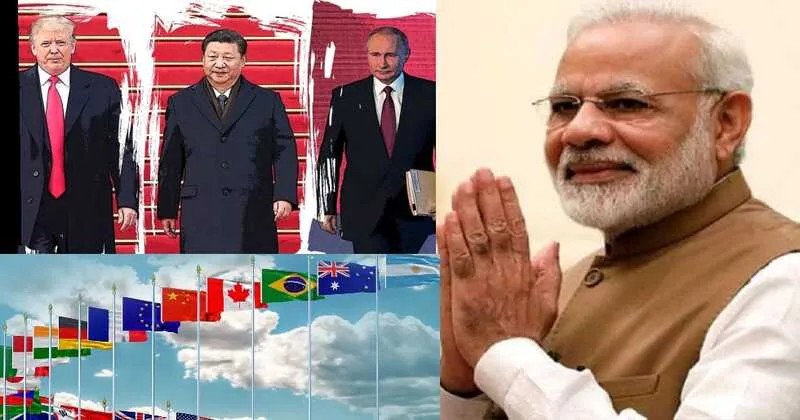
In a world torn between freedom and control, dialogue and domination, India under Narendra Modi has emerged as the defining symbol of global leadership grounded in democracy, culture, and collaboration. The contrast is striking, while Modi’s India rises as a beacon of openness and progress, Xi Jinping’s China, Putin’s Russia, and Donald Trump’s USA drift down darker, unstable paths marked by fear, isolation, and unpredictability.
India and Modi : Democracy in Action, Diplomacy in Motion
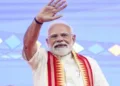
With every foreign visit, Prime Minister Modi carries the voice of 1.4 billion Indians and the legacy of the world’s oldest living civilization. From receiving the Grand Collar of the National Order of the Southern Cross in Brazil to being honoured by countries across Europe, the Middle East, and the Indo-Pacific, Modi is not just a leader, he is a statesman, a symbol of India’s ascension as a global force.
Unlike his counterparts, Modi’s leadership draws strength from India’s democratic roots, its inclusive growth, and its commitment to peace and development. Today, India is not only the largest democracy but also the most respected one, increasingly viewed as a reliable partner in geopolitics, economy, and culture.
While Modi travels the globe engaging with leaders, cultures, and peoples, India’s strategic influence expands, from BRICS to the Quad, from G20 to bilateral alliances. India’s rise is not built on intimidation or coercion, but on trust and collaboration.
Xi Jinping’s China: A Power in Fear, Not in Command
By contrast, Xi Jinping’s China, though economically large, is a state entrapped in its own insecurities. Once an ambitious global player, Beijing has now grown increasingly isolated. Xi’s near-total absence from international forums and summits underscores his fear of internal rebellion, military dissatisfaction, and growing unrest within the Chinese Communist Party ranks.
China’s aggressive surveillance, suppression of dissent, and expansionist policies have alienated its neighbours and raised global suspicion. Even as its economy falters under regulatory crackdowns and demographic decline, Xi’s China chooses paranoia over partnership, opacity over openness. With no trust at home and little credibility abroad, China’s dream of superpower status remains marred by its authoritarian reality.
Putin’s Russia: A Leader on the Run, A Nation in Retreat
In Putin’s Russia, the situation is even more dire. Once a prominent power broker in global affairs, Russia has now become diplomatically isolated. With an active International Criminal Court arrest warrant against him for alleged war crimes, Putin can no longer travel freely without risking detention.
Russia’s invasion of Ukraine, domestic crackdown on dissent, and aggressive propaganda have turned it into a pariah. Moscow’s global stature has plummeted, and Putin’s personal fear of arrest reflects the growing international demand for accountability.
From the Kremlin’s silencing of opposition leaders to its alleged manipulation of elections, Russia is now seen less as a global leader and more as an unstable force clinging to outdated notions of imperial dominance.
Trump’s USA: Erratic Leadership, Eroding Global Trust
Even Donald Trump’s USA, once hailed as the leader of the free world, suffers a credibility crisis in his ongoing presidency. Trump’s chaotic foreign policy, impulsive tariffs, and unilateral sanctions alienated allies and earned him the moniker ‘Donald Tariff. His disdain for multilateralism and institutions like NATO and the UN weakened America’s global standing.
While the United States remains a democracy, Trump’s leadership style, marked by contradiction, narcissism, and confrontation, inflicted long-term damage. His handling of international relations was not rooted in diplomacy but in domination, not in respect but in reaction. His legal troubles and polarising legacy have further reduced his appeal, both at home and abroad.
India’s Global Embrace: A Nation Loved by All
In this landscape of retreating powers, India has emerged as the world’s most embraced democracy. Whether it’s through developmental partnerships in Africa, strategic alliances in Southeast Asia, or deepening bonds with Europe and the Americas, India under Modi is the only major power welcomed globally without fear, suspicion, or controversy.
People across the world see in India a country that celebrates its heritage while embracing modernity. It offers an alternative to the arrogance of the West and the authoritarianism of the East, a balanced, stable, and principled force.
From yoga and Ayurveda to digital diplomacy and Make in India, India’s soft and hard power go hand in hand. And at the heart of this success stands Modi, confident, composed, and commanding respect not through fear, but through values.
As Xi’s China crumbles inward, Putin’s Russia hides in shame, and Trump’s USA falters in confusion, Modi’s India rises above, undaunted, democratic, and dynamic.
This is not just a story of a leader, but of a nation reclaiming its rightful place on the world stage. In the clash between democracy and authoritarianism, India is the future, and the world knows it.










Comments