





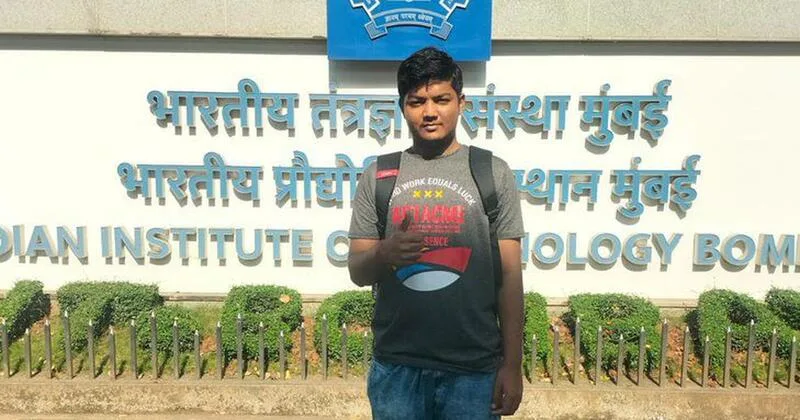
Nearly two and a half years after the tragic suicide of first-year IIT Bombay student Darshan Solanki, the long-delayed trial against the main accused, Armaan Iqbal Khatri, is finally set to commence. Khatri, initially named in the FIR under abetment to suicide, had approached the Bombay High Court seeking to quash the case against him.
However, during a hearing on July 4, the state government and the legal team representing Darshan’s family strongly opposed the plea. Facing stiff resistance, Khatri withdrew his petition, effectively clearing the way for the trial to proceed in the Sessions Court. A division bench comprising Justice Ajay Gadkari and Justice Rajesh Patil allowed the withdrawal.
The case has experienced multiple delays, mainly due to legal challenges filed by the accused. Khatri had moved the High Court, arguing that there was an insufficient basis for the charges filed by the Special Investigation Team (SIT) of the Mumbai Police.
Represented by Advocate Vijay Hiremath, Khatri’s legal team contended that the FIR lacked substance. However, Special Public Prosecutor Prakash Salsingikar, along with advocates Sandesh More and Hitendra Gandhi appearing for Darshan’s family, strongly opposed the plea and urged the court to reject it. Confronted with this opposition, Khatri’s legal team opted to withdraw the petition, removing the final procedural obstacle to the trial.
Background of the case
On February 12, 2023, a tragic incident occurred at IIT Bombay when Darshan Solanki, a first-year chemical engineering student, died by suicide after jumping from the seventh floor of his hostel. The incident prompted swift action from Mumbai Police, who formed a Special Investigation Team (SIT) to probe the matter. During the investigation, a handwritten note was recovered from Darshan’s room, which pointed to harassment and emotional distress allegedly caused by communal remarks made by his classmate, Armaan Iqbal Khatri. Based on this, an FIR was registered under Section 306 (abetment of suicide).
Allegations of Caste Discrimination
We mourn the loss of an 18 year old dalit student, Darshan Solanki, who joined @iitbombay 3 months back for his BTech. We must understand that this is not a personal/individualised issue, but an institutional murder. Despite our complaints the institute did not care to make the pic.twitter.com/qKH6Vw1HPE
— APPSC IIT Bombay (@AppscIITb) February 12, 2023
From the outset, the case attracted widespread attention not just for the tragedy but also due to allegations of caste discrimination raised by leftist groups. Darshan, a Dalit student from a small town, became the focus of these concerns when organisations like the Ambedkar-Periyar-Phule Study Circle (APPSC) and other leftist activists accused IIT Bombay of overlooking caste-based harassment. They presented testimonies claiming that Darshan was isolated by classmates who learned about his background and ridiculed him for being a reserved-category student.
The APPSC demanded the invocation of the SC/ST (Prevention of Atrocities) Act, accusing IIT Bombay and the Mumbai Police of overlooking crucial evidence of caste-based victimisation. Their supporters argued that it was Darshan’s social isolation and exclusion—not academic pressure—that led to his tragic death.
Caste-based institutional murder!
Darshan Solanki, SC student at IIT Bombay fell victim to casteism and died by jumping from the college hostel.
The culprits shouldn't be spared at any cost. We demand a fair inquiry into this. pic.twitter.com/VHZFc2zLSm
— Mission Ambedkar (@MissionAmbedkar) February 13, 2023
The death of 18-year-old Darshan Solanki, a first-year chemical engineering student, sparked nationwide concern—not only for the tragic loss but also for the allegations of caste-based discrimination that soon followed. Darshan, who came from a Dalit background, was quickly seen by many as a victim of systemic exclusion within elite academic spaces.
Student groups, including the Ambedkar-Periyar-Phule Study Circle (APPSC) and other activist organisations, alleged that Darshan had faced ridicule and isolation after his caste background became known. They claimed that caste-based harassment had contributed significantly to his emotional distress and called for the invocation of the SC/ST (Prevention of Atrocities) Act. These groups also accused both IIT Bombay and Mumbai Police of ignoring key evidence of caste-based victimisation. However, the narrative began to shift when it was revealed that the primary accused in the case was Armaan Iqbal Khatri, a classmate of the victim.
According to student testimonies, tensions had developed between Armaan and Darshan after a disagreement. It was alleged that Armaan had threatened Darshan with violence during the argument. Darshan, reportedly frightened by the incident, later apologised to Armaan, suggesting the level of fear and distress he may have experienced.
After Darshan’s death, IIT Bombay set up a 12-member inquiry committee to investigate the matter. The committee concluded that academic stress and falling attendance were the key contributing factors, and found no evidence of caste-based bullying. Similarly, the Special Investigation Team (SIT) formed by Mumbai Police recovered a handwritten note from Darshan’s room, which pointed to peer conflict but did not mention caste harassment. Based on their findings, the SIT registered a case under Section 306 (abetment of suicide) against Armaan Iqbal Khatri, but did not invoke any provisions related to caste discrimination.
Darshan’s father, Ramesh Solanki, contested these findings. He argued that the official investigations may have overlooked deeper forms of discrimination his son faced, and that the emotional burden Darshan carried went beyond academics.
As more information about the case emerged, many of the groups that had originally highlighted caste discrimination gradually stepped back from the conversation. Notably, the APPSC, which had once actively pushed for justice under the caste discrimination lens, ceased its public advocacy on the matter. This shift raised broader questions about the consistency and motivations behind some of the early activism.















Comments