





Swami Vivekananda was an epoch making thinker. At the same time, he was a path finder not only for the development of the spirituality already in man but also for making the people, especially the downtrodden and indigent people self-reliant. He actualised the idea of “Shiva Bhave Jeeva Seva” inculcated in him by his master Sri Ramakrishna; an idea that induced him to render service to humanity. This is why, he devoted himself, during his very short span of life, for the regeneration of his countrymen irrespective of their gender, religion and ethnicity.
Swami Vivakenanada: The Journey
Although Swami Vivekananda was not an economist, he developed a clear vision on the problems of economic development of Bharat from his ethereally exhaustive gnostic knowledge on Vedanta—both theoretical and practical. He travelled extensively through the lengths and breadths of Bharat and keenly observed the plight of the socially and economically downtrodden people. At that time, he found the widespread persistence of extreme poverty, hunger, inequality and ignorance coupled with caste, ethnicity and other divides. He also found that these were backed up by the ruthless exploitation of those hapless underdogs by the rich people in our society by using their economic and social power. At the same time, the downtrodden people were becoming the victims of religious superstitions. Sister Nivedita in her book wrote that “Swamiji told her time and again: You do not yet understand India! We the Indians are man-worshippers after all! Our God is man.” Cherishing the mental anguish about the deplorable socio-economic scenario of the vast majority of people of his countrymen in the core of his heart, he set out for USA to join the Conference of Parliament of Religions at Chicago in 1893. Swamiji continued to think over it throughout the three years of his first phase of visit to the West (first visit 1893 to 1896, second visit 1899-1900). Surprisingly, he did not utter any words about himself and his master Sri Ramakrishna. He always spoke about his nation, countrymen along with the Hindu philosophy.
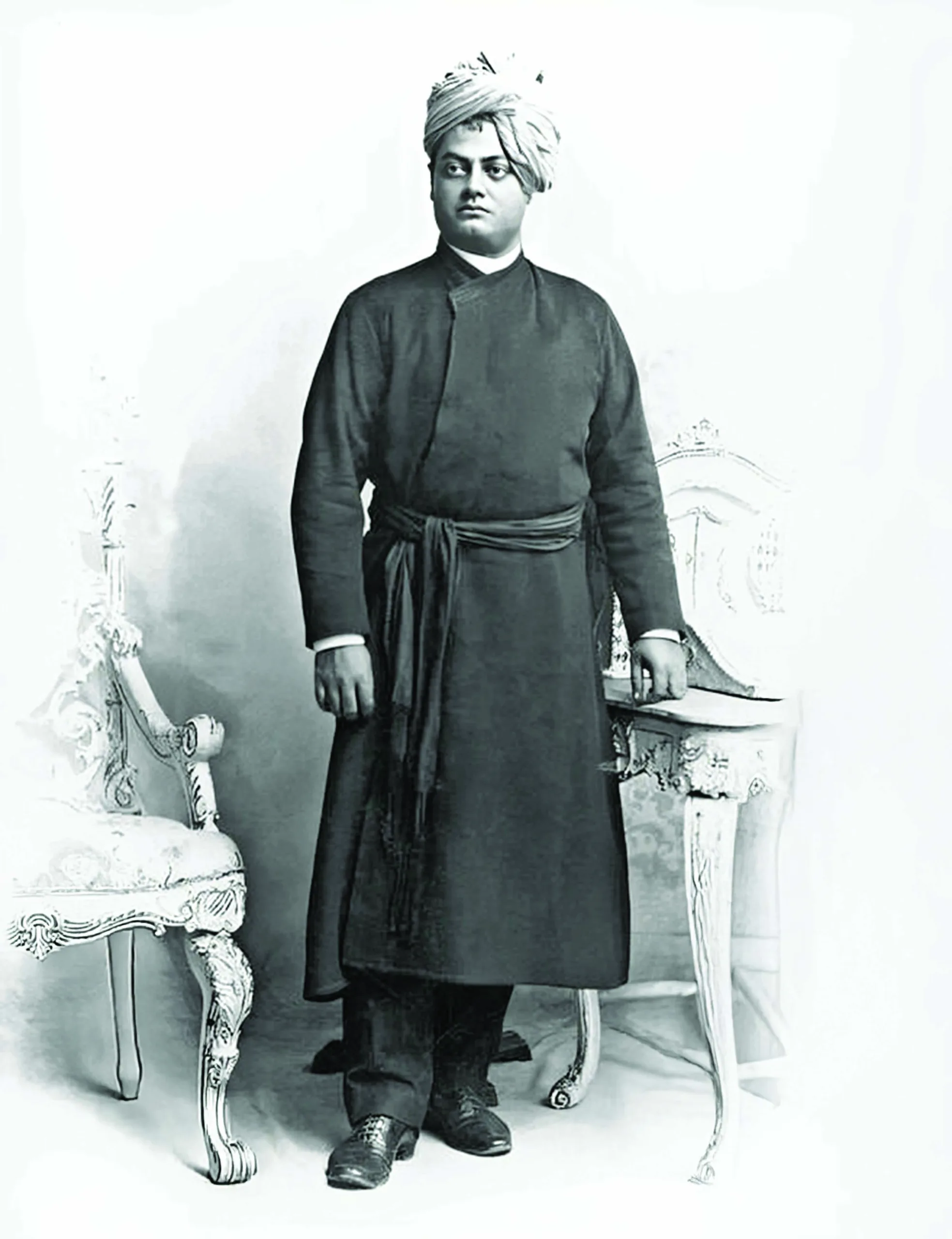
Swami Vivekananda: The Resolute Patriot
Mary Louise Burke (Sister Gargi) in her book Swami Vivekananda in the West mentioned that Swamiji did not come to America to preach the fundamentals of Vedas and Vedanta to people of the West. His main mission was the regeneration of his motherland. This is why, in the series of inspiring letters to his disciples and other distinguished personalities like Dewanji of Khetri etc, he advised them to dedicate themselves for the resurgence of the socially and economically downtrodden people. He did not even hesitate to request the affluent people in the western countries for help. Sometimes, they used to deceive him by not paying him for lectures even after committing. But he never let it affect him. He stuck resolutely to his mission and continued to strive hard to collect financial aid and cooperation from the west.
Another crucial objective of his foreign visit was to gather technological knowledge and art in order to bring it to Bharat. His primary aim was to make the youth self-reliant by imparting the technical know-how which he observed in western countries. He wanted to establish technological institutions for the common citizens of Bharat. So he dedicated himself fully to procure financial aid during his next visit to the west. It is interesting to note that he visited the Throop Polytechnic Institute in USA, later converted into California Institute of Technology (CalTech), only to see how they impart manual and technical training to people engaged in micro, small, cottage and handicraft industries.
Swami Vivekananda: Real Reason For Voyage
The people of USA were so interested in his prolific lectures that in the Los Angeles Times daily of January 14, 1900, Swamiji was hailed as a philosopher and gnostic personality. It said, “Those who were not present in his lectures will be interested to know that Swamiji has not come to this country for imparting spiritual knowledge only, but simultaneously, trying to create keen interest amongst the people of the west for the establishment of industrial schools in India for the economic development of the common people of India.” Again in January 16, 1900, the Pasadena Daily Star wrote, “Swamiji has agreed to deliver more lectures in the next week provided the people here agreed to help establishing Industrial schools in India”. Marie Louise Burke, in her book, wrote, “During his first visit to America, he incessantly delivered lectures in various places continuously for ten months and it can leave no doubt that his conscious purpose in coming to America was to obtain material help for the masses of India whose suffering he felt as only he could feel.”
Swamiji himself wrote on August 20, 1893, “With a bleeding heart, I have crossed half of the world to this strange land seeking help”. Again in 1894, Swamiji wrote in a letter to Sri Ramakrishna, “I have come to America to earn money myself, and then return to my country and devote the rest of my days to the realisation of this one aim of my life – “The Regeneration of India”.
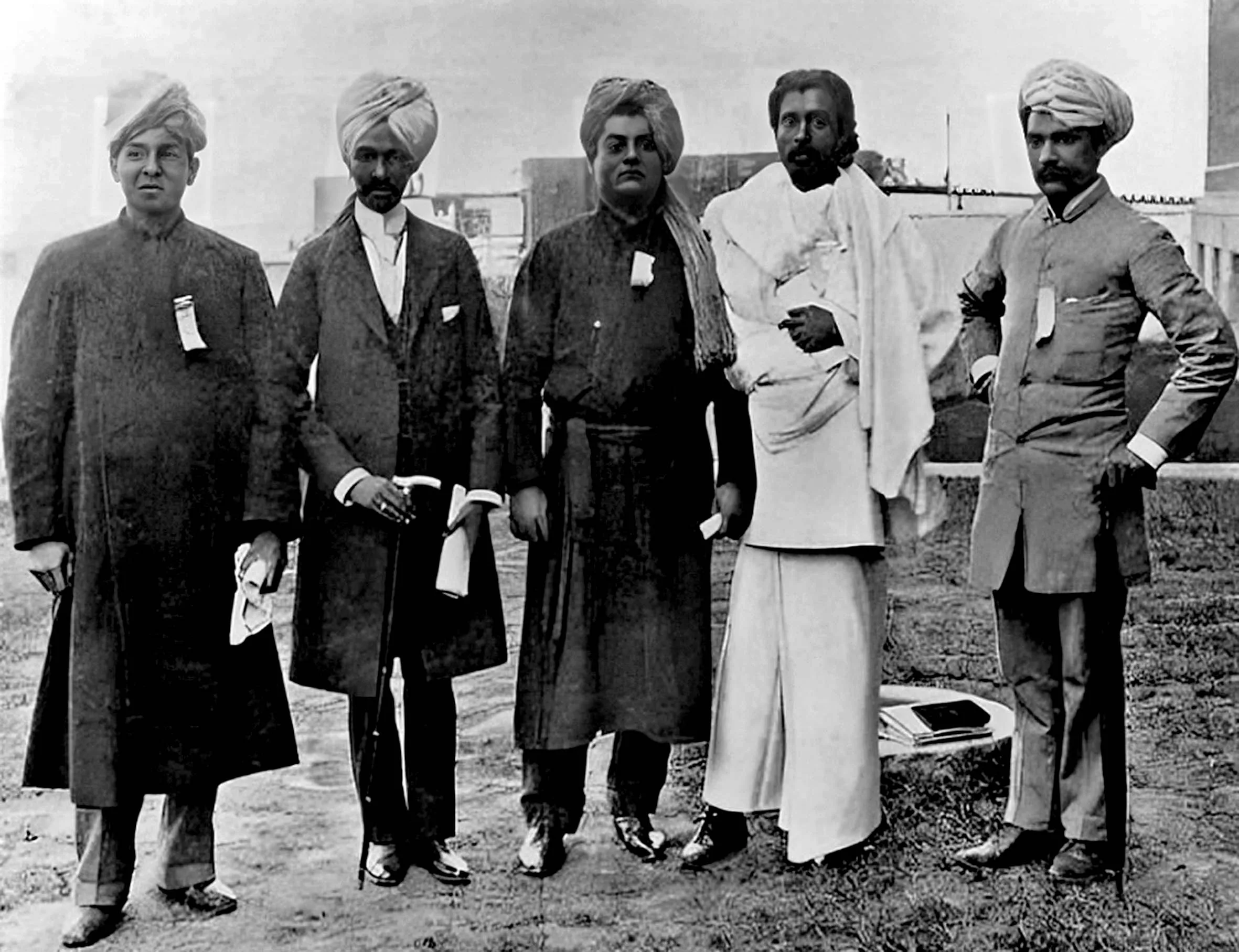
In Chicago, John D Rockefeller, known to be extremely wealthy, came to see him. Swamiji initially did not pay any heed as he was accustomed to deception of westerners. He found it difficult to get donations from rich Christians devoid of generosity and kindness. There is some information in letters to his disciples and others about the funds he was able to procure for establishing small training centers in Bharat. His idea was to run and manage these centres with the help of the educated monks of Ramakrishna order and his followers. While visiting Japan, he was surprised to see how the technology and skill brought about rapid economic development of the country. On his way to Vancouver from Yokohama, Swamiji met Jamshedji Tata in the ship. When he came to know that Tata was importing matches from Japan, Swamiji instantly told him that you get only some margin money as profit and this actually leads to the transfer of resource from Bharat to Japan. He told Jamshedji that it would be prudent to establish a match factory in Bharat so that resources would remain within Bharat creating employment opportunities for Bharatiyas as well. Swamiji did not hesitate to request Jamshedji to establish an institute for scientific research in technological innovation in Bharat so that a vast number of technically skilled persons would be able to help in the rapid industrial and agricultural development which in turn could help alleviate the acute problems of unemployment, poverty and economic distress of the masses of Bharat. Jamshedji agreed to his request and the Indian Institute of Science in Bangalore and the Tata Institute of Fundamental Research in Mumbai were established. Encouraged by the discussion with Swamiji on the process of industrialisation in Bharat, Jamshedji Tata established Tata Iron and Steel Industries at Jamshedpur. This reflects his keen knowledge on development and economics.
During his extensive travel throughout Bharat, Swamiji found extreme inequality with respect to income and wealth. He thought it was a result of the exploitation of the hard earned money of the poor by the wealthiest people. In a letter to Saralabala Ghosal, niece of Rabindranath Tagore, the then editor of the Bharati Patrika, he wrote, “I have found that a lot of social organisations have flourished in India by sucking the blood of the poorest people. But the lots of those poor people have not been improved, rather there has been the proliferation of such organisations in large numbers for the continuation of such process of exploitation of the poor.” His profound knowledge on the process of rapid economic development experienced by the western countries led him to conclude that the economic development is proportional to the expansion of education from patrician to plebeians. So he emphasised more on the rapid expansion of technical and general education to the people of Bharat. He believed that spirituality would generate strength, fearlessness and faith in one’s own self. This will boost mental strength to do hard work for the elevation of socio-economic conditions through the generation of innovative power and entrepreneurship within themselves. The present National Education Policy (NEP 2020) of the Government of India seems to be a reflection of Swamiji’s philosophy.
Swami Vivekananda: Economic Philosophy
Swamiji thought that the social and economic upliftment of the vast majority of the poor underprivileged people should be the prime importance of our nation for its overall economic development. He believed that economic development is not a mechanical process, but a human enterprise and its outcome will depend on the education, skill, quality and attitude of the people. He was motivated to bring about rapid economic development through the structural change of our economy wherein the spread of education should play pivotal role.
His first and foremost objective was to bring about simultaneous development of agriculture and industry. He knew that the majority of the people of Bharat live in rural areas and they preponderantly earn their livelihood from cultivation. These people are expropriated by rich people and village landlords. So he wanted to improve the method of cultivation through the application of advanced technology that he found in American agriculture. For this purpose, he wanted to impart technical and general education to the farmers through small training centers at village level. He realised that our poor farmers were suffering because they were illiterate and ignorant. Therefore, proper education, both general and technological, seemed like a good remedy which should also be imparted to women folks. Swamiji believed that the women in families play a crucial role in economy. Given the scenario on the present economic development of Bharat, one can plausibly conclude that the economic philosophy as well as the comprehensive policies chalked out by Swamiji seems to have found overwhelming relevance in its application and persuasion for the balanced and all inclusive socio-economic development of the vast majority of our people. The fundamental visions of Swamiji on the economic development of our country at his time reveal his clear foresight.










Comments