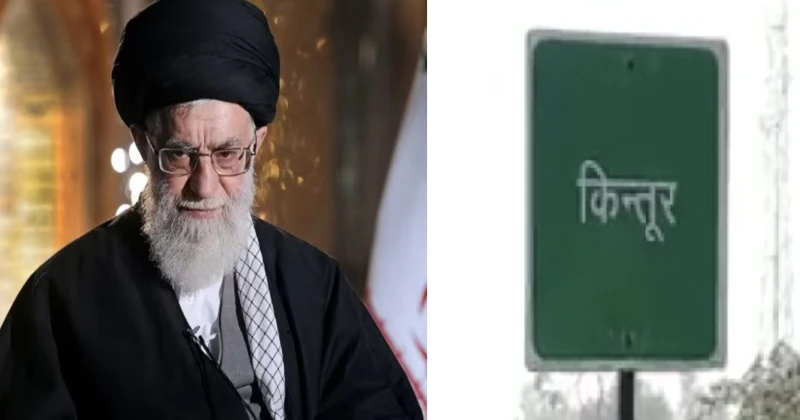
Ayatollah Khomeini’s forgotten Indian roots
December 5, 2025
  • Read Ecopy
  • Circulation
  • Advertise
  • Careers
  • About Us
  • Contact Us
Android AppiPhone AppArattai
Organiser
  • ‌
  • Bharat
    • Assam
    • Bihar
    • Chhattisgarh
    • Jharkhand
    • Maharashtra
    • View All States
  • World
    • Asia
    • Europe
    • North America
    • South America
    • Africa
    • Australia
  • Editorial
  • International
  • Opinion
  • RSS @ 100
  • More
    • Op Sindoor
    • Analysis
    • Sports
    • Defence
    • Politics
    • Business
    • Economy
    • Culture
    • Special Report
    • Sci & Tech
    • Entertainment
    • G20
    • Azadi Ka Amrit Mahotsav
    • Vocal4Local
    • Web Stories
    • Education
    • Employment
    • Books
    • Interviews
    • Travel
    • Law
    • Health
    • Obituary
  • Subscribe
    • Subscribe Print Edition
    • Subscribe Ecopy
    • Read Ecopy
  • ‌
  • Bharat
    • Assam
    • Bihar
    • Chhattisgarh
    • Jharkhand
    • Maharashtra
    • View All States
  • World
    • Asia
    • Europe
    • North America
    • South America
    • Africa
    • Australia
  • Editorial
  • International
  • Opinion
  • RSS @ 100
  • More
    • Op Sindoor
    • Analysis
    • Sports
    • Defence
    • Politics
    • Business
    • Economy
    • Culture
    • Special Report
    • Sci & Tech
    • Entertainment
    • G20
    • Azadi Ka Amrit Mahotsav
    • Vocal4Local
    • Web Stories
    • Education
    • Employment
    • Books
    • Interviews
    • Travel
    • Law
    • Health
    • Obituary
  • Subscribe
    • Subscribe Print Edition
    • Subscribe Ecopy
    • Read Ecopy
Organiser
  • Home
  • Bharat
  • World
  • Operation Sindoor
  • Editorial
  • Analysis
  • Opinion
  • Culture
  • Defence
  • International Edition
  • RSS @ 100
  • Magazine
  • Read Ecopy
Home Bharat

Ayatollah Khomeini’s forgotten Indian roots: How UP’s Kintoor shaped Iran’s revolution & now watches in horror

Ayatollah Khomeini’s ancestral village, Kintoor in Uttar Pradesh, finds itself spiritually entangled in the Israel-Iran conflict as his Indian legacy resurfaces amid war headlines. Once a cradle of Shia scholarship, the village now watches in anguish as the revolutionary’s name is invoked in a battle far removed from the values he stood for

WEBDESKWEBDESK
Jun 24, 2025, 11:30 am IST
in Bharat, World, International Edition, Uttar Pradesh
Follow on Google News
FacebookTwitterWhatsAppTelegramEmail

As Israel and Iran inch dangerously closer to full-scale war, with airstrikes, missile barrages, and unprecedented military rhetoric dominating headlines, a small, almost forgotten Indian village—Kintoor in Uttar Pradesh—has emerged from obscurity. This is not just a story of genealogy or nostalgia. It is a geopolitical ghost resurrected—the birthplace of Iran’s revolutionary legacy, deeply embedded in the soil of India.

At the heart of this legacy lies Syed Ahmad Musavi Hindi, a Shia cleric born in Kintoor in the early 1800s. His migration to the Middle East led to the birth of Ayatollah Ruhollah Khomeini, the supreme architect of Iran’s Islamic Republic. Today, as the Middle East is engulfed in flames once again, his descendants in India are torn between ancestral pride and political grief—caught in a legacy that has now become a weaponised memory.

Kintoor, a sleepy village in Barabanki district near Lucknow, is steeped in history but absent from most textbooks. Once a flourishing center of Shia scholarship, it was home to clerics, imambargahs, madrasas, and an intellectual network that stretched from Delhi to Najaf and Karbala. It was here, in the first quarter of the 19th century, that Syed Ahmad Musavi Hindi was born.

A descendant of Imam Musa al-Kazim, the seventh Imam in Twelver Shia Islam, Syed Ahmad’s erudition and piety soon clashed with the restrictions of British colonial India. By 1830, he had set off on a pilgrimage that would change the course of history first to Najaf in Iraq, then onward to Mashhad and eventually Khomein, Iran.

In defiance of forced assimilation, he adopted the suffix “Hindi” as an assertion of identity. This was not a random marker. It became a spiritual and ideological banner—one that his grandson, Ruhollah Khomeini, would carry all the way to Tehran’s revolutionary stronghold.

Born in 1902 in Khomein, Ruhollah Khomeini was raised on the theological foundations laid by his grandfather. His speeches—rigorous, fiery, and steeped in Islamic jurisprudence—mobilised millions. He stood against Western imperialism, the U.S.-backed Shah, and secularism. When the Islamic Revolution of 1979 succeeded, Khomeini became the Supreme Leader of Iran—a position that fused political power with divine authority.

Khomeini’s government implemented Velayat-e Faqih, the rule of the jurist, transforming Iran into a theocracy. The West called him a dictator. His supporters hailed him as the long-awaited savior of Shia Islam. But few knew—or acknowledged—that this ideological titan had his bloodline anchored in an Indian village.

Inside Khomeini’s home in Kintoor’s Mahal Mohalla, his descendants—Dr Rehan Kazmi, Adil Kazmi, and Nihal Kazmi—preserve his memory with reverence. Framed portraits of the Ayatollah adorn their modest walls. “He always carried ‘Hindi’ in his name, not just as heritage, but as a proclamation,” said Adil Kazmi. “When we went to Iran and introduced ourselves as his descendants, we were received as guests of honour. But today, we are watching that legacy be swallowed by missiles and headlines.”

As Ayatollah Ali Khamenei, Iran’s current Supreme Leader, intensifies his hardline stance against Israel in response to devastating airstrikes, a storm brews over his own lineage. Some Iranian sources and independent scholars claim that Khamenei’s father, Sayyid Jawad Khamenei, was also descended from Syed Ahmad Musavi Hindi, and therefore shares the same Kintoori ancestry as Khomeini.

But the Kazmi family in Kintoor dismisses these claims as misleading.

“Khamenei is a political heir, not a blood descendant,” said Dr Rehan Kazmi. “His father was from Mashhad. There is no record in our family or Iranian archives to link his bloodline to ours. It’s dangerous to rewrite genealogy for propaganda.”

However, Khamenei has avoided making any public clarification. In the midst of war, ancestral credibility is now a tool of soft power, and any association with Khomeini’s legacy can fortify religious legitimacy in Iran’s volatile succession politics.

The ongoing Israel-Iran escalation now dangerously close to triggering regional conflagration has reverberated even in Kintoor. Iran has launched 400 ballistic missiles and over 1,000 drones in retaliation to Israel’s targeted airstrikes on its military facilities. Israeli Prime Minister Netanyahu’s ominous declaration that “no one is immune” even hinting at Ayatollah Khamenei—has raised global alarms.

For Khomeini’s Indian descendants, the war is both a political tragedy and a spiritual dissonance. “The attacks by Israel are inhumane. Iran is responding defensively,” said Dr Rehan Kazmi. “But my heart breaks when I see the name of our ancestor being used as a battle standard. He stood for justice, self-respect, and religious awakening not vengeance.”

Also Read: ‘Flagrant violation of Sovereignty’: Qatar condemns Iranian missile strikes on US base at Al-Udeid

Adil Kazmi added, “We do not condone war. Khomeini’s revolution was a resistance against oppression, not a call for endless bloodshed. His memory should inspire dialogue, not destruction.”

Despite its significance, Kintoor remains neglected. The imambargahs are crumbling. The ancestral homes are fading. Yet, traces of the past remain manuscripts, oral histories, grave sites—a living testimony to India’s once-vital contribution to Islamic theology and transnational Shia thought.

During the 18th and 19th centuries, numerous Indian clerics traveled to Najaf and Karbala to study and settle. They carried with them not just religion but cultural diplomacy. The migration of Syed Ahmad Musavi Hindi was part of this intellectual exodus from colonial India, forming a legacy that would later shape the Islamic Republic of Iran.

In the West, Khomeini is often reduced to a radical mullah. In Iran, he is revered as Imam. But in Kintoor, he remains a scholar first, a revolutionary second. And now, amid escalating war, his legacy is being weaponised by both sides—used by Iran for ideological fervor and cited by Israel to justify hard retaliation.

“We want to restore the memory of Khomeini as a thinker, not just a Supreme Leader,” said Adil Kazmi. “He studied Indian philosophy. He admired knowledge. He didn’t start out to make war his legacy.”


Topics: Ayatollah KhomeiniUttar PradeshBarabankiIsrael Iran conflictIsrael-Iran WarKintoori ancestryKintoor village
ShareTweetSendShareSend
✮ Subscribe Organiser YouTube Channel. ✮
✮ Join Organiser's WhatsApp channel for Nationalist views beyond the news. ✮
Previous News

India pushes to renegotiate Ganga Water Treaty with Bangladesh amid rising water demands and shifting regional tensions

Next News

Evin Prison Bombed: Israel strikes symbol of Iran’s state brutality amid rising regional tensions

Related News

Representative Image

4 held after NIA conducts raids in multiple states in connection with illegal arms and ammunition trafficking case

Representative Image

NIA raids over 20 places in Haryana, Bihar, UP in alleged ammunition trafficking case

Uttar Pradesh CM Yogi Adityanath

Uttar Pradesh records Rs 8 Lakh crore budget, powers growth engine of India

NIA conducts raids at nine locations across J&K and Uttar Pradesh

Delhi Red Fort Blast: NIA conducts raids at nine locations across J&K and Uttar Pradesh, seizes digital evidence & cash

Nargis Akhtar, a Bangladeshi national, and her husband Hariom Anand, arrested by Uttar Pradesh ATS

Uttar Pradesh: Bangladeshi woman Nargis arrested in Lucknow for identity fraud, married using fake Indian documents

Uttar Pradesh Chief Minister Yogi Adityanath (Left)

Uttar Pradesh: CM Yogi slammed Mughals & Aurangzeb for trying to Islamise India; Hailed Sikhs for denouncing them

Load More

Comments

The comments posted here/below/in the given space are not on behalf of Organiser. The person posting the comment will be in sole ownership of its responsibility. According to the central government's IT rules, obscene or offensive statement made against a person, religion, community or nation is a punishable offense, and legal action would be taken against people who indulge in such activities.

Latest News

23rd India-Russia Annual Summit

India-Russia Summit heralds new chapter in time-tested ties: Inks MoUs in economic, defence, tourism & education

DGCA orders probe into IndiGo flight disruptions; Committee to report in 15 days

BJYM leader Shyamraj with Janaki

Kerala: Widow of BJP worker murdered in 1995 steps into electoral battle after three decades at Valancherry

Russian Sber bank has unveiled access to its retail investors to the Indian stock market by etching its mutual fund to Nifty50

Scripting economic bonhomie: Russian investors gain access to Indian stocks, Sber unveils Nifty50 pegged mutual funds

Petitioner S Vignesh Shishir speaking to the reporters about the Rahul Gandhi UK citizenship case outside the Raebareli court

Rahul Gandhi UK Citizenship Case: Congress supporters create ruckus in court; Foreign visit details shared with judge

(L) Kerala High Court (R) Bouncers in Trippoonithura temple

Kerala: HC slams CPM-controlled Kochi Devaswom Board for deploying bouncers for crowd management during festival

Fact Check: Rahul Gandhi false claim about govt blocking his meet with Russian President Putin exposed; MEA clears air

Union Minister for Road Transport and Highways Nitin Gadkari (Right)

India set for highway overhaul as Union Minister Nitin Gadkari unveils nationwide shift to MLFF electronic tolling

RSS Akhil Bharatiya Prachar Pramukh Shri Sunil Ambekar

When Narrative Wars result in bloodshed, countering them becomes imperative: Sunil Ambekar

Ministry of Civil Aviation mandates emergency action: IndiGo ordered to stabilise flight operations by midnight

Load More
  • Privacy
  • Terms
  • Cookie Policy
  • Refund and Cancellation
  • Delivery and Shipping

© Bharat Prakashan (Delhi) Limited.
Tech-enabled by Ananthapuri Technologies

  • Home
  • Search Organiser
  • Bharat
    • Assam
    • Bihar
    • Chhattisgarh
    • Jharkhand
    • Maharashtra
    • View All States
  • World
    • Asia
    • Africa
    • North America
    • South America
    • Europe
    • Australia
  • Editorial
  • Operation Sindoor
  • Opinion
  • Analysis
  • Defence
  • Culture
  • Sports
  • Business
  • RSS @ 100
  • Entertainment
  • More ..
    • Sci & Tech
    • Vocal4Local
    • Special Report
    • Education
    • Employment
    • Books
    • Interviews
    • Travel
    • Health
    • Politics
    • Law
    • Economy
    • Obituary
  • Subscribe Magazine
  • Read Ecopy
  • Advertise
  • Circulation
  • Careers
  • About Us
  • Contact Us
  • Policies & Terms
    • Privacy Policy
    • Cookie Policy
    • Refund and Cancellation
    • Terms of Use

© Bharat Prakashan (Delhi) Limited.
Tech-enabled by Ananthapuri Technologies