






At a time when missionary-led conversions continue to plague even the remotest corners of Bharat, tales of resistance shine like flickering lamps in a storm. Disguised as humanitarian work, these conversion networks, operating under the guise of NGOs, have quietly and strategically infiltrated tribal and rural belts, places where the population is vulnerable, unassuming, and often untouched by formal education or legal safeguards.
Organiser has consistently reported from these frontlines, from the forests of Jharkhand to the coastal edges of Kerala, from the Northeast to the tribal belts of central India. We have traced the sinister tactics of missionaries: how they wooed, manipulated, and converted; how some later found the courage to return to Sanatan Dharma. In our previous reports, we uncovered large-scale conversions in Jharkhand ahead of assembly elections. Recently, we unearthed cases in Pilibhit where Sikhs along the Indo-Nepal border had been misled into Christianity.
Now, the same rot is creeping into the tribal heartland of Madhya Pradesh.
This correspondent travelled to Jhabua district, one of the most tribal-dominated regions in the state, to report on a rare but inspiring case, not of conversion, but of resistance. This is the story of a young woman named Sangeeta Bhil and her father Deewan Bhil, who took a stand so bold that it turned a tide that had silently taken root for over two decades.
“If they go to Church, I’ll have them arrested”
“If they go to church again, I’ll complain and have them arrested—even if they are my daughter’s in-laws,” said Deewan Bhil with a resolute smile.
His daughter Sangeeta Bhil (19) became a household name across Bharat, not just for her marriage, but for what she did after. She married Ashish (21), also a Bhil, in an arranged Hindu wedding on April 17, 2025. The ceremony followed all tribal Hindu customs: Haldi, Mehendi, a mandap, and the traditional baraat. The following day, her vidai took her to her in-laws’ home in Undwa village.
It was during the customary grah pravesh that Sangeeta’s world shook.
She was taken to the pooja room, only to find a large Christian cross mounted on the wall. No images of Hindu deities, no lamps or incense, only the symbol of a faith she had never known as her own. Stunned and silent, she stayed the night, torn between confusion and shock. The next day, she returned to her father’s house in Bisoli village.
There, she revealed the truth: Ashish and his entire family were Christian converts for over 20 years. Sangeeta, raised in a devout Hindu household, refused to go back. “I cannot compromise with my faith,” she declared.
Her resistance was unwavering. So strong was her resolve that it shook her in-laws to the core. In the days that followed, Ashish and his parents, practising Christians for two decades, reconverted to Sanatan Dharma to bring their daughter-in-law home.
Their return raised a flurry of questions in my mind: What gave Sangeeta such extraordinary resilience? How did she make such a strict and bold decision? And what does it feel like for Ashish and his family to return to the faith they had once abandoned? With these questions in hand, I decided to travel to Jhabua.
What stood out even more than Sangeeta’s courage was her father Deewan Bhil’s unflinching support for her. “If my daughter has taken this decision, then what can I do? I stand by her, always,” he told me calmly, with a quiet strength that matched his daughter’s.
A journey into the tribal heartland
Deewan lives in Bisoli, a tribal village about 10 kilometres from the Jhabua district headquarters. Sangeeta had been married in Undwa village, located about eight kilometres from the city. I took a cab to Bisoli; the roads were smooth, but finding Deewan’s house was not easy. He does not own a phone, so I had to ask villagers for directions.
Eventually, two locals helped guide me through fields to his house, more a shanty with mud walls, though two concrete rooms had been built under the Pradhan Mantri Awas Yojana. A charpoy lay in the angan, a cow was tied beside it, and I noticed a working water tap installed under the Nal Jal scheme.

Children emerged as I arrived. I asked, “Where is Deewan ji?” My companions translated my question into Bhili, the local tribal dialect. The people here primarily speak Bhili, its tone similar to Gujarati, which is not surprising given the proximity of the Gujarat border, but they understand Hindi quite well.
I placed my phone on charge using a newly installed electric board. Though sparsely populated, the village had basic amenities, far more than one might expect. The people live on small hillocks, which they call pallis.

When the men around me learned I had come to inquire about Sangeeta and her in-laws, one proudly said, “In this palli, there are no converts. We are all Hindu Bhils.” Switching to Hindi, he added, “Hum Yeshu wale nahi hain.”
Another man recalled a confrontation: “About a year and a half ago, two pastors came here carrying Bibles and tried to get people to join the Church. We beat them up and filed a police complaint. Since then, no one has dared to return. We are all Hindus here.”
Just then, a woman with her head covered came out and informed us that Deewan had gone to the nearby fields. One of the children offered to guide me. We walked nearly two kilometres before spotting Deewan, working amid ploughed maize fields. When he saw me, he offered me a charpoy to sit on and served a glass of water.
It’s important to mention here that I had come to Jhabua hoping to meet both Sangeeta and Ashish in person. However, like many young couples from the region, they had already left for Gujarat to work as labourers. Seasonal migration is a major concern in Jhabua, where the youth are compelled to move to nearby states in search of employment, leaving behind their elders and children.
But this raised a pressing question in my mind: If Sangeeta had walked out of Ashish’s house after discovering their conversion, how did they both end up leaving together for work?
The answer lay in the dramatic sequence of events that followed and the conditions Sangeeta firmly laid down for the marriage to continue.
“Had we known, we would never have agreed”
Speaking to this correspondent, Deewan Bhil, Sangeeta’s father, explained, “We had arranged Sangeeta’s marriage through a Bhangera (marriage broker) who brought Ashish’s proposal. He never informed us that the family had converted to Christianity. Had we known, we would never have married our daughter into that house.”
He added firmly, “We are Bhils, and we only marry within Hindu families. Yes, some have converted, but we don’t accept alliances with them. We tribals are Hindus, this practice of converting and still keeping Hindu names is wrong and must stop.”
On his daughter’s stance, he said, “Sangeeta is not highly educated, but she said she would never change her religion. And neither will I. When we learned about the conversion, we called a panchayat meeting. Ashish’s family was summoned and advised to return to Sanatan Dharma. But they didn’t comply. So, we filed an FIR against them.”

Following the complaint, both Ashish and his father, Gajju Macchar, were arrested and spent over a week in jail.
“After they got bail, they agreed to perform Ghar Wapsi. They removed all Christian symbols and gave up their Bibles. Only after that did I send my daughter back to their home,” said Deewan.
“If they ever pressure her again to convert or even think of returning to Church, I will complain again. This is non-negotiable. We are Hindus, and we must remain so.”
The village of crypto converts
To witness the change firsthand, the correspondent travelled to Undwa, Ashish’s village.
The road leading to the village is well-paved, but access to Ashish’s house requires one to leave the vehicle two kilometres before and walk through fields and hilly terrain. The settlement, locally known as a palli, comprises around 10 houses, each built on its own piece of land.


Gajju, Ashish’s father, came to escort the correspondent. His home is modest, a kutcha structure with one pucca room. He lives there with his wife, Gangu, his mother, Ibu Bai, his brother’s family, and others.
Sitting outside his house, Gajju opened up, “We converted to Christianity about 20 years ago. No missionary came to us. My wife was unwell and found healing in a Church. Since then, we stopped being Hindus. We are tribals but followed Christianity.”
Asked whether he had changed his name after baptism, Gajju shook his head. “No, we kept our Hindu names,” he admitted.

Both his wife and mother confirmed they were baptised shortly after attending Church and had stopped using traditional Hindu symbols like bindi and sindoor since. “We don’t celebrate Diwali or Holi, only Christmas,” Gajju added. “We marry as per Hindu rituals, but we don’t worship Kuldevtas or visit temples. We only went to Church.”
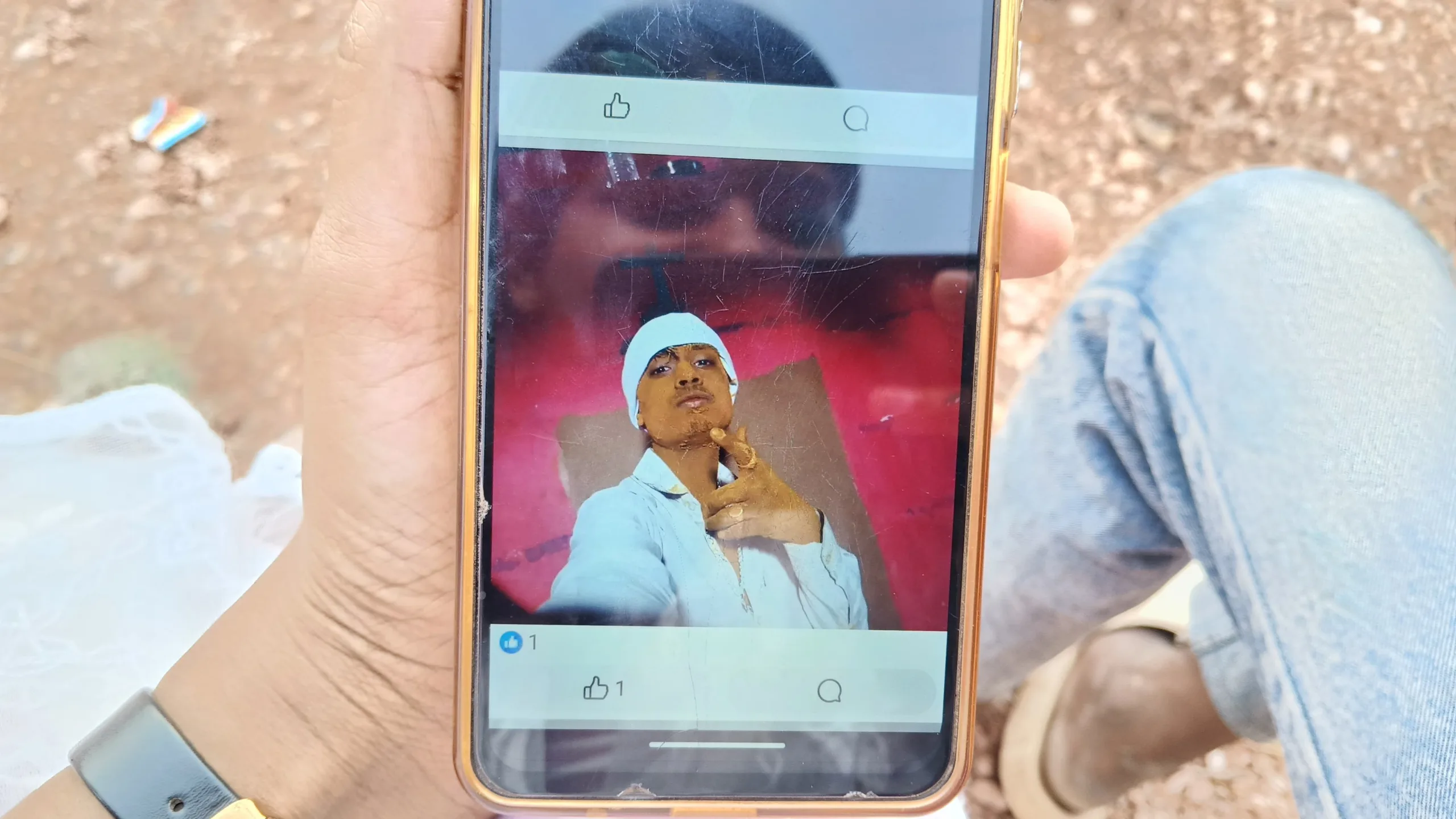
When asked if there was any Church in the village, Gajju denied it. But according to a local, Undwa has a population of around 1,200, of which nearly 300 have converted. There are reportedly three Churches, all built on tribal lands and run by local converts known as Padri ji.
On the way back, the correspondent noticed many houses with crosses painted on their doors. One of them belonged to Bunki Bhil, a woman who identified herself as a “baptised tribal” for over 20 years.

She openly showed her Bible, adorned with pictures and labelled from Shalom Disciples Church. “I too was healed through the Church. Since then, I’ve never stopped going,” she said.

The reality of crypto conversion
What emerges is a deeply rooted and complex picture, families who maintain Hindu names, celebrate marriages with Hindu rites, but have converted in faith and practice. They are crypto converts, navigating dual identities to retain social and governmental benefits while committing spiritually to another faith.
After Sangeeta’s complaint and the arrests of Ashish and Gajju, the family removed the cross from their home. The Bible is gone. The wall where the cross once hung is now stuffed with discarded material. In its place, a poster of bhagwan Shiva now adorns the home, and a saffron flag flutters on the rooftop.


When asked again how he had initially converted, Gajju replied, “It was only my wife’s illness. Otherwise, we were always Hindus.”
The correspondent was also taken to the tribal devsthan—a sacred worship site under a tree, where terracotta horses and mud idols lay. This is common in tribal homes. Gajju bowed with reverence at the spot.
But for how long?
While Gajju and family have now ceased going to Church, the bigger question looms large: how long will the change last? Can an FIR and a week in jail be considered true reconversion? Or is this just a tactical retreat?
Conversion among tribals has taken on a sophisticated form. Baptised tribals, under Hindu names, reap the benefits of Scheduled Tribe status while practising Christianity. This duality poses a grave and growing threat.

Undwa is not unique. Village after village in Madhya Pradesh and across Bharat has witnessed this quiet transformation. An underground army of crypto converts continues to grow, more dangerous than declared converts, as they slip under the radar of both law and social scrutiny.
These crypto-converts, hidden in plain sight, pose a more insidious challenge than those who openly change their faith. They are part of a growing underground movement that threatens the spiritual and cultural integrity of tribal Bharat. If immediate action, legal, administrative, and societal, is not taken, village after village will quietly fall, and an entire generation will be lost to this deceptive duality.
Sangeeta: A symbol of strength
In all of this, it was one young woman’s courage that forced a reckoning.
It was Sangeeta’s unyielding will that brought the truth to light. She did not just expose the conversion, she demanded accountability. She refused to accept a life of compromise and made her return to her in-laws conditional upon their return to the dharma she was born into. Her decision did not just made a family to change; it sparked a larger conversation.

Sangeeta, born in a modest tribal household with little formal education, proved that true strength does not come from status or literacy; it comes from clarity of purpose and the courage to act on it. She could have chosen to remain silent. Many in her position, after marriage, might have accepted the situation quietly. But she did not.
She resisted. Resisted with all her might.
And in doing so, she became a symbol, not just of individual resistance, but of collective hope.
Her father, Deewan Bhil, too, deserves recognition. His unshakable support for his daughter, his resolve to file an FIR, to stand up against his own daughter’s in-laws, this is the strength that our society needs more of.
Together, Sangeeta and Deewan are not just victims of a situation; they are warriors. In the ongoing battle to protect the dharma, their story stands as a reminder that the biggest fight is not in courtrooms or streets, but in homes, villages, and hearts.
It is time that Hindus across Bharat take inspiration from such acts of courage and wake up to the reality: the missionary network is deepening its roots even in the remotest corners. And unless we act, with awareness, with laws, with cultural revival, we risk losing not just individuals, but entire communities.
Sangeeta’s fight reminds us that it is not education, wealth, or power that defends dharma, it is willpower. The kind that does not flinch in the face of isolation or pressure. The kind that turns even the most vulnerable into agents of change.















Comments