India halts IWT after Pahalgam attack; Simla agreement affected
December 5, 2025
  • Read Ecopy
  • Circulation
  • Advertise
  • Careers
  • About Us
  • Contact Us
Android AppiPhone AppArattai
Organiser
  • ‌
  • Bharat
    • Assam
    • Bihar
    • Chhattisgarh
    • Jharkhand
    • Maharashtra
    • View All States
  • World
    • Asia
    • Europe
    • North America
    • South America
    • Africa
    • Australia
  • Editorial
  • International
  • Opinion
  • RSS @ 100
  • More
    • Op Sindoor
    • Analysis
    • Sports
    • Defence
    • Politics
    • Business
    • Economy
    • Culture
    • Special Report
    • Sci & Tech
    • Entertainment
    • G20
    • Azadi Ka Amrit Mahotsav
    • Vocal4Local
    • Web Stories
    • Education
    • Employment
    • Books
    • Interviews
    • Travel
    • Law
    • Health
    • Obituary
  • Subscribe
    • Subscribe Print Edition
    • Subscribe Ecopy
    • Read Ecopy
  • ‌
  • Bharat
    • Assam
    • Bihar
    • Chhattisgarh
    • Jharkhand
    • Maharashtra
    • View All States
  • World
    • Asia
    • Europe
    • North America
    • South America
    • Africa
    • Australia
  • Editorial
  • International
  • Opinion
  • RSS @ 100
  • More
    • Op Sindoor
    • Analysis
    • Sports
    • Defence
    • Politics
    • Business
    • Economy
    • Culture
    • Special Report
    • Sci & Tech
    • Entertainment
    • G20
    • Azadi Ka Amrit Mahotsav
    • Vocal4Local
    • Web Stories
    • Education
    • Employment
    • Books
    • Interviews
    • Travel
    • Law
    • Health
    • Obituary
  • Subscribe
    • Subscribe Print Edition
    • Subscribe Ecopy
    • Read Ecopy
Organiser
  • Home
  • Bharat
  • World
  • Operation Sindoor
  • Editorial
  • Analysis
  • Opinion
  • Culture
  • Defence
  • International Edition
  • RSS @ 100
  • Magazine
  • Read Ecopy
Home Politics

Pakistan rattled as India puts IWT on abeyance post Pahalgam terror attack, Simla agreement also affected

India’s decision to suspend the Indus Waters Treaty after the Pahalgam attack marks a strategic shift in bilateral ties with Pakistan, challenging outdated frameworks like the Simla Agreement. As terrorism continues unchecked, India signals it will no longer adhere to treaties that ignore ground realities

Ameya KulkarniAmeya Kulkarni
Jun 15, 2025, 01:00 pm IST
in Politics, Bharat, World, South Asia, Opinion
Follow on Google News
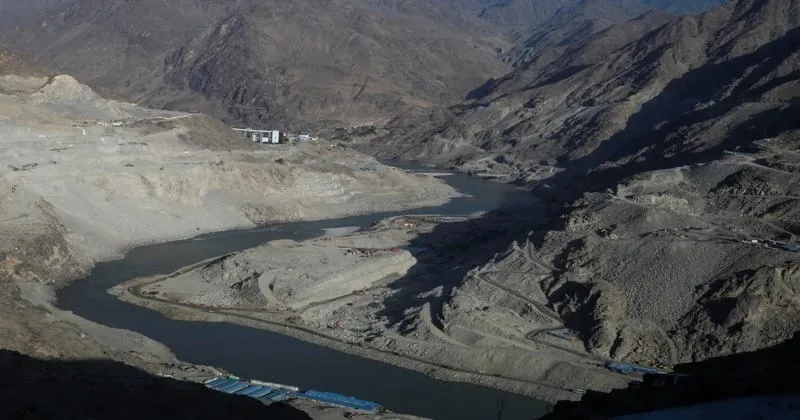
Representative image

Representative image

FacebookTwitterWhatsAppTelegramEmail

One of the measures India undertook in the aftermath of the Pahalgam attack (22 April 2025) was to keep in ‘abeyance’ the 1960 Indus Waters Treaty (IWT). In response, Pakistan announced that it would place in abeyance its participation in all bilateral agreements with India, including the 1972 Simla Agreement. The central point is that while the Pahalgam attack was the inflexion point for India on the IWT, Pakistan merely mirrored India’s actions without offering any rationale. To place ‘ in abeyance’ implies suspending all processes of bilateral engagement under the Treaty, including the World Bank’s ‘mediation’ in the process. This is a diplomatic decision taken because of Pakistan’s continued intransigence on terrorism. The absence of a specific provision in the treaty allowing such a move does not render India’s actions bad in law, as has been claimed by Pakistan. On the contrary, Islamabad’s consistent violations of the Simla Agreement and other bilateral pacts make a mockery of the very essence of international law and practice.

The IWT has always favoured Pakistan and, in many ways, has been made obsolete by modern technology—making its revision long overdue. On two prior occasions, in January 2023 and then in September 2024, India requested a “review and modification” of the IWT, but did not hear back from Pakistan. Therefore, placing the IWT in abeyance now provides an opportunity to effectively curtail the flow of water to Pakistan as much as possible. One of the first responses to India’s action on the IWT post- Pahalgam saw Syed Ali Murtaza, Pakistan’s Water Resources Secretary, reaching out to his Indian counterparts, expressing readiness to engage in discussions on clauses of the Treaty which India finds ‘objectionable’.

Islamabad has been rattled by the announcement of keeping the treaty in abeyance, as the move signals that India is ready to take unilateral steps without batting an eyelid. External Affairs Minister (EAM) S. Jaishankar has made it clear that India is only willing to talk ‘terror’ with Pakistan, and that no discussions on the IWT would be held anytime soon. Jaishankar stated, “The Indus Waters Treaty is held in abeyance and will continue to be held in abeyance until the cross-border terrorism by Pakistan is credibly and irrevocably stopped.”

In January 2025, the ‘Neutral Expert’ appointed by the World Bank at India’s request stated that he was ‘competent’ to adjudicate the differences between India and Pakistan on the Kishenganga and Ratle Hydro Electric Projects (HEPs). India has thus far not participated in the proceedings of the “illegally constituted” Court of Arbitration in The Hague, initiated by the World Bank at Pakistan’s request. Logically, all proceedings between both countries under the IWT should automatically be held in abeyance. World Bank President Ajay Banga recently clarified that as the Bank was only a facilitator, it would not “step in to fix” India’s suspension of the treaty. Notably, in 2016, the World Bank itself chose to ‘pause’ the working of the treaty to allow both countries to find an amicable solution to their differences.

Therefore, the question arises as to the basis for India’s actions. The 1969 Vienna Convention on the Law of Treaties (VCLT) offers some guidance on this issue. Article 62 alludes to a “fundamental change in circumstances” since the signing of the treaty as a valid ground for termination. Several factors, including technological advancements and climate change, render the original terms of the IWT void. Additionally, Pakistan’s sponsorship of terrorism and its continuing impact on India reinforces the argument that India would be justifies in invoking Article 62(3) of the Convention— which states: “…… a party may invoke a fundamental change of circumstances as a ground for terminating or withdrawing from a treaty; it may also invoke the change as a ground for suspending the operation of the treaty.” This is why in 2023 and 2024, India sent notices to Pakistan, seeking its cooperation in modifying the treaty – highlighting concerns over demographic changes, environmental issues, the need for clean energy development, as well as the impact of cross-border terrorism.

These concerns, in turn, raise the issue of increasing India’s capacity to store and utilise the waters of the rivers to the maximum extent possible, thereby limiting their flow into Pakistan. Many projects, including the Ratle HEP, are underway, and in due course, these will reduce the downstream flow of water into Pakistan. However, disputes between states such as Punjab and Haryana over the sharing of river water risk undermining the national interest. Another priority must be to constitute an empowered committee to monitor progress on all Indus Basin projects. Its remit must include project monitoring, ensuring timely completion , enhancing storage capacity, and optimising irrigation potential. This is an action that Prime Minister Narendra Modi can initiate promptly, with the Minister for Jal Shakti serving as the chairman of the Committee.

Pakistan appears to be under the illusion that a tit-for-tat suspension of all treaties signed with India will somehow counterbalance India’s decision to place the IWT ‘in abeyance’. The Simla Agreement, signed in 1972, provides the basis for the conduct of bilateral relations between India and Pakistan. Its suspension means that both sides do not recognise the Line of Control (LoC). This suits Pakistan, as it sends terrorists across the LoC and simultaneously claims that parts of the International Boundary are merely a ‘ working boundary’. This kind of perfidy is best treated with a cold shoulder. For India, the suspension of the Simla Agreement opens the door to militarily modify or alter the LoC whenever it chooses. This, however, is a subject of another analysis.

Post-1972, it was Pakistan which violated the clause on the non-use of force – Article 1 (VI) of the Simla Agreement – by sending terrorists into Jammu and Kashmir, and eventually into the Indian heartland. Therefore, India is justified in maintaining that the only issue worth discussing with Pakistan is terrorism. Another matter that must remain on the table is the Pakistani retreat from areas that today constitute Pakistan-occupied Jammu and Kashmir (PoJK).

While there are several bilateral agreements between India and Pakistan, the Simla Agreement and IWT remain the most important. India’s call for the revision of the IWT is based on practical considerations. By the same logic, New Delhi must now also consider seeking a revision of the Simla Agreement.

Topics: cross border terrorismIndus Waters TreatyPahalgam AttackIndia-Pakistan tensionsSimla AgreementIWT Abeyance
ShareTweetSendShareSend
✮ Subscribe Organiser YouTube Channel. ✮
✮ Join Organiser's WhatsApp channel for Nationalist views beyond the news. ✮
Previous News

Balancing the Separation of Power: Working within the “Lakshman Rekha”

Next News

Odisha: CRPF jawan injured in Sundargarh IED blast succumbs to injuries

Related News

IG BSF Jammu Frontier Shashank Anand

‘Pakistan treated it as war’: BSF reveals intense cross-border clash during Operation Sindoor

Representative Image

Dealing best with the internal enemy in Bharat

India’s Permanent Representative to the UN, Ambassador Parvathaneni Harish

Delhi Blast: India urges UN Security Council to crack down on illicit arms trafficking after explosion near Red Fort

India holds the decisive upper hand on the Indus, and any strategic shift now could rapidly intensify Pakistan’s water crisis

India turns Indus from lifeline to leverage after Pahalgam attack, warns Pakistan of harsh water pressure ahead

The largest ever hydropower dam being planned on the Chenab, Sawalakote gets fresh mandatory environmental clearance from the Central ministry

1,856 MW Sawalakote hydropower project on Chenab gets fresh environmental clearance, dam building process gets hastened

Saudi Prince Mohammed Bin Salman and Prime MInister Narendra Modi (Left) and Pakistan PM Shehbaz Sharif (Right)

Saudi-Pakistan defence pact remains symbolic as Riyadh deepens ties with New Delhi

Load More

Comments

The comments posted here/below/in the given space are not on behalf of Organiser. The person posting the comment will be in sole ownership of its responsibility. According to the central government's IT rules, obscene or offensive statement made against a person, religion, community or nation is a punishable offense, and legal action would be taken against people who indulge in such activities.

Latest News

PM Modi presents Putin with Bhagavad Gita, chess set, and silver horse

Cultural ties strengthened: PM Modi presents Putin with Bhagavad Gita, chess set, and silver horse

Image for representational purpose only, Courtesy Vocal Media

Bihar to get ‘Special Economic Zones’ in Buxar and West Champaran

Thirupparankundram Karthigai Deepam utsav

Andhra Pradesh: AP Dy CM Pawan Kalyan reacts to Thirupparankundram row, flags concern over religious rights of Hindus

23rd India-Russia Annual Summit

India-Russia Summit heralds new chapter in time-tested ties: Inks MoUs in economic, defence, tourism & education

DGCA orders probe into IndiGo flight disruptions; Committee to report in 15 days

BJYM leader Shyamraj with Janaki

Kerala: Widow of BJP worker murdered in 1995 steps into electoral battle after three decades at Valancherry

Russian Sber bank has unveiled access to its retail investors to the Indian stock market by etching its mutual fund to Nifty50

Scripting economic bonhomie: Russian investors gain access to Indian stocks, Sber unveils Nifty50 pegged mutual funds

Petitioner S Vignesh Shishir speaking to the reporters about the Rahul Gandhi UK citizenship case outside the Raebareli court

Rahul Gandhi UK Citizenship Case: Congress supporters create ruckus in court; Foreign visit details shared with judge

(L) Kerala High Court (R) Bouncers in Trippoonithura temple

Kerala: HC slams CPM-controlled Kochi Devaswom Board for deploying bouncers for crowd management during festival

Fact Check: Rahul Gandhi false claim about govt blocking his meet with Russian President Putin exposed; MEA clears air

Load More
  • Privacy
  • Terms
  • Cookie Policy
  • Refund and Cancellation
  • Delivery and Shipping

© Bharat Prakashan (Delhi) Limited.
Tech-enabled by Ananthapuri Technologies

  • Home
  • Search Organiser
  • Bharat
    • Assam
    • Bihar
    • Chhattisgarh
    • Jharkhand
    • Maharashtra
    • View All States
  • World
    • Asia
    • Africa
    • North America
    • South America
    • Europe
    • Australia
  • Editorial
  • Operation Sindoor
  • Opinion
  • Analysis
  • Defence
  • Culture
  • Sports
  • Business
  • RSS @ 100
  • Entertainment
  • More ..
    • Sci & Tech
    • Vocal4Local
    • Special Report
    • Education
    • Employment
    • Books
    • Interviews
    • Travel
    • Health
    • Politics
    • Law
    • Economy
    • Obituary
  • Subscribe Magazine
  • Read Ecopy
  • Advertise
  • Circulation
  • Careers
  • About Us
  • Contact Us
  • Policies & Terms
    • Privacy Policy
    • Cookie Policy
    • Refund and Cancellation
    • Terms of Use

© Bharat Prakashan (Delhi) Limited.
Tech-enabled by Ananthapuri Technologies