





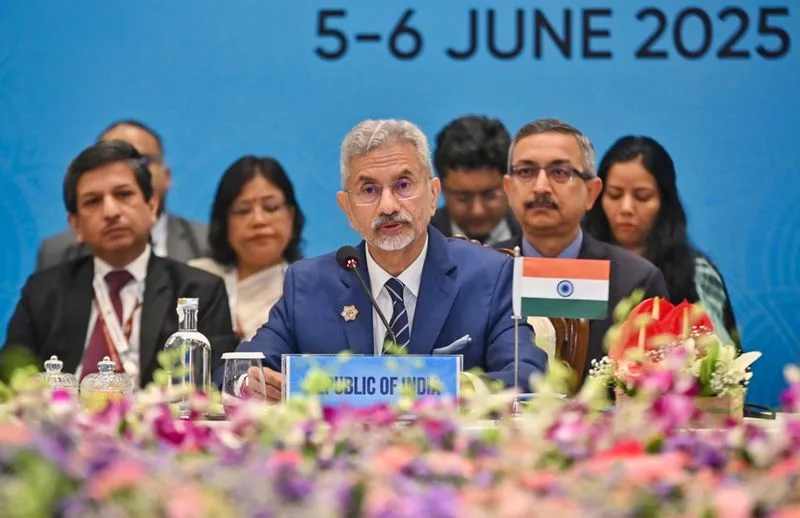
In a strategic move to reduce global dependence on China’s dominance in the rare earths sector, India and five Central Asian countries, Kazakhstan, Kyrgyzstan, Tajikistan, Turkmenistan, and Uzbekistan, have agreed to collaborate on the exploration and development of rare earth elements and other critical minerals. The agreement was formalised during the 4th India-Central Asia Dialogue held in New Delhi.
The move comes amid growing concerns over China’s near-monopoly in this critical resource sector. Currently, China accounts for approximately 70 per cent of the world’s rare earth mining and commands a near-total hold over processing and refining. In April 2025, Beijing tightened its grip by imposing export controls on six heavy rare earth elements and rare earth magnets, citing national security and international obligations as justification.
In response, India is intensifying its efforts to diversify supply chains and secure its own critical mineral reserves. As part of the broader National Critical Mineral Mission (NCMM), the Indian government is finalising an incentive scheme aimed at mineral recycling and establishing long-term stockpiles of rare earth magnets. Fiscal incentives for domestic manufacturing are also under discussion.
Underscoring this renewed commitment, the Ministry of Mines launched the NCMM Outreach Forum through a high-level seminar in New Delhi, inaugurated by Union Minister G. Kishan Reddy. The event brought together more than 200 stakeholders, including officials from central ministries, PSUs, global financial institutions such as the World Bank and ADB, private sector players, and research institutions.
Addressing the gathering, Reddy emphasised that critical minerals are more than just commodities, they are strategic assets essential for India’s technological advancement and clean energy goals. “These resources are foundational to our ambitions in electric mobility, solar energy, semiconductors, and aerospace. Our push for self-reliance in critical minerals is central to India’s green and economic future,” he said.
The partnership with Central Asia not only diversifies India’s mineral supply sources but also strengthens geopolitical and economic ties with the resource-rich region, marking a significant stride in India’s journey toward mineral security and industrial transformation.
India-Central Asia Dialogue
The Ministers of Foreign Affairs of Kazakhstan, the Kyrgyz Republic, Tajikistan, Turkmenistan, and Uzbekistan noted the current level of trade and investment between India and Central Asian countries and stressed the importance of making concerted efforts to realise the full potential of mutual trade, especially in sectors like pharmaceuticals, information technology, agriculture, energy, textiles, gems and jewellery, etc.
According to the MEA statement, the Ministers underlined the importance of greater financial connectivity between India and Central Asian countries, including through digital payment systems, enhanced interbank relations, and trade in national currencies to encourage greater trade, investment, tourism and people-to-people exchanges.
Recognising the important role of financial and banking linkages, the Sides also expressed interest in establishing a Joint Working Group to explore ways to further deepen banking and financial connectivity between India and Central Asian partners, according to the statement.
The Central Asian countries noted the importance of India Stack in accelerating digital transformation and providing public service delivery at scale. India agreed to provide assistance in developing Digital Public Infrastructure (DPI) in Central Asian countries.
The Ministers also agreed to establish the India-Central Asia Digital Partnership Forum and welcomed Uzbekistan’s offer to host the inaugural meeting.
What are Critical Minerals?
Critical minerals are such minerals that are crucial for economic progress and national security. Unavailability or even concentration of existence, extraction, or processing of such minerals in limited geographical points can cause supply chain risk and disruption.
India has officially listed 30 key minerals as being essential to its economic security and technological future. They are:
1) Lithium, Cobalt, Nickel, Graphite for battery and EVs
2) Rare Earth Elements (REEs) such as Neodymium, Dysprosium, and Terbium for wind turbines, electronics, and defence systems
3) Copper, Tin, Molybdenum used in electrical transmission and semiconductors
4) Tungsten, Beryllium, Tantalum utilised in defence, aerospace, and high-performance alloys
5) Gallium, Tellurium, Selenium for photovoltaics and high-efficiency electronics
Critical Minerals and the New Balance of Global Power
In today’s rapidly evolving global landscape, critical minerals have emerged as the new strategic assets, much like oil was in the 20th century. These minerals, such as lithium, cobalt, graphite, nickel, and rare earth elements, are vital to the functioning of modern technologies and green energy systems. They are the unseen backbone of electric vehicles, smartphones, solar panels, wind turbines, advanced batteries, and sophisticated defence equipment.
What makes them geopolitically significant is their uneven global distribution and concentrated supply chains, which are largely dominated by a few countries. For example, China currently controls over 70 percent of global rare earth processing and more than half of the world’s graphite and gallium refining. The Democratic Republic of Congo supplies over 70 percent of the world’s cobalt, but Chinese firms dominate its extraction and exports. Likewise, Russia holds a crucial position in the supply of palladium, nickel, and titanium, with strategic implications, particularly following its current confrontation with Ukraine. This concentrated monopoly has made critical minerals weapons of political influence. Disruption of any kind, in the form of sanctions, export prohibitions, or geopolitical conflicts, can freeze industries and national economies.
India is in a particularly weak position in this global context. It is completely import-reliant for a number of critical minerals such as lithium, cobalt, nickel, niobium, vanadium, and tantalum, some of which are critical for its defence readiness, clean energy goals, and digital infrastructure. If access to these materials is cut off or made prohibitively costly, the government’s initiative for electric cars, solar power, and high-tech electronics in the framework of Atma Nirbhar Bharat vision and commitment to becoming net-zero emission by 2070 will be compromised.
In addition, critical minerals are central to India’s defence system. They are applied in radar, precision-guided missiles, and communications satellites, and hence their accessibility is a nation’s security concern. India’s economic prospects and strategic autonomy are thus self-evidently connected to the extent to which it can acquire a secure and diversified supply of such minerals.
Why Critical Minerals Matter to Ordinary People
Critical minerals are not something that we talk about every day, yet they are embedded deeply in the very fabric of our existence. From when you wake up and turn on your smartphone to the lights that illuminate your home and the transport that gets you to your workplace, these minerals are working unobtrusively behind the scenes.
The phone you hold in your hand, the computer you depend on, and the internet router that maintains you online are all based on scarce elements such as gallium, indium, and rare earth metals. If you or a family member plans to purchase an electric vehicle, it is run by lithium and cobalt batteries. A lack of such minerals might make EVs more expensive and hamper production, making clean transport unaffordable for the mass consumer.
Solar panels producing clean electricity and wind turbines that are going to offer a pollution-free future are made necessary by minerals such as tellurium, neodymium, and silver. Even our health care system relies on these. Critical minerals play an important role in the functioning of MRI machines, radiation treatments, and life-saving diagnostic equipment that employ metals such as gadolinium and rhenium.
Their importance goes beyond technology. They affect job creation, the economy, the environment, and even national security. Without a stable supply of these materials, everyday essentials could become more expensive, scarce, or technologically outdated.
Comprehending the significance of critical minerals is not only a concern for policymakers or scientists. It is a concern of daily life, public health, and the type of future we wish to construct for our coming generations.
Government Initiatives for Establishing Domestic Capacity
The highlight of the seminar was the signing of a historic MoU between Hindustan Copper Limited and RITES, aimed at creating an integrated domestic value chain for strategic minerals. It aims to shift from exploration and mining to processing and value manufacturing within Indian shores.
The NCMM itself has been budgeted Rs 16,300 crore for seven years, and another Rs 18,000 crore is expected from PSUs. It looks to auction more than 100 mineral blocks, implement 1,200 exploration projects, and acquire 50 mines outside the country to address long-term supply security.
Concurrently, the government has introduced a Rs 1,500 crore mineral recycling program, fortifying the circular economy strategy, which is indispensable in the minimisation of dependence and the control of environmental expenditures.
From the Lithium Triangle to Europe
India is aggressively pursuing global mineral diplomacy. Prime Minister Modi’s recent visits to Latin America focused on tapping into the “Lithium Triangle” of Argentina, Bolivia, and Chile through partnerships with state-owned entities like Codelco. Back home, joint exploration agreements have been signed with five Central Asian nations.
In Europe, India is negotiating with Italy to obtain semiconductors and green technology supplies. A strategic free trade agreement with Australia is also set to make critical minerals one of the pillars of importance. All these are further supplemented by India’s entry into the Minerals Security Partnership (MSP) with the U.S., EU, Japan, and Australia.
Institutional Push, Innovation Edge
Government-owned companies like KABIL (Khanij Bidesh India Ltd.) have been on an acquisition spree in Argentina, Zambia, and the U.S. Research centers, too, are pioneering cutting-edge technologies like sodium-ion batteries and low-impact recycling methods.
New discoveries of minerals are also fueling hope. Just last month, India officially announced a 5.9-million-ton lithium reserve in Reasi district, Jammu & Kashmir, a game-changer for its EV plans.
But bottlenecks remain. India is nearly entirely import reliant for lithium, cobalt, nickel, and graphite. Infrastructural challenges, regulatory slow-downs, and poor private sector participation continue to hold back progress.
Turning Policy into Power
India’s destiny with critical minerals is not merely digging up rocks or refining metals. It is about building the foundations of a modern, self-sufficient, and sustainable country. They are used to power clean energy, drive digital technology, secure national defence, and build tens of millions of jobs in new industries.
As the planet shifts toward a low-carbon economy, the need for such resources will increase only further. Unless India acts now, it will be left in the international race for green technology and industrial prominence. In order to fully reap this momentum, India will have to synchronise regulatory reforms, industrial infrastructure, and international alignments. A five-pronged approach is on the horizon:
1. Doing business in mining, with simplified approvals and investment promotion
2. Domestic exploitation of untapped reservoirs in states such as Rajasthan, Odisha, Karnataka, and J&K
3. Cutting-edge processing technologies to minimise raw material exports and import of processed products
4. Allied-facilitated joint ventures to diversify supply chains from China
5. Environmental protection to guarantee that mining does not damage biodiversity and local populations
Towards a Sustainable Future
By making investments in exploration, recycling, research, and international collaboration, India can wean itself off imports and shield itself from geopolitical shocks. It can create a robust supply chain that enables innovation, environmental stewardship, and economic growth. Above all, it can provide all citizens (from a student on a laptop to a patient requiring medical imaging) access to the technologies shaping the future.
This is a moment of choice. With the appropriate policies, public opinion, and collective action, India can turn its mineral vulnerability into strategic strength. What we do today will determine the security, economy, and international standing of the country for decades to come.












Comments