





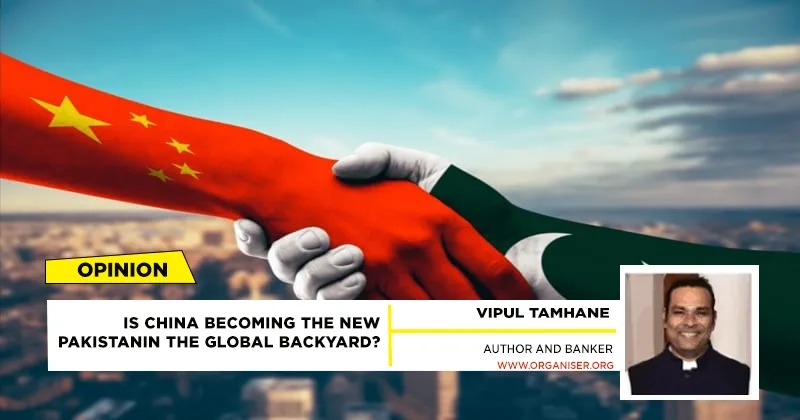
On April 22, 2025, 26 people lost their lives in a brutal terrorist attack in Pahalgam, J&K, an operation claimed by The Resistance Force (TRF), a splinter group from the SDN-listed Pakistan-based Lashkar-e-Taiba (LeT). While the world reflects in grief from yet another senseless act of violence, India’s diplomatic push to have TRF designated as a terrorist organisation at the United Nations Security Council (UNSC) has been blocked at every turn by none other than China. The question looms larger than ever: Is China a silent patron of global terrorism?
A Pattern of Obstruction and Shielding
China’s obstructionism in the UNSC is nothing new. India’s efforts to have Masood Azhar, the architect of Jaish-e-Mohammed (JeM), designated as an international terrorist were blocked by China on several occasions from 2009 to 2019. It was only when there was heavy international pressure that Beijing finally gave in in May 2019. Prior to that, the “insufficiency of evidence” pretext appeared more a diplomatic fig leaf than a legal reasoning. Today, history seems to be repeating itself as China is said to be covering up for TRF from international criticism, in spite of overt evidence of its association with LeT and activities in recent mass-casualty attacks.
This consistent pattern points to more than mere coincidence with the geopolitical interests of Pakistan. It portends a larger, ominous willingness on the part of China to use non-state violent groups as proxies in the realization of its strategic ambitions.
Arming Insurgency Across Asia
China’s reach goes far beyond the UNSC. In Northeast India, where insurgency has been a source of trouble for national security for decades, the trafficking of Chinese weapons is an ominous fact. Indian intelligence has blamed China for arming Naxalite–Maoist insurgents and ethnic militant organisations in Manipur, Nagaland, and Mizoram. Later on, the capture of illicit Chinese weapons along the Myanmar-Thailand border again fueled concerns over a deliberate plan to resume violence in the area.
Reports referenced by the European Foundation for South Asian Studies (EFSAS) suggest that the seized arms come from “first came from China, and original made in China, and not domestically made” by more than the Kachin Independence Army or others. The suspected intent of those who purchased the arms is to undermine India’s Act East Policy by undermining the Indo-Myanmar corridor, which is essential to many nations in the region for connectivity and trade. This kind of interference is strategic and surgical conflict, where it hurts most.
Diplo-Terrorism in Myanmar
Having China tied with the Arakan Army (AA), whom the Myanmar government called a terrorist organisation, is concerning. Between the years of 2019 and 2021 Myanmar publicly accused China of supplying its AA with assault rifles, machine guns, and even SAMS (surface to air missiles). And we are not talking about basic supplies or weapons with limited capabilities but advanced Chinese military technology; for example, FN-6 MANPADS, which are capable of taking out long-endure aircraft.
The motive? As noted by analyst Anders Corr, this is diplo-terrorism; China’s strategy to use violent ethnic militias as a tool for regional influence expansion and an armed layer of protection of its BRI (Belt and Road Initiative) investments. Use of insurgents across the Northeast India to Indian Ocean corridor through Myanmar’s Chin and Rakhine states is both strategically good, and operationally important, from China’s national interest, & economic perspective. By arming insurgents along this corridor, China not only gets to maintain the upper hand with Myanmar’s military dictatorship but also creates disruptions to India’s regional outreach.
The Xinjiang Paradox
For a long time, China has characterised itself as a victim of terrorism, particularly in the area of Xinjiang, blaming terrorism on indigenous Uighur separatist organisations sometimes identified as the East Turkistan Islamic Movement (ETIM). Beijing’s counterterrorism narrative in Xinjiang is one of a seeming victim of terrorism in a manner that the world comes to see as state backed repression, but of which, China is selective and self-serving. While brutally repressing internal dissent, the Chinese state has displayed an alarming willingness if not tolerance in employing proxies that can provide terrorists the capability to destabilise other countries.
China’s anti-terrorism campaigns in Xinjiang are indistinguishable from the perceptions of genocide, mass detention and forced labour. Meanwhile, China encourages contexts of instability abroad, from South Asia to Africa, creating militancy and insurgency as the practice of diplomatic pragmatism.
Terror and Trade: The African connection
China’s expanding military and economic presence in Africa adds additional complexity to this puzzle. China’s arms exports to African countries increased from $103 million in 2022 to $306 million in 2023. These sales, strictly legal on paper, routinely wind up supporting rebel and insurgent forces holding resource-rich areas, like those in the Democratic Republic of Congo.
The calculus is straightforward but brutal: dominate resources at any cost, even by facilitating insurgents. Beijing’s interests in securing access to cobalt, coltan, and rare earth minerals have spawned nebulous alliances with non-state actors. Through them, China tiptoes around the conventions of international diplomacy while keeping plausible deniability within reach.
Proxy Play in the South China Sea
In the South China Sea, China’s employment of non-state actors occurs in a maritime guise. China’s maritime militia, which masquerades under the cloak of civilian fishing vessels, harasses ships of Vietnam, the Philippines, and other claimant countries. These are Beijing’s grey-zone warriors, intrepid enough to make territorial claims but not officially military, and therefore, they escape open confrontation. Could the same proxies be employed for onshore power in the future? The notion isn’t unthinkable. A number of analysts caution that China may employ insurgent forces in Southeast Asia to destabilise competing regimes, achieving its ends indirectly while enjoying diplomatic cover.
Strategic Double Standards
It’s getting increasingly impossible to miss China’s contradictory position concerning terrorism. While it clamours for global counterterror efforts, its behaviour is undermining them. Continuing military sales to pariah regimes like Iran and Syria and using its veto power at the UN to block counterterrorism efforts pertaining to the designated terrorist attacks is a calculated display of hypocrisy.
At the 2001 APEC Summit, Chinese President Jiang Zemin hesitated when pushed by US President George W. Bush to stop military exports to terrorist-associated states. Even now, China quietly makes such action contingent on extraneous demands, such as US arms sales to Taiwan, pointing out that its terrorism policy is transactional, not ethical.
A Global Reckoning is Due
The world’s indulgence of China’s conduct, its disregard for UN processes, its arms diplomacy, its sponsorship of insurgent movements, has to stop. Beijing’s terrorism sponsorship may be more subtle than either Pakistan’s or Saudi Arabia’s, but its effects are as devastating and more insidious. China’s policy is predicated on uncertainty, plausible deniability, and the murk of diplomacy. But the bottom line is more telling.
From the blood-drenched fields of Pahalgam to the jungles of rebel-held Myanmar and Africa’s mineral-rich hotbeds of conflict, the telltale fingerprints of Chinese complicity are difficult to overlook. This is no simple geopolitics, but a threat to global security.
It is time the world community acknowledges that China’s moves do not just facilitate terrorism but weaponise it. And in the process, China does not just pose a threat to regional stability but tramples the norms of the international order it purports to defend. Enough silence. The world must call out China’s double game, for what it is: a quiet, calculated sponsorship of terror.














Comments