Book review | The Nehru Years: An International history of Indian non-alignment
December 5, 2025
  • Read Ecopy
  • Circulation
  • Advertise
  • Careers
  • About Us
  • Contact Us
Android AppiPhone AppArattai
Organiser
  • ‌
  • Bharat
    • Assam
    • Bihar
    • Chhattisgarh
    • Jharkhand
    • Maharashtra
    • View All States
  • World
    • Asia
    • Europe
    • North America
    • South America
    • Africa
    • Australia
  • Editorial
  • International
  • Opinion
  • RSS @ 100
  • More
    • Op Sindoor
    • Analysis
    • Sports
    • Defence
    • Politics
    • Business
    • Economy
    • Culture
    • Special Report
    • Sci & Tech
    • Entertainment
    • G20
    • Azadi Ka Amrit Mahotsav
    • Vocal4Local
    • Web Stories
    • Education
    • Employment
    • Books
    • Interviews
    • Travel
    • Law
    • Health
    • Obituary
  • Subscribe
    • Subscribe Print Edition
    • Subscribe Ecopy
    • Read Ecopy
  • ‌
  • Bharat
    • Assam
    • Bihar
    • Chhattisgarh
    • Jharkhand
    • Maharashtra
    • View All States
  • World
    • Asia
    • Europe
    • North America
    • South America
    • Africa
    • Australia
  • Editorial
  • International
  • Opinion
  • RSS @ 100
  • More
    • Op Sindoor
    • Analysis
    • Sports
    • Defence
    • Politics
    • Business
    • Economy
    • Culture
    • Special Report
    • Sci & Tech
    • Entertainment
    • G20
    • Azadi Ka Amrit Mahotsav
    • Vocal4Local
    • Web Stories
    • Education
    • Employment
    • Books
    • Interviews
    • Travel
    • Law
    • Health
    • Obituary
  • Subscribe
    • Subscribe Print Edition
    • Subscribe Ecopy
    • Read Ecopy
Organiser
  • Home
  • Bharat
  • World
  • Operation Sindoor
  • Editorial
  • Analysis
  • Opinion
  • Culture
  • Defence
  • International Edition
  • RSS @ 100
  • Magazine
  • Read Ecopy
Home Bharat

Book review | The Nehru Years: An International history of Indian non-alignment

Ameya KulkarniAmeya Kulkarni
May 25, 2025, 08:00 pm IST
in Bharat, Book Review
Follow on Google News
FacebookTwitterWhatsAppTelegramEmail

Non-alignment may be displaying green shoots of revival as the world heads into a phase of polarisation not witnessed since the Cold War years. Swapna Kona Nayudu’s book under review is, therefore, timely and topical. It offers a nuanced and granular analysis of how Nehru, its chief architect, understood it as both political philosophy and as an instrument of diplomatic practice in the pursuit of India’s national interests. This is a thoroughly well-researched book, with notes, bibliography and index occupying almost half of the text. The author succeeds in offering a fresh and uniquely Indian perspective on how non-alignment became an organising principle guiding India’s engagement with the world during the Cold War years, echoes of which reverberate in both the idiom and substance of India’s current foreign policy, though the labels may have changed.

Non-alignment in popular parlance was understood as a foreign policy of rejecting a subordinate ally status in either the ideological and military bloc headed by the US or that led by the Soviet Union. This posture was rooted in the colonial experience of India and other states of Asia, Africa and Latin America, which having overthrown the colonial yoke were not prepared to exchange it for another form of subservience. In this elemental sense, there was a natural solidarity and political affinity among this category of newly emerging nations in the post Second World War period. Non-alignment manifested itself in different ways in the foreign policies of countries that became part of the Non-Aligned Movement, which came into existence in 1961. But the overarching sense of solidarity has remained alive under the current brand of the Global South.

The author has shown how Nehru’s conception of non-alignment was conflicted between the idea of forming a third bloc confronting the demands for acquiescence from East and West and Nehru’s deeply rooted sense of internationalism and cosmopolitanism, that sought engagement with both. He came to see the United Nations as a platform offering opportunities for transcending the power divide to enlarge the arena for peace. It is this perspective that led India to play an active and critical role in four international crises — the Korean War between the US and China (1950-53), the Suez Canal Crisis involving a joint UK, French and Israeli attack against Egypt (1956), the Soviet invasion of Hungary (1956) and finally the Congo Civil War (1960-63).

While Nehru may have worked together with other non-aligned countries in seeking peace in these crises, it was clearly India in the lead, with the personal prestige of Nehru as an international statesman being deployed. Even though Nehru was one of the seminal figures behind the successful Afro-Asian Conference in Bandung in 1955, he resisted the idea of its formalisation as a movement and recent archives show that he may not have been enthusiastic about the Non-Alignment Movement being announced in 1961. Yugoslavia’s Tito and Egypt’s Nasser were its main drivers.

The author also reveals the constant tension between Nehru’s conception of non-alignment and the repeated deflections from it in response to the complexities of the crises with which he had to deal. There were also the compulsions of upholding India’s national interests. The way India reacted to the Suez crisis was different from its response to the Hungarian crisis. Although Dr Nayudu does try to square the circle, there is no doubt that India was bolder and more explicit in opposing aggression in one case and somewhat coy in the other. The partnership with the Soviet Union was beginning to take shape and it was not in India’s interests to condemn Moscow in the same manner. The argument that condemnation had to be avoided to keep open the door to peace is a Nehruvian legacy that has been embraced by his successors. It is far too convenient a diplomatic instrument to be abandoned as we have seen in the Ukrainian crisis.

The author is unusually perceptive in demonstrating Nehru’s discomfort in engaging with Africa with which he was less familiar than with Asia. He was no champion of a pan-African political movement and seemed discomfited by the integral place of race in Africa’s search for a modern identity. Though he led the way in opposing apartheid in South Africa, which was racist in conception, he did not fully appreciate its pervasive overlay across Africa even in its post-colonial situation.

Another legacy that remains intact is India’s role in UN peacekeeping, providing Indian troops, paramilitary personnel, and even its diplomats to keep the peace in conflict situations. Nehru saw this as part of India’s internationalist responsibility. While this began as peacekeeping with unarmed troops, it evolved into peacekeeping with armed troops but with no mandate to engage in hostile operations — and finally, as in the Congo civil war, to engaging in combat operations to militarily change the situation on the ground. It’s an interesting account and deserves a fuller treatment.

This book is a welcome spotlight on one of the foundational principles of India’s foreign policies and the thinking of its main preceptor, Nehru, examined in all its richness, complexity, ambiguity, and its contradictory expressions in practice. We shall find these resonating in India’s foreign policy to this day.
Topics: India Foreign PolicyNehruCold War DiplomacyUN Peace keepingNehruvian Legacy
ShareTweetSendShareSend
✮ Subscribe Organiser YouTube Channel. ✮
✮ Join Organiser's WhatsApp channel for Nationalist views beyond the news. ✮
Previous News

The Aim of Human Life: An evening discourse on Adi Shankaracharya’s teachings

Next News

Cold Start Reloaded: Sindoor as India’s red line

Related News

Afghan Industry and Commerce Minister Alhaj Nooruddin Azizi receives a warm welcome on his arrival for the official visit to India, in New Delhi on November 19, 2025

India deepens engagement with Afghanistan as Commerce Minister visits New Delhi amid rising Kabul–Islamabad tensions

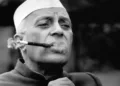
How Nehru turned his own birthday into ‘Children’s Day’: The forgotten history of a soviet-style PR exercise

Muttahiki’s high-level visit to New Delhi underscores India’s evolving Afghan policy and growing regional influence

India-Taliban engagement reflects strategic realignment and emerging power dynamics in south asian geopolitics

Russian President Vladimir Putin, PM Narendra Modi and British PM Sir Keir Starmer

India balances energy and diplomacy as Russian oil flows continue and British PM Starmer prepares for official visit

Representative image

Peace or Precarity? The Abraham Accords and the unfinished struggle for Palestinian statehood

Representative image

A War Without an Ending: Russia, Ukraine, and the age of permanent stalemate

Load More

Comments

The comments posted here/below/in the given space are not on behalf of Organiser. The person posting the comment will be in sole ownership of its responsibility. According to the central government's IT rules, obscene or offensive statement made against a person, religion, community or nation is a punishable offense, and legal action would be taken against people who indulge in such activities.

Latest News

Petitioner S Vignesh Shishir speaking to the reporters about the Rahul Gandhi UK citizenship case outside the Raebareli court

Rahul Gandhi UK Citizenship Case: Congress supporters create ruckus in court; Foreign visit details shared with judge

(L) Kerala High Court (R) Bouncers in Trippoonithura temple

Kerala: HC slams CPM-controlled Kochi Devaswom Board for deploying bouncers for crowd management during festival

Fact Check: Rahul Gandhi false claim about govt blocking his meet with Russian President Putin exposed; MEA clears air

Union Minister for Road Transport and Highways Nitin Gadkari (Right)

India set for highway overhaul as Union Minister Nitin Gadkari unveils nationwide shift to MLFF electronic tolling

RSS Akhil Bharatiya Prachar Pramukh Shri Sunil Ambekar

When Narrative Wars result in bloodshed, countering them becomes imperative: Sunil Ambekar

Ministry of Civil Aviation mandates emergency action: IndiGo ordered to stabilise flight operations by midnight

Chhattisgarh CM Vishnu Deo Sai at Panchjanya Conclave, Nava Raipur, Image Courtesy - Chhattisgarh govt

Panchjanya Conclave: Chhattisgarh CM Sai shares views on development projects in Maoist hotbed, women empowerment

Union Finance Minister Nirmala Sitharaman

‘TMC is holding Bengal back’: Sitharaman slams Mamata govt over industrial & healthcare setbacks

Karnataka: Muslim youth Mohammed Usman accused of sexual assault, blackmail & forced conversion in Bengaluru

Social Justice Is a cover; Anti-Sanatana dharma is the DMK’s real face at Thirupparankundram

Load More
  • Privacy
  • Terms
  • Cookie Policy
  • Refund and Cancellation
  • Delivery and Shipping

© Bharat Prakashan (Delhi) Limited.
Tech-enabled by Ananthapuri Technologies

  • Home
  • Search Organiser
  • Bharat
    • Assam
    • Bihar
    • Chhattisgarh
    • Jharkhand
    • Maharashtra
    • View All States
  • World
    • Asia
    • Africa
    • North America
    • South America
    • Europe
    • Australia
  • Editorial
  • Operation Sindoor
  • Opinion
  • Analysis
  • Defence
  • Culture
  • Sports
  • Business
  • RSS @ 100
  • Entertainment
  • More ..
    • Sci & Tech
    • Vocal4Local
    • Special Report
    • Education
    • Employment
    • Books
    • Interviews
    • Travel
    • Health
    • Politics
    • Law
    • Economy
    • Obituary
  • Subscribe Magazine
  • Read Ecopy
  • Advertise
  • Circulation
  • Careers
  • About Us
  • Contact Us
  • Policies & Terms
    • Privacy Policy
    • Cookie Policy
    • Refund and Cancellation
    • Terms of Use

© Bharat Prakashan (Delhi) Limited.
Tech-enabled by Ananthapuri Technologies