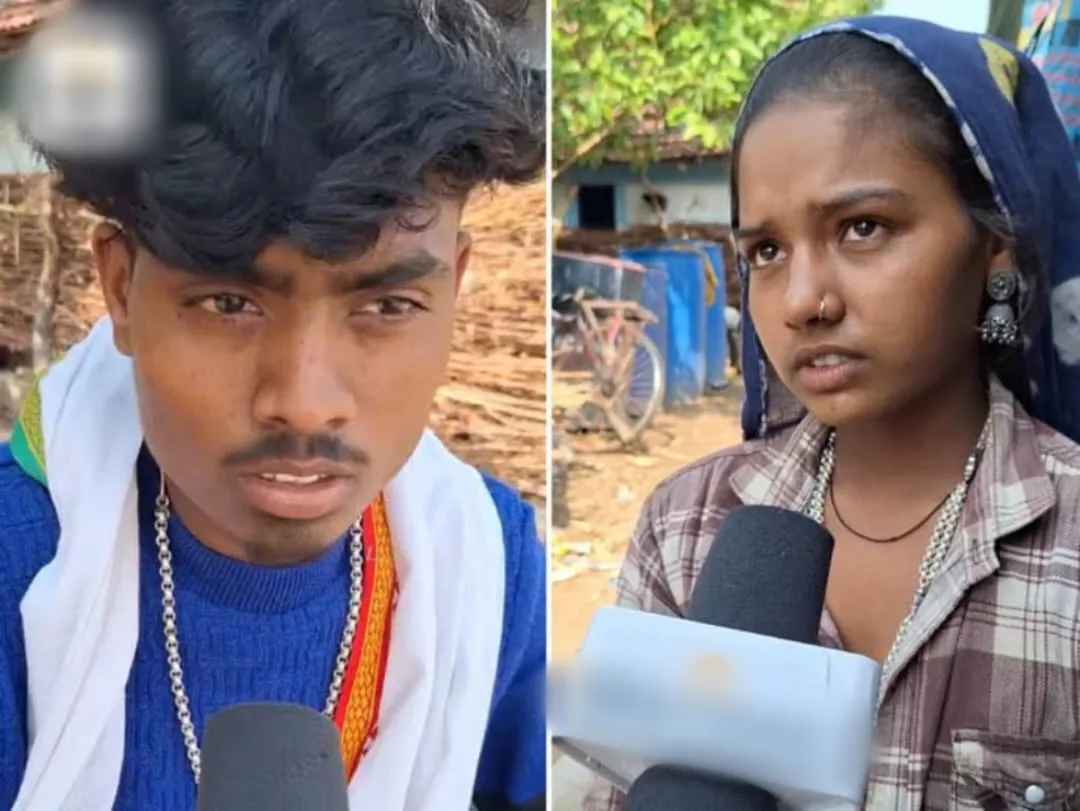
A dramatic turn of events unfolded in Undwa village, Jhabua district, when a Bhil tribal newlywed, Sangita, fled her in-laws’ home just a day after her wedding upon discovering their Christian faith. Her refusal to adopt Christianity and subsequent legal action prompted her in-laws to abandon their 20-year practice of Christianity and return to the Sanatan fold, marking a significant cultural and religious reconciliation.
A wedding and an unexpected discovery
On April 17, 2025, a vibrant wedding procession traveled 8 kilometers from Undwa village to Bichholi village in Jhabua city for the marriage of Ashish and Sangita. The ceremony, attended by villagers and wedding guests, proceeded smoothly under traditional Bhil customs. The following morning, April 18, Sangita was bid farewell to her in-laws’ home in Undwa village, where post-wedding rituals commenced.
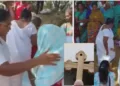
As part of the rituals, Sangita was led to the pooja ghar inside the family’s mud house. To her shock, she noticed a Christian ‘cross’ prominently displayed, with no images of Hindu deities present. Realising her in-laws followed Christianity—a fact not disclosed before the marriage—Sangita refused to participate in the rituals.
In a bold move, she fled the house alone, travelling 12 kilometres back to her parental home in Bichholi, where her brother later picked her up.
As she left, Sangita made her stance clear: “I cannot stay in this house or adopt Christianity. Forget me as long as you remain Christian.”
Legal battles and reconciliation
Sangita’s departure triggered a chain of events that culminated in legal action and eventual reconciliation. Fearing legal repercussions, Sangita’s family filed an FIR against her husband, Ashish, and his father, Gajju Macchar, for concealing their religious identity.
The legal battle cost the family Rs 60,000-70,000 in fees, funded through loans. Gajju and Ashish were arrested and spent five days in jail before being released on bail the previous Tuesday.
After a month of negotiations, facilitated by the Bhil tribal panchayat and Sangita’s family, a resolution was reached. Gajju’s family, who had practised Christianity for approximately 20 years, agreed to return to Sanatan Dharma. The family formally declared their reconversion in court and ceased attending church prayers, paving the way for Sangita to return to her in-laws’ home.
Village dynamics and Christian influence
Undwa village, with a population of about 1,200, has seen significant religious shifts in recent years. According to a local tribal member, over 300 villagers have converted to Christianity, and the village is home to three churches built on private tribal land. These churches are managed by local priests, referred to as “Padriji” or “Father,” some of whom are tribal members themselves.
The rise of churches in the region reflects a broader trend of conversions among tribal communities, often attributed to promises of healing and social support.
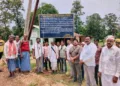
A Dainik Bhaskar team visited Undwa to investigate the incident and the broader context of religious dynamics in the area. Villagers were hesitant to discuss the case or provide details about Gajju Macchar’s home, reflecting the sensitivity of the issue. However, one resident confirmed the village’s demographic split and the presence of churches, noting that conversions have increased over the years.
Why the family adopted Christianity
Gajju Macchar, speaking at a shop outside the village, shared the reason behind his family’s conversion to Christianity two decades ago. He recounted how his wife, Gangu Bai, had fallen gravely ill, unable to walk or speak, with a twisted neck. Despite visiting multiple temples and hospitals, her condition did not improve. On the advice of villagers, Gajju took Gangu to a church in nearby Naugawa village at midnight. After prayers led by priests, Gangu’s health improved dramatically, leading the family to embrace Christianity. Gajju noted that no family member had fallen ill in the 20 years since, reinforcing their faith until the recent events.
Another villager, Narsingh, shared a similar story, explaining that his family converted after experiencing healing through church prayers. His son has since become a priest, highlighting the deep-rooted influence of Christianity in the community.
Sangita’s resolve and Hindu identity
At Sangita’s parental home in Bichholi, preparations were underway for her return to Undwa, with Ashish present to take her back. Initially hesitant to speak, Sangita opened up about her shock at discovering her in-laws’ Christian faith. “If I had known, I wouldn’t have married,” she said. “I don’t like Christianity. I’m Hindu and will remain so.”
Sangita emphasised her deep attachment to Hinduism, stating that converting to Christianity would have severed ties with her brothers and family. She had urged her in-laws to return to Hinduism, but their initial refusal prompted her to file the FIR.
After their release from jail and reconversion to Hinduism, Sangita agreed to return to her in-laws’ home. However, she issued a stern warning: “If they try to follow Christianity again, they’ll face jail and a 10-year sentence.”
Family perspectives and superstition
Sangita’s father praised his daughter’s sensibility, despite her lack of formal education. He criticised the trend of tribal families converting to Christianity, attributing it to superstition. “They take medicines and get better, but they’re told it’s the church that healed them,” he said, highlighting the influence of such beliefs in the region.
At Gajju’s home, his wife, Gangu Bai, explained that the matchmaker who arranged the marriage failed to disclose their Christian faith to Sangita’s family, leading to the misunderstanding. Gajju’s mother, Ibu, expressed frustration with Sangita, blaming her for the legal and financial toll on the family. “This whole issue started because of her,” Ibu said, adding that their inability to sustain the legal battle forced their return to Hinduism.
When asked about resuming Hindu worship, Ibu remarked, “My time to go is near.”
Ashish’s commitment to a new beginning
Ashish, eager to reunite with his wife, acknowledged the role their Christian faith played in the conflict. “This happened because we were Christian. Now we’ve returned to Hinduism,” he said. “I love my wife and am happy to take her home. My family has also returned to Hinduism, and I’ll keep Sangita happy.”
The resolution, driven by Sangita’s unwavering commitment to her Hindu faith, has not only reunited a couple but also prompted a family to reconnect with their cultural roots after two decades.