





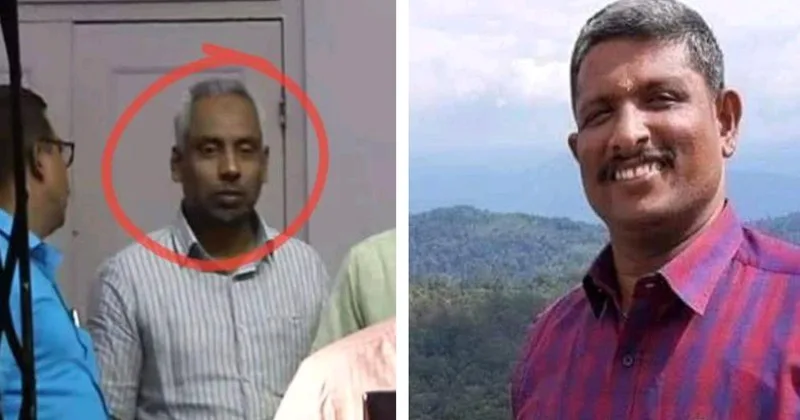
In an unexpected move that has created a nationwide concern, the Supreme Court of India has granted bail to Abdul Sathar, a former secretary general and an Islamic terrorist of the banned Popular Front of India (PFI), who was undoubtedly part of the brutal murder of Sreenivasan, an RSS karyakarta in Kerala. The apex court’s reason, that an individual cannot be jailed solely for their ideology has raised concerns about the judiciary’s stance on the rising religious extremism, national security and justice.
Sreenivasan was attacked and killed in his motorbike shop in Palakkad on April 16, 2022. The National Investigation Agency (NIA), which is probing the case, has found the involvement of PFI members in orchestrating the murder as part of a broader conspiracy and religious hatred. However, during the bail hearing, the Supreme Court bench, comprising Justices Abhay S. Oka and Ujjal Bhuyan, stated: “You can’t jail someone for their ideology,” emphasizing that no direct role was attributed to Abdul Sathar in the murder. However, this remark has drawn sharp criticism for potentially minimizing the serious implications of ideological extremism and undermining efforts to combat the Islamic radical violence in the country.
The PFI was declared an unlawful organisation in September 2022 under the Unlawful Activities (Prevention) Act (UAPA), following the findings of its involvement in anti-national activities and links to terrorist organizations within the country and abroad. In this context, granting bail to a senior leader of such an organisation, particularly in a case involving violent and terror conspiracy, has been seen as sending a problematic message.
Since Sathar was then a decision-making authority of PFI and having history of 71 past conflicts and more importantly Sreenivasan’s photo was found on in his of phone, the current observation of Supreme Court will have far reaching consequences. Besides, out of the 44 men jailed in connection with the case, all but nine were granted bail in June last year. Abdul Sathar was among the nine who were denied bail. The Kerala High Court had held that the accusations against them were prima facie true. In this context, the Supreme Court’s decision to grant bail raises serious concerns.












Comments