





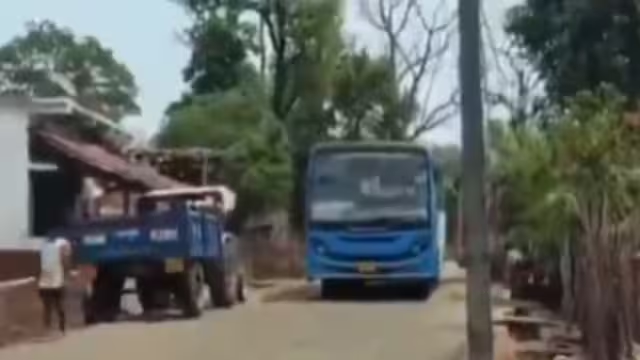
In a series of developments for one of India’s most remote and conflict-ridden regions, a state-run passenger bus rolled into Katejhari, a tribal village in Maharashtra’s Maoist-affected Gadchiroli district, marking the first time public transportation has reached the area since India’s independence in 1947. The initiative, hailed as a transformative step toward integrating isolated communities into the mainstream, is being celebrated by residents and officials alike as a beacon of hope for improved access to healthcare, education, and economic opportunities in a region long plagued by Maoist insurgency.
A New Lifeline for Katejhari
Katejhari, nestled deep in the forested terrain of Gadchiroli, has long been cut off from basic services due to its remote location and the persistent threat of Maoist violence. For decades, residents of this tribal village and surrounding areas have relied on foot travel or private vehicles to access essential services, often trekking long distances to reach schools, hospitals, or markets. The arrival of the state-run bus, operated by the Maharashtra State Road Transport Corporation (MSRTC), marks a historic shift, connecting Katejhari and approximately 10 nearby villages to broader opportunities.
📍#Maharashtra: Villagers in #Gadchiroli erupted in #joy when bus service started in #Katejhari for the first time since #Independence. #GadchiroliNews #MaharashtraNews #Joy #BusService #PostIndependence pic.twitter.com/RreLqqDA44
— Lokmat Times Nagpur (@LokmatTimes_ngp) May 19, 2025
Local residents greeted the bus with enthusiasm, with many describing the moment as “more than just a convenience.” Videos circulating on social media platforms like X captured the bus’s entry into Katejhari, showing villagers cheering and waving as the vehicle traversed the rugged terrain. “This bus is our bridge to the world,” said a local resident, speaking to reporters. “It means our children can go to school more easily, and we can reach hospitals without fear.”
A Step Toward Development and Peace
The introduction of public transport in Katejhari is part of a broader push by the Narendra Modi-led central government to address red terrorism and foster development in Maoist-affected regions.
Gadchiroli, located in eastern Maharashtra, has been a stronghold of Maoist activity for decades, with insurgents exploiting the region’s isolation and underdevelopment to maintain influence. The bus service, officials say, is not just a logistical achievement but a strategic move to integrate these areas into the mainstream and weaken the grip of insurgency.
Jagdish Pandey, sub-divisional police officer in Gadchiroli, emphasised the transformative potential of the initiative. “This is not just a bus, but a means of development for the people of this village, as well as for residents of around 10 nearby villages who can avail education and employment from it,” Pandey told the media.
He added that the service would facilitate access to schools, healthcare facilities, and markets, fostering economic growth and social mobility in a region where such opportunities have been scarce.
The initiative follows recent successes in anti-Maoist operations, including a significant operation on the Chhattisgarh-Telangana border, where security forces neutralised several Maoist operatives.
Union Home Minister Amit Shah praised the operation, stating that it demonstrated the government’s resolve to eliminate Naxalism. Prime Minister Narendra Modi echoed this sentiment, reiterating the central government’s commitment to establishing peace and connecting Maoist-affected areas with mainstream development.
“The success of our security forces shows that the campaign towards rooting out Maoism is moving in the right direction,” Modi said in a statement last week.
A Symbol of Hope and Progress
The arrival of public transport in Katejhari is more than a logistical milestone; it is a symbol of hope for a region long marginalised by conflict and isolation. For the residents of Gadchiroli, the bus represents a tangible connection to the opportunities and services that much of India takes for granted.
As one villager put it, “This bus carries our dreams—our children’s education, our access to doctors, our chance to build a better life.”
As the government continues its efforts to root out Naxalism and bring development to India’s hinterlands, the Katejhari bus service stands as a testament to the power of infrastructure to transform lives.










Comments